Junte-se a nós em uma viagem ao mundo dos livros!
Adicionar este livro à prateleira
Grey
Deixe um novo comentário Default profile 50px
Grey
Assine para ler o livro completo ou leia as primeiras páginas de graça!
All characters reduced
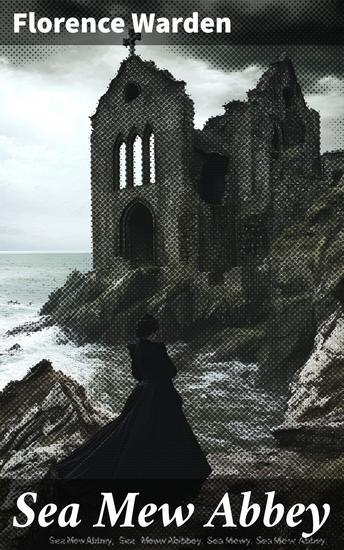
Sea Mew Abbey - cover
LER

Sea Mew Abbey

Florence Warden

Editora: Good Press

  • 0
  • 0
  • 0

Sinopse

In "Sea Mew Abbey," Florence Warden weaves a compelling narrative that intertwines elements of gothic romance and mystery amidst the haunting backdrop of a secluded coastal abbey. The novel is characterized by its richly descriptive prose, evocative of the turbulent seas and crumbling stone architecture that serve as both setting and metaphor for the characters' internal turmoils. Warden deftly builds suspense, employing atmospheric detail and the archetype of the Byronic hero, inviting readers to delve into the psychological complexities of love, betrayal, and redemption in a world where the supernatural often looms. Florence Warden, a prominent figure in the late 19th-century literary scene, drew inspiration from her own tumultuous experiences and the societal constructs of her time. Originally hailing from a theatrical background, Warden's understanding of dramatic tension and character depth permeates her writing. Her travels across England's coastlines provided an authentic sense of place, propelling her to explore themes of isolation and the human condition, which resonate powerfully in "Sea Mew Abbey." This remarkable novel is highly recommended for readers who appreciate atmospheric storytelling and intricate character development. Warden's unique blend of gothic elements with genuine emotional depth provides not only a thrilling reading experience but also an exploration of timeless human dilemmas. Dive into "Sea Mew Abbey" for a journey that will linger long after the final page.
Disponível desde: 02/03/2025.
Comprimento de impressão: 140 páginas.
Outros livros que poderiam interessá-lo

  • Les Misérables: Volume 2: Cosette - Book 2: The Ship Orion (Unabridged) - cover

    Les Misérables: Volume 2:...

    Victor Hugo

    • 0
    • 0
    • 0
    Victor-Marie Hugo (26 February 1802 - 22 May 1885) was a French poet, novelist, essayist, playwright, and dramatist of the Romantic movement. During a literary career that spanned more than sixty years, he wrote abundantly in an exceptional variety of genres: lyrics, satires, epics, philosophical poems, epigrams, novels, history, critical essays, political speeches, funeral orations, diaries, and letters public and private, as well as dramas in verse and prose.
    BOOK 2: THE SHIP ORION: Jean Valjean had been recaptured. The reader will be grateful to us if we pass rapidly over the sad details. We will confine ourselves to transcribing two paragraphs published by the journals of that day, a few months after the surprising events which had taken place at M. sur M.
    Ver livro
  • First and Last Things - Book 3: Of General Conduct (Unabridged) - cover

    First and Last Things - Book 3:...

    H. G. Wells

    • 0
    • 0
    • 0
    Herbert George "H. G." Wells (1866 - 1946) was an English writer.
    He was prolific in many genres, including the novel, history, politics, social commentary, and textbooks and rules for war games. Wells is now best remembered for his science fiction novels and is called a "father of science fiction"
    BOOK 3: OF GENERAL CONDUCT: I hold that the broad direction of conduct follows necessarily from belief. The believer does not require rewards and punishments to direct him to the right. Motive and idea are not so separable. To believe truly is to want to do right. To get salvation is to be unified by a comprehending idea of a purpose and by a ruling motive.
    The believer wants to do right, he naturally and necessarily seeks to do right.
    Ver livro
  • Golden Goose The - Story Time Episode 35 (Unabridged) - cover

    Golden Goose The - Story Time...

    Brothers Grimm

    • 0
    • 0
    • 0
    This prophetic Brothers Grimm fairytale is about the supposedly dimmest and youngest of three brothers, who due to an act of kindness, is gifted a golden goose by an old man. The parable is about not being greedy trying to pluck a golden feather will only get you stuck in a parade of shame.
    Ver livro
  • Top 10 Short Stories The - The 19th Century - The English - The top ten short stories written from 1800 - 1899 by English authors - cover

    Top 10 Short Stories The - The...

    George Eliot

    • 0
    • 0
    • 0
    Short stories have always been a sort of instant access into an author’s brain, their soul and heart.  A few pages can lift our lives into locations, people and experiences with a sweep of landscape, narration, feelings and emotions that is difficult to achieve elsewhere. 
     
    In this series we try to offer up tried and trusted ‘Top Tens’ across many different themes and authors. But any anthology will immediately throw up the questions – Why that story? Why that author?  
     
    The theme itself will form the boundaries for our stories which range from well-known classics, newly told, to stories that modern times have overlooked but perfectly exemplify the theme.  Throughout the volume our authors whether of instant recognition or new to you are all leviathans of literature. 
     
    Some you may disagree with but they will get you thinking; about our choices and about those you would have made.  If this volume takes you on a path to discover more of these miniature masterpieces then we have all gained something. 
     
    In this Century England assembles more of the world’s territories, people and materials for her own Empire.  The arts also flourish with names in this volume that are bywords for talent beyond the reach of almost all other writers.  An ever hungry audience demands yet more and more. 
     
    1 - The Top 10 - The 19th Century - The English - An Introduction 
    2 - The Lifted Veil - Part 1 by George Eliot 
    3 - The Lifted Veil - Part 2 by George Eliot 
    4 - The Signalman by Charles Dickens 
    5 - The Man Who Would Be King - Part 1 by Rudyard Kipling 
    6 - The Man Who Would Be King - Part 2 by Rudyard Kipling 
    7 - The Magic Shop by H G Wells 
    8 - The Withered Arm by Thomas Hardy 
    9 - The Old Nurse's Story by Elizabeth Gaskell 
    10 - A Little Dinner At Timmin's by William Makepeace Thackeray 
    11 - Father Giles of Ballymoy by Anthony Trollope 
    12 - Lost Hearts by M R James 
    13 - A Terribly Strange Bed by Wilkie Collins
    Ver livro
  • The Plush Usurper - cover

    The Plush Usurper

    E. Nesbit

    • 0
    • 0
    • 0
    King Alban was a good king, ruling over Albanatolia with kindness, fairness, and above all, efficiency, thanks to the white magic. Everyone had enough to wear, enough to eat, enough to do, and had their washing done for free at the Palace, on Mondays from 10 to 4. One day, the king's lavish and vain long-lost brother returned to the kingdom to bring a bit of colour to the realm with his own particular brand of magic, while stirring up discontent among the citizens, so that he might take the throne for himself.  This amusing allegory by E. Nesbit explores themes of political propaganda, populism and responsible leadership, all told with Nesbit's signature charm, wit and whimsy. The Plush Usurper was first published in Nine Unlikely Tales, 1901.
    Ver livro
  • Les Misérables: Volume 2: Cosette - Book 1: Waterloo (Unabridged) - cover

    Les Misérables: Volume 2:...

    Victor Hugo

    • 0
    • 0
    • 0
    Victor-Marie Hugo (26 February 1802 - 22 May 1885) was a French poet, novelist, essayist, playwright, and dramatist of the Romantic movement. During a literary career that spanned more than sixty years, he wrote abundantly in an exceptional variety of genres: lyrics, satires, epics, philosophical poems, epigrams, novels, history, critical essays, political speeches, funeral orations, diaries, and letters public and private, as well as dramas in verse and prose.
    BOOK 1: WATERLOO: Last year (1861), on a beautiful May morning, a traveller, the person who is telling this story, was coming from Nivelles, and directing his course towards La Hulpe.
    Ver livro