Junte-se a nós em uma viagem ao mundo dos livros!
Adicionar este livro à prateleira
Grey
Deixe um novo comentário Default profile 50px
Grey
Assine para ler o livro completo ou leia as primeiras páginas de graça!
All characters reduced
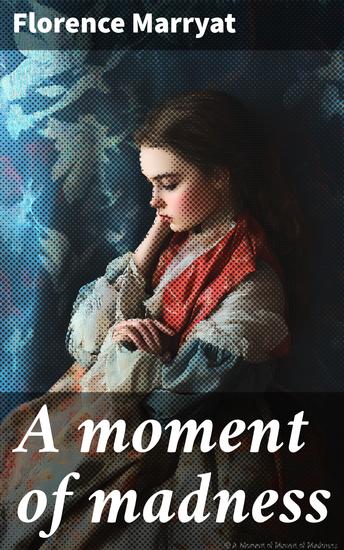
A moment of madness - cover
LER

A moment of madness

Florence Marryat

Editora: Good Press

  • 0
  • 0
  • 0

Sinopse

In "A Moment of Madness," Florence Marryat masterfully weaves a tale that delves into the complexities of the human psyche and the societal constraints of the 19th century. Through her captivating narrative style, Marryat explores themes of obsession, betrayal, and the nuances of mental health, employing a rich, descriptive prose that reflects both the emotional depth of her characters and the intricacies of Victorian social mores. The novel situates itself within the context of burgeoning psychological literature, offering readers insight into the shifting perceptions of madness during a time of rapid scientific and cultural change. Florence Marryat, a prominent novelist, playwright, and social reformer, draws upon her diverse experiences— including her background as the daughter of a naval officer and her engagement with the spiritualist movement—to inform her writing. Living through the constraints of her era, Marryat's works often criticize societal norms and highlight women's struggles for autonomy and respect. Her keen understanding of human behavior, coupled with her personal encounters with loss and social upheaval, lends authenticity to the emotional landscapes in her fiction. This compelling novel is highly recommended for readers interested in psychological fiction and those who appreciate rich character studies intertwined with historical context. Marryat's examination of the fragile line between sanity and madness is a profound reflection on the human experience, making "A Moment of Madness" an essential read for both lovers of classic literature and modern psychological exploration.
Disponível desde: 02/03/2025.
Comprimento de impressão: 150 páginas.
Outros livros que poderiam interessá-lo

  • Arch Rascal An - From their pens to your ears genius in every story - cover

    Arch Rascal An - From their pens...

    Knut Hamsun

    • 0
    • 0
    • 0
    Knud Pedersen was born in Lom in the Gudbrandsdal valley of Norway on the 4th of August, 1859 in what was then the United Kingdoms of Sweden and Norway.  He was the fourth son of seven children born to poor parents who, when he was three, were invited to an uncle’s farm to work his land. 
    When he was nine he moved away from his family to help another uncle who ran a post office.  Whilst with him he was beaten and starved which manifested in a series of chronic nervous difficulties.  The treatment endured for six years until he managed to escape back to Lom. 
    For some time he now took any job that was available to him, including store clerk, peddler, shoemaker's apprentice, sheriff's assistant, elementary-school teacher and ropemaker's apprentice.  At about the same time, with the wealth of these gained experiences, he began to explore his literary talents. 
    In 1877 he published his first book ‘The Enigmatic Man: A Love Story from Northern Norway’, others soon followed but real success only came in 1890 with ‘Hunger’, an influential work for later novelists with its internal monologue and bizarre logic.  His work is often associated with Pantheism; where nature and mankind are unified in a strong and often mystical bond.   
    His work was so influential that in 1920 he was awarded the Novel Prize for Literature. 
    Shortly after this point his works became fewer and his interests darker.  During World War II he became a fervent admirer of the Nazi’s, even meeting Hitler, even though German armies had overrun Norway.  With the war’s end he was detained on charges of treason.  His old age was apparently the primary reason given for Hamsun receiving only a fine.  Other reasons also sought to excuse his abhorrent behaviour but it was clear that whilst he was loved for his literature he was detested for his politics and morals. 
    His literary canon includes more than 20 novels, a poetry collection, short stories, plays, a travelogue, other works of non-fiction and essays. 
    Knut Hamsun died on the 19th February 1952 in Grimstad. He was 92.
    Ver livro
  • Three Languages The - Story Time Episode 51 (Unabridged) - cover

    Three Languages The - Story Time...

    Brothers Grimm

    • 0
    • 0
    • 0
    A count's only son could learn nothing. Three times the count sent him for a year to famous masters. Each time, the son came back: saying first that he knew what dogs said when they barked; the next time, what birds said; and finally, what frogs said. Infuriated by his uselessness, his father ordered his people to take him to the woods and kill him, but they sympathised with him, and instead brought the count the eyes and tongue of a deer as proof of his death.
    Ver livro
  • South of the Slot - Iconic American author London brings a story ahead of its time in this influential story about class and labour - cover

    South of the Slot - Iconic...

    Jack London

    • 0
    • 0
    • 0
    John Griffith Chaney was born on January 12th, 1876 in San Francisco.   
     
    His father, William Chaney, was living with Flora Wellman when she became pregnant.  Chaney insisted she have an abortion.  Flora's response was to turn a gun on herself.  Although her wounds were not severe the trauma made her temporarily deranged. 
     
    In late 1876 his mother married John London and the young child was brought to live with them as they moved around the Bay area, eventually settling in Oakland where now, calling himself Jack, he completed grade school. 
     
    Jack worked hard at several jobs, sometimes 12-18 hours a day, but his dream was university.  He studied hard and borrowed the money to enrol in the summer of 1896 at the University of California in Berkeley. 
     
    In 1897, at 21, Jack searched out newspaper accounts of his mother's suicide attempt and for the name of his biological father. He wrote to Chaney, then living in Chicago, who claimed he could not be Jack’s father because he was impotent and casually asserted that London's mother had relations with other men.  Jack, devastated by the response, quit Berkeley and went to the Klondike. Other accounts suggest that his dire finances presented Jack with the excuse he needed to leave. 
     
    In the Klondike Jack began to gather material for his writing but also accumulated many health problems, including scurvy, which together with hip and leg problems he would carry for the rest of his life. 
     
    During the late 1890's Jack was regularly publishing short stories and by the turn of the century full blown novels. 
     
    By 1904 Jack had married, fathered two children and was now in the process of divorcing.  A stint as a reporter on the Russo-Japanese war of 1904 was equal amounts trouble and experience. But that experience was always put to good use in a continuing and remarkable output of work. 
     
    In 1905 he married Charmian Kittredge who at last was a soul and companion who brought him some semblance of peace despite his advancing alcoholism and his incurable wanderlust. 
     
    Twelve years later Jack had amassed both wealth and a literary reputation through such classics as ‘The Call of the Wild’, ‘White Fang’ and many others. He had a reputation as a social activist and was a tireless friend of the workers.   
     
    Jack London died suffering from dysentery, late-stage alcoholism and uremia, aged only 40, on November 22nd 1916 at his property in Glen Elen in California 
     
    In ‘South of the Slot’ Jack London reveals yet another facet of his writing talents. In turn of the Century San Francisco, a Professor of Sociology explores the working-class neighbourhoods gradually revealing an alter-ego with his Union loving personality and name.  The question is which is his real character.
    Ver livro
  • What Christmas is as We Grow Older - cover

    What Christmas is as We Grow Older

    Charles Dickens

    • 0
    • 0
    • 0
    “What Christmas is as We Grow Older” is a short Christmas-Story by Charles Dickens: Time was, with most of us, when Christmas Day encircling all our limited world like a magic ring, left nothing out for us to miss or seek; bound together all our home enjoyments, affections, and hopes; grouped everything and every one around the Christmas fire; and made the little picture shining in our bright young eyes, complete.
    Ver livro
  • The Heart of a Dog - cover

    The Heart of a Dog

    Mikhail Bulgakov

    • 0
    • 0
    • 0
    A well-to-do professor working in Moscow strikes up an unlikely friendship with a stray dog and attempts a scientific first by transplanting the testicles and pituitary gland of a recently deceased man into the dog.
    
    With a wild, but alarmingly human animal on the loose, the professor's previously respectable life becomes a nightmare beyond his imagination. A suberp satirical novel, it is also a sharp and pointed criticism of Soviet society, especially the new rich that arose after the Bolshevik revolution.
    Ver livro
  • Hunchback of Notre-Dame The (Book 6) - cover

    Hunchback of Notre-Dame The...

    Victor Hugo

    • 0
    • 0
    • 0
    Book 6: The Hunchback of Notre-Dame or Notre-Dame de Paris is a French Gothic novel by Victor Hugo, published in 1831. - The story is set in Paris in 1482 during the reign of Louis XI. The gypsy Esmeralda (born as Agnes) captures the hearts of many men, including those of Captain Phoebus and Pierre Gringoire, but especially Quasimodo and his guardian Archdeacon Claude Frollo. Frollo is torn between his obsessive lust for Esmeralda and the rules of Notre Dame Cathedral. He orders Quasimodo to kidnap her, but Quasimodo is captured by Phoebus and his guards, who save Esmeralda. Gringoire, who attempted to help Esmeralda but was knocked out by Quasimodo, is about to be hanged by beggars when Esmeralda saves him by agreeing to marry him for four years.
    Ver livro