¡Acompáñanos a viajar por el mundo de los libros!
Añadir este libro a la estantería
Grey
Escribe un nuevo comentario Default profile 50px
Grey
Suscríbete para leer el libro completo o lee las primeras páginas gratis.
All characters reduced
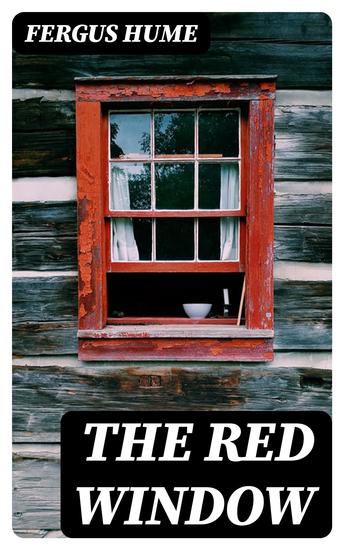
The Red Window - Enriched edition - cover

The Red Window - Enriched edition

Fergus Hume

Editorial: DigiCat

  • 0
  • 0
  • 0

Sinopsis

Fergus Hume's 'The Red Window' is a captivating detective novel that explores the depths of human emotion and the intricacies of deception. Set against the backdrop of Victorian England, Hume employs a gripping narrative style characterized by vivid imagery and carefully constructed suspense. The plot centers around a mysterious murder within the confines of an opulent mansion, where secrets lie behind every façade. Through intricate character development and layered storytelling, Hume invites readers to navigate the complexities of morality and justice, evoking the era's characteristic tension between social propriety and hidden desires. Fergus Hume, a pioneer of the detective genre, drew inspiration from his experiences as a law clerk and his fascination with crime and human psychology. Author of the famous 'The Mystery of a Hansom Cab,' Hume's works often reflect his keen observations of society's pitfalls, coupled with a deep-seated understanding of the human condition. His unique perspective as a prolific writer during the late 19th century allowed him to shine a light on the darker aspects of urban life, making his narratives both timely and timeless. 'The Red Window' serves as a brilliant entry point for readers who appreciate classic detective fiction infused with psychological depth. Its rich layers of intrigue and Hume's deft storytelling make it a must-read for enthusiasts of the genre, ensuring that both seasoned fans and newcomers are kept on the edge of their seats.

In this enriched edition, we have carefully created added value for your reading experience:
- A succinct Introduction situates the work's timeless appeal and themes.
- The Synopsis outlines the central plot, highlighting key developments without spoiling critical twists.
- A detailed Historical Context immerses you in the era's events and influences that shaped the writing.
- A thorough Analysis dissects symbols, motifs, and character arcs to unearth underlying meanings.
- Reflection questions prompt you to engage personally with the work's messages, connecting them to modern life.
- Hand‐picked Memorable Quotes shine a spotlight on moments of literary brilliance.
- Interactive footnotes clarify unusual references, historical allusions, and archaic phrases for an effortless, more informed read.
Disponible desde: 02/06/2022.
Longitud de impresión: 197 páginas.

Otros libros que te pueden interesar

  • The Medici Manuscript - The Glass Library book 2 - cover

    The Medici Manuscript - The...

    C.J. Archer

    • 0
    • 0
    • 0
    One book can change your life. 
    Finding an old manuscript in the attic has always been a fantasy of Sylvia’s. She just never expected the fantasy to come true, or for it to lead her to answers about her mysterious family. 
    The silver clasps binding the pages contain rare magic – the same magic that might run through Sylvia’s veins. To discover a link to her ancestors means understanding the book itself, but it’s written in a code that proves difficult to crack. The only thing she knows for certain is that it was once owned by the Medicis, the powerful family that controlled Renaissance Florence.  
    With the help of Gabe and his friends, Sylvia investigates the book’s origins. But following the clues throws up more questions – questions they need help answering. Trusting others is not Sylvia’s strong suit, but with Gabe at her side, she becomes capable and confident. Until their trust is shattered when the book is stolen.  
    Uncovering the thief proves dangerous, particularly when someone is also trying to kidnap Gabe. With his own mysteries to unravel, Gabe’s private life becomes more complicated. Sylvia tries to keep her distance but staying away from someone as magnetic as Gabe is impossible.  
    With so many distractions, can they find the thief before the book is lost forever? Or will the secrets contained within its pages remain unsolved and will Sylvia’s past continue to be a mystery?
    Ver libro
  • Luigi Pirandello - A Short Story Collection - Nobel prize winning Italian master author - cover

    Luigi Pirandello - A Short Story...

    Luigi Pirandello

    • 0
    • 0
    • 0
    Luigi Pirandello was born on 28th June 1867 into an upper-class family in Agrigento, in Sicily. 
     
    In 1880, the family moved to Palermo and there he completed high school and thence to the University of Palermo, at that time the centre of what became the Fasci Siciliani movement.  Although not an active member he had close friendships with many of its leading ideologists.  Pirandello then completed his university studies in Rome and Bonn, receiving his Doctorate in March, 1891. 
     
    His time in Rome had provided him with the opportunity to visit its many theatres. "Oh the dramatic theatre! I will conquer it. I cannot enter into one without experiencing a strange sensation, an excitement of the blood through all my veins..." 
     
    1894 brought marriage, at his father's suggestion, to a shy, withdrawn girl: Mara Antonietta Portulano.  The marriage encouraged his studies and writings and, the following year, the first part of the ‘Dialoghi tra Il Gran Me e Il Piccolo Me’ was published. 
     
    In 1903 the flooding of the sulphur mines in which his father had invested the family capital and Antonietta's dowry, brought financial catastrophe.  She, on hearing the news, was mentally broken.  Pirandello would now work a full day and then watch over his troubled wife at night. Somehow he found time to write ‘The Late Mattia Pascal’.  It was an immediate and resounding success.  
     
    In 1909, Pirandello began his collaboration with the prestigious Corriere della Sera.  Whilst his fame as a writer was increasing his private life was poisoned by the suspicion and jealousy of Antonietta who now turned physically violent.  His plays were now being regularly performed but, within a decade, Antonietta had to be placed into an asylum from which she never left. 
     
    In 1921, in Rome his play, ‘Six Characters in Search of an Author’ debuted.  It was a failure.  However, when presented in Milan it was a great success, as it also was in London and New York. 
     
    In 1925, Pirandello, with Mussolini’s help, assumed the artistic direction and ownership of the Teatro d'Arte di Roma.  He now described himself both as ‘a Fascist because I am Italian’ and ‘I'm apolitical, I'm only a man in the world...’  However his later conflicts with fascist leaders meant he fell under close surveillance by the OVRA, the secret police. 
     
    In 1934 he won the Nobel Prize but asked that the medal be melted down for Italy’s occupation of Abyssinia Campaign to which he had given his support.  
     
    Pirandello's canon stretches across novels, short stories, poetry, essays and some 40 plays.  His tragic farces are often cited as forerunners of the Theatre of the Absurd. 
     
    Luigi Pirandello died on the 10th December 1936 at his home at Via Bosio, Rome, Italy.  He was 69.
    Ver libro
  • The Picture of Dorian Gray - cover

    The Picture of Dorian Gray

    Oscar Wilde

    • 0
    • 0
    • 0
    The Picture of Dorian Gray is an acclaimed novel by Oscar Wilde, first published in 1890. It tells the story of a handsome and wealthy young man, Dorian Gray, who discovers a portrait of himself. After making a wish to stay young and beautiful forever, the painting begins to age instead of him and Dorian must keep it hidden from the world. As he lives a life of pleasure and excess, the painting continues to reveal Dorian's true self and ultimate fate. With its themes of morality, innocence, and self-destruction, The Picture of Dorian Gray remains one of the most important and influential works of literature. 
    Oscar Wilde (1854-1900) was an Irish playwright, novelist, poet, and wit. He was one of the most prominent figures of the late Victorian era and a leading light of the Aesthetic Movement. Wilde is best known for his plays “The Importance of Being Earnest” and “An Ideal Husband”, as well as his novel “The Picture of Dorian Gray”. His work was heavily influenced by his Irish background, as well as his love of the theater. His witticisms and epigrams are still widely quoted today. Wilde was also an outspoken critic of Victorian morality, often challenging the conventions of the day. His personal life was also the subject of much controversy and he was imprisoned for two years for “gross indecency”. Wilde’s life and work have inspired generations of writers, artists, and thinkers. He is still regarded as one of the most influential writers in English literature.
    Ver libro
  • The Scarlet Pimpernel - cover

    The Scarlet Pimpernel

    Emmuska Orczy

    • 0
    • 0
    • 0
    "The Scarlet Pimpernel" by Baroness Orczy is a captivating historical novel crafted in the early 20th century. Set against the swirling chaos of the French Revolution, the narrative follows the elusive Englishman known only as the Scarlet Pimpernel, who undertakes audacious rescues of aristocrats ensnared in the deadly clutches of the guillotine. This protagonist, cloaked in secrecy, juggles his dual identity, creating an electrifying tension as he maneuvers through the perilous political landscape. The novel poignantly explores themes of bravery, loyalty, and the profound cost of sacrifice. 
    As the story unfolds, the grim atmosphere of the Reign of Terror in Paris is palpably felt. The air is thick with the stench of fear and bloodshed as the relentless guillotine claims countless souls, its blade gleaming ominously in the sunlight. The bloodthirsty crowd, swelling with fervor, eagerly anticipates the next execution, their excitement palpable like a hungry predator awaiting its prey. At the heart of this mayhem stands Sergeant Bibot, a proud sentinel at the barricades, relishing his role in thwarting the desperate escape attempts of fleeing aristocrats. 
    Amidst the growing turmoil, whispers of a clandestine group of Englishmen begin to circulate, their leader—the enigmatic Scarlet Pimpernel—launching daring rescues that confound the authorities and thwart death's grasp. The narrative vividly paints the harrowing fear and desperation of those on the run, contrasting it with the zealous exhilaration of citizens intoxicated by their newfound power and thirst for vengeance. This sets the stage for a gripping tale of unwavering heroism amidst a world spiraling into chaos.
    Ver libro
  • D H Lawrence - A Short Story Collection - Volume 2 - A titan of English literature that challenged ideas of romance and sexuality - cover

    D H Lawrence - A Short Story...

    D H Lawrence

    • 0
    • 0
    • 0
    David Herbert Lawrence was born on the 11th September 1885 in Eastwood, Nottinghamshire, a coal mining town where the reality of a harsh life was only useful as experiences for future literary works. 
     
    He was educated at Beauvale Board School and became the first local boy to receive a scholarship to attend Nottingham High School. After 3 years he became a junior clerk in Haywood’s surgical appliances factory. He was also attempting a literary career which, in the short term, led to a teacher training position in Eastwood and later a teaching qualification from University College, Nottingham.  
     
    Lawrence’s first efforts were poems, short stories and a draft of ‘The White Peacock’. Moving to London and a teaching position in Croydon his writing attracted the attention of Ford Madox Ford, editor of The English Review, and he commissioned him to write ‘Odour of Chrysanthemums’.  
     
    Wanting to write full-time he now began work on what would become ‘Sons and Lovers.   
     
    In 1912 he met the older and married mother-of-three Frieda Weekley. They eloped to Germany and here Lawrence could see for himself the growing tensions with France.  So keen was his interest that he was arrested and accused of being a British spy.  
     
    In early 1914 Frieda obtained her divorce and they returned to Britain to be married just days before the outbreak of war. Owing to her German parentage, and his own public dislike of militarism and violence, the couple were treated with contempt and suspicion throughout the war years.  
     
    Despite this he continued to write but his reputation in England was so tarnished and, mirrored by his own disdain for the country, he and Frieda left England in November 1919, first for Europe and then America via Ceylon and Australia. 
     
    They bought a ranch in Taos, New Mexico and visited Mexico several times. The third visit in March 1925 caused a near fatal attack of malaria. To convalesce they moved to Florence. Here he continued work on ‘Lady Chatterley’s Lover’ which for many years would cause controversy. A renewed interest in oil painting resulted in an exhibition in 1929 which was raided by the police and several works were confiscated.  
     
    D H Lawrence died of complications arising from a bout of tuberculosis on the 2nd of March 1930 in Vence, France.  He was 44. 
     
    1 - D H Lawrence - A Short Story Collection - Volume 2 - An Introduction 
    2 - The Rocking Horse Winner by D H Lawrence 
    3 - The Border Line by D H Lawrence 
    4 - A Fragment of Stained Glass by D H Lawrence 
    5 - Odour of Chrysanthemums by D H Lawrence 
    6 - The Horse Dealer's Daughter by D H Lawrence
    Ver libro
  • Nana - cover

    Nana

    Emile Zola

    • 0
    • 0
    • 0
    "Nana" by Émile Zola is a novel that explores the decadence and moral decay of Parisian society in the 19th century. It follows the life of Nana, a beautiful and ambitious young woman, as she navigates the social and economic challenges of her time. The novel provides a vivid portrayal of the excesses and corruption of the Second Empire, using Nana as a symbol of the destructive influence of unchecked desire and hedonism.
    Ver libro