¡Acompáñanos a viajar por el mundo de los libros!
Añadir este libro a la estantería
Grey
Escribe un nuevo comentario Default profile 50px
Grey
Suscríbete para leer el libro completo o lee las primeras páginas gratis.
All characters reduced
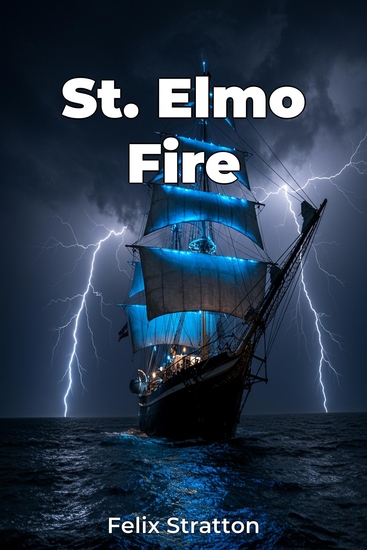
St Elmo Fire - cover

St Elmo Fire

Felix Stratton

Traductor A AI

Editorial: Publifye

  • 0
  • 0
  • 0

Sinopsis

St. Elmo's Fire explores the historical and scientific dimensions of the eerie, luminous glow often seen on pointed objects during electrical storms. This phenomenon, observed for centuries by sailors, involves atmospheric electricity and corona discharge, where intense electric fields ionize air molecules, causing them to emit light. Intriguingly, these plasma discharges were often viewed with a mix of awe and fear, sometimes seen as omens or even divine intervention. The book uniquely blends maritime history with cutting-edge physics to offer a comprehensive understanding of this enigmatic occurrence.

 
The book's approach is to first examine St. Elmo's Fire through historical accounts found in naval records and sailors' logs, providing context to its perception over time. It then transitions into a scientific analysis of electromagnetic field dynamics and atmospheric science, explaining the physics behind the phenomenon. This includes detailed discussions of how electrical storms create conditions ripe for St. Elmo's Fire, offering insights into lightning protection and safety measures.

 
Ultimately, the book synthesizes these historical and scientific perspectives to present a nuanced view applicable to modern safety and risk assessment.
Disponible desde: 01/05/2025.
Longitud de impresión: 68 páginas.


Otros libros que te pueden interesar

  • Luck - cover

    Luck

    David Flusfeder

    • 0
    • 0
    • 0
    ‘A joy’ Philippe Sands‘Glorious’ David Spiegelhalter 
    A fascinating, enchanting and personal look at the meaning of luck, and the way in which it has shaped our shared history and continues to inflect our day to day lives. 
    What does it mean to be lucky? How might we mitigate the effects of bad luck and maximise those of good? Is there actually such a thing as ‘luck’—some force that intervenes between desire and its consummation, that impedes or hastens it? 
    To answer these questions, David Flusfeder sets out on a search for the definition of luck. This quest will take him to Siberia, Versailles, the Old Testament desert; play roulette in Baden-Baden with Dostoevsky; visit a Cambridge fairground with Wittgenstein; meet the sixteenth-century poet Thomas Bastard, who challenged Fortune, and lost; find Nietzsche on the slopes of Vesuvius; learn about the pioneers of probability; the twentieth-century art investigators of chance and possibility; and the intensely personal story of his father’s good fortune in escaping war-time Poland. Starting at the British Library in London, and following the dictates of an online randomiser that decided the chapter order, Flusfeder follows in the footsteps of some victors of luck and those who were defeated by it, from ancient times to the modern day. 
    Luck asks fundamental questions about the world, ourselves, our place in it. In these questions, about our relationships to fortune, to risk, to opportunity, to chance, destiny and fate, we find ourselves deciding who we are and how we might choose to live. 
    ‘Thrilling, intelligent and wilfully unique … I loved it’ James Runcie, author of The Great Passion 
    ‘Ruminative … page-turning’ TLS 
    ‘Fascinating … An eminently enjoyable and engrossing page-turner’ The Jewish Chronicle 
    In LUCK, David Flusfeder delves into the psychology of fortune, intertwining it with elements of mathematics and theory. The book is a top pick for those interested in the social aspects of games, particularly poker, and the communication skills required to navigate them. 
    For fans of Brian Klaas (Fluke), Morgan Housel (Same as Ever), Annie Jacobsen (Surprise, Kill, Vanish), Bill Perkins (Die With Zero), and Cal Newport (Slow Productivity). 
    HarperCollins 2022
    Ver libro
  • We are what we listen to - The impact of music on individual and social health - cover

    We are what we listen to - The...

    Dr. Patricia Caicedo M.D.

    • 0
    • 0
    • 0
    In this groundbreaking union of art and science, soprano, musicologist, and physician Patricia Caicedo explores the connection between music-its performance, how we listen to it, why we enjoy it-and health.Drawing on the latest research and musical examples, Caicedo reveals:- How the brain works when you listen to and make music.- The relationship between rhythm, movement, and health.- The relationship between pleasure, emotion, and music.- How music has been a crucial element of the human experience since the beginning of the species and how it is fundamental for maintaining communities.- The importance of music in pain and death.- How music increases your creativity and produces happiness and a sense of purpose in life.We are what we listen to: the impact of music on individual health will attract readers of Oliver Sacks and David Byrne, as it is an unprecedented, transdisciplinary investigation that contextualizes the music and its effects on historical, scientific, and social levels. It is an essential book for music lovers and everybody seeking to improve their mental and physical health. 
    "This thoroughly researched written book results from a lifetime of careful study and wide experience. It contains revelations on virtually every page concerning the therapeutic benefits of music." Dr. Walter Clark, Professor of Musicology, University of California Riverside. 
    "I appreciate this book because it is written in a way that activates the reader's senses in a way that not only informs but efficiently urges us to participate creatively, letting the music do its magic to us." Alfons Karabuda, President International Music Council.
    Ver libro
  • Seeds of A Sunflower: Poems of Growth - None - cover

    Seeds of A Sunflower: Poems of...

    ANDREA "DREA" CONN

    • 0
    • 0
    • 0
    Every sunflower seed can grow into a new flower. 
    Like love overcoming trauma, self-worth emerging from self-doubt, or a new purpose stumbled upon after an identity crisis; each sunflower seed will bloom and grow. 
    It will eventually be reborn with enough care and nurturing if you bury it deep enough. 
    Seeds of a Sunflower is a thought-provoking, raw collection of autobiographical poems that will break your heart and piece it back together, petal by petal, leaf by leaf, existing parasites and thorns included. 
    By exposing this vulnerable, private side of her, Andrea Conn tackles the shame and stigma society associates with trauma, loss, paralyzing fear, and imperfection. Her struggles with PTSD, infertility, and personal identity—a daily relatable battle that countless people face—illuminate the slow, painful path to inner strength and self-love. 
    The sunflower will stand tall again. The phoenix will rise from its ashes. The wounds will fade into scars. 
    You won’t forget how long it took you to heal, how much recovery resembled heartbreak, and how it hurt to grow again. 
    Because you are worth more than you can imagine!
    Ver libro
  • Western Han Dynasty - The Expansion and Flourishing of Early Imperial China - cover

    Western Han Dynasty - The...

    Rolf Hedger

    • 0
    • 0
    • 0
    The Western Han Dynasty (206 BCE – 9 CE) emerged following the collapse of the Qin Dynasty, a period marked by harsh legalist rule and widespread rebellion. The fall of the Qin created a power vacuum, leading to years of conflict between rival warlords. Among them was Liu Bang, a peasant-born general who would go on to establish one of China’s most influential dynasties. His leadership, pragmatic policies, and ability to gain the support of both the military and the common people played a crucial role in shaping the early Han state. 
    Liu Bang, later known as Emperor Gaozu, rose to prominence during the rebellion against the Qin. Unlike his rival Xiang Yu, a nobleman known for his military prowess, Liu Bang relied on strategy, diplomacy, and alliances to gain an advantage. In 202 BCE, he decisively defeated Xiang Yu at the Battle of Gaixia, solidifying his control over China and declaring himself the first emperor of the Han Dynasty. His rule marked a shift away from the oppressive policies of the Qin, emphasizing stability, leniency, and bureaucratic governance. 
    One of Gaozu’s first major reforms was the reduction of harsh legalist laws that had caused unrest under the Qin. He abolished extreme punishments, lowered taxes, and granted land to military leaders and allies. However, in order to maintain control, he adopted a semi-feudal system, granting large territories to loyal kings while keeping direct control over the central government. This system helped secure loyalty but later posed challenges as regional rulers sought more autonomy.
    Ver libro
  • Chinook Crew 'Chick' - Highs and Lows of Forces Life from the Longest Serving Female RAF Chinook Force Crewmember - cover

    Chinook Crew 'Chick' - Highs and...

    Liz McConaghy

    • 0
    • 0
    • 0
    Liz McConaghy spent a total of seventeen years flying with the RAF’s Chinook Fleet. Aged just 21, she was the youngest aircrew member to deploy to Iraq and was also the only woman on the Chinook wing for four years. In her astounding career, Liz McConaghy completed two deployments to Iraq followed by ten deployments to Helmand province in Afghanistan in support of the enduring Operation Herrick campaign. 
     
    Liz’s inspiringly honest story reveals the highs and lows that she witnessed at war, and the cost that came with that both, physically and mentally for those involved. During her deployments, she survived not only a near fatal wire strike onboard her CH47, but numerous enemy fire ‘contacts’ defending her crew by returning fire from both the M134 ‘Minigun’ and M60 weapons entrusted to her to operate. 
     
    Her biggest honor of all her duties, however, was serving on the Medical Emergency Response Team, or MERT, flying ambulance as it was more commonly known. This involved recovering wounded soldiers from the battlefield, often under fire, and witnessing them both die and indeed come back to life at her feet in the cabin of her Chinook. 
     
    Liz saw Camp Bastion grow from a barbed wire fence surrounding an area of tents in the sand to the huge Operating Base it became. She was also on the last 1310 Flight deployment there as the British forces withdrew 10 years later handing it back to the Afghan National Army. 
     
    Very few Chinook crew members, if any, spanned the length of time deployed as Liz McConaghy did. This is a genuinely unique tale that only Liz could tell, which ends with her battling the memories that haunted her, long after she had left the battlefield. Her own war within took her to the point of suicide once she had left the service. Her survival from both the battles in foreign lands and in her own head led her to begin telling her story, in the hope she can help others win their wars.
    Ver libro
  • Holocaust - World War 2 History of Its Causes and Consequences - cover

    Holocaust - World War 2 History...

    Kelly Mass

    • 0
    • 0
    • 0
    Most people know what the Holocaust was. They have at least a vague image of what transpired in Europe during the 1940s. Still, the details may be blurry. So, let’s take a look at history and the events that shocked the world. And even though this was clearly not the first genocide in the world, it was one of particular proportions and scale, and therefore noteworthy. 
    At the time of The Second World War, the Holocaust, also referred to as the Shoah, was a genocide of European Jews. Between 1941 and 1945, Nazi Germany and its allies killed around 6 million Jews in German-occupied Europe, representing about two-thirds of Europe's Jewish population. The killings happened in pogroms and mass shootings, and also through a technique of extermination by labor in prisoner-of-war camp and in gas chambers and gas vans in German extermination camps, mostly Auschwitz-Birkenau, Majdanek, Sobibór, Beec, Chemno, and Treblinka in occupied Poland. 
    The Holocaust is one of those things that people remember as something they want to “never again” happen to humanity. Let’s hope that they can hold up to this ideal. Either way, let’s dive into the past and explore what led up to it, the magnitude of the murders and the methods the Nazis used.
    Ver libro