Junte-se a nós em uma viagem ao mundo dos livros!
Adicionar este livro à prateleira
Grey
Deixe um novo comentário Default profile 50px
Grey
Assine para ler o livro completo ou leia as primeiras páginas de graça!
All characters reduced
Parallel and High Performance Programming with Python (2nd Edition) - Transform Your Python Code into a High-Performance Powerhouse Using Multithreading CUDA PyTorch Spark and Dask - cover
LER

Parallel and High Performance Programming with Python (2nd Edition) - Transform Your Python Code into a High-Performance Powerhouse Using Multithreading CUDA PyTorch Spark and Dask

Fabio Nelli

Editora: Orange Education Pvt Ltd

  • 0
  • 0
  • 0

Sinopse

Unleash the Full Power of Python to Run Faster Code, Scale Smarter, and Compute Without Limits.Key Features● Get a free one-month digital subscription to www.avaskillshelf.com● Master end-to-end Python parallelism from multithreading and multiprocessing to distributed computing on GPUs, clusters, and the cloud.● Accelerate real-world workloads using cutting-edge frameworks like Ray, Dask, PyTorch, Spark, Modin, Joblib, and CUDA.● Deploy high-performance pipelines at scale with Kubernetes, serverless computing, FPGAs, and emerging quantum acceleration techniques.Book DescriptionPython is the backbone for data science, AI, and cloud computing and the demand for speed and scalability has never been higher. That’s why mastering parallel and high-performance programming is essential to transform Python into a tool that meets modern performance demands.Building on the success of the first edition, Parallel and High Performance Programming with Python (2nd Edition) expands and modernizes the original work, adding new frameworks, deployment patterns, and acceleration techniques for next-generation computing.You’ll begin by mastering the core concepts of parallelism, threading, and multiprocessing, then move into asynchronous programming for responsive and efficient workloads. The book guides you through distributed Python across clusters, followed by deep dives into GPU acceleration using CUDA and PyTorch. You’ll explore real-world applications in data science and artificial intelligence, and learn how to scale pipelines seamlessly with Ray, Modin, and Spark.Advanced chapters introduce Joblib optimization, Kubernetes, and serverless scaling for cloud-native workloads, and cutting-edge topics such as FPGA acceleration and quantum computing, giving you a future-ready performance toolkit. Packed with hands-on examples, benchmarks, and deployment-ready best practices, this second edition helps you turn everyday Python into a high-performance, production-grade system.What you will learn● Design and optimize high-performance Python applications using parallelism, concurrency, and async patterns.● Profile, diagnose, and eliminate CPU, I/O, and memory bottlenecks for real-world workloads.● Accelerate compute-intensive tasks using CUDA kernels, PyTorch tensors, NumPy vectorization, and GPU-enabled deep learning workflows.● Build and scale distributed systems seamlessly with Dask, Ray, Apache Spark, and Modin for massive data processing.● Deploy and orchestrate compute pipelines on Kubernetes, AWS Lambda, and Azure Functions for cost-efficient scalability.● Integrate advanced acceleration technologies like Joblib, FPGA workflows, and quantum simulation frameworks to stay ahead of the curve.Who is This Book For?This book is tailored for data scientists, machine learning engineers, Python developers, and backend programmers who need to boost performance and scalability in their applications. It also serves data and cloud engineers, DevOps/MLOps professionals, HPC specialists, and distributed systems developers building high-throughput pipelines. Technical architects, research engineers, and quantitative analysts will find advanced design patterns to optimize workloads across CPUs, GPUs, clusters, FPGAs, and serverless or quantum environments.Table of Contents1. Introduction to Parallel Programming2. Parallel Programming with Threads3. Parallel Programming with Processes4. Asynchronous Programming5. Distributed Python6. GPU Programming with Python7. Parallel Computing Applications8. Parallel Computing for Data Science9. Parallel Computing for Artificial Intelligence10. Future of Parallel Programming11. Modern Frameworks for Parallelism and Distribution: Ray and Modin12. PySpark13. Joblib14. Parallelization on Cloud and Serverless Systems15. Parallel Programming with FPGAs16. Introduction to Quantum Computing and Quantum Architectures       Index
Disponível desde: 05/02/2026.
Comprimento de impressão: 471 páginas.

Outros livros que poderiam interessá-lo

  • A Rare Recording of Astrophysicist Carl Sagan Discussing Planet Earth - cover

    A Rare Recording of...

    Carl Sagan

    • 0
    • 0
    • 0
    Carl Edward Sagan (November 9, 1934 - December 20, 1996), born in Brooklyn, NY, was an American astronomer and astrophysicist. His best-known scientific contribution was his research on the possibility of extraterrestrial life, including experimental demonstration of the production of amino acids from basic chemicals by exposure to light. He assembled the first physical messages sent into space, the Pioneer plaque and the Voyager Golden Record, which were universal messages that could potentially be understood by any extraterrestrial intelligence that might find them. The following is a lecture Sagan gave in 1977 during which he discussed the place, scale and geometry of earth--the third planet from the Sun, formed 4.5 billion years ago--in our solar system.
    Ver livro
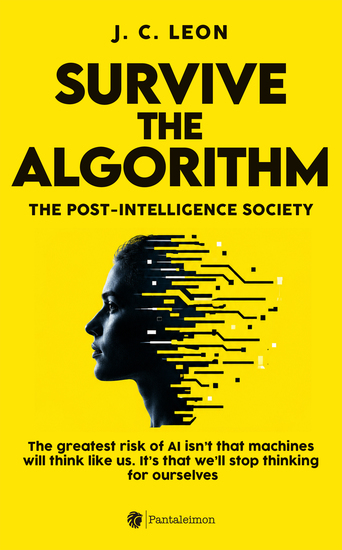
  • Survive the algorithm - The post-intelligence society - cover

    Survive the algorithm - The...

    José Carlos León Delgado

    • 0
    • 0
    • 0
    Artificial intelligence doesn't want you to think. Are you ready to have it decide for you? This book is a practical guide to living in a world where machines with artificial intelligence will think and make decisions for us.
    
    This book is an invitation to explore the depths of what it means to be human in a predicted scenario where machines will be as intelligent as humans in many ways, or even more so, relieving us of the task of thinking, at least out of practical necessity for survival. While that future that many promise arrives, I invite the reader to exercise their right to be human and think for themselves, based on the ideas presented here.
    Ver livro
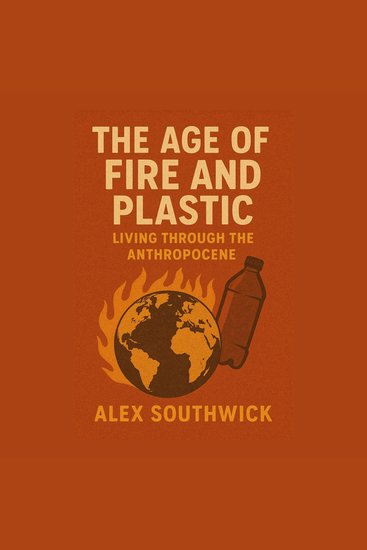
  • Age of Fire and Plastic The: Living Through the Anthropocene - cover

    Age of Fire and Plastic The:...

    Alex Southwick

    • 0
    • 0
    • 0
    We live in a world built by fire and wrapped in plastic — a planet reshaped by our own invention. From the first flicker of flame to the glow of the digital screen, humanity’s genius has transformed the Earth’s systems in ways no species has ever done before. 
    In The Age of Fire and Plastic, Alex Southwick traces the story of the Anthropocene — the era in which humans became a geological force. Through vivid storytelling and sharp insight, Southwick reveals how our tools of progress — oil, metal, concrete, and polymer — have left indelible marks in the air, sea, and soil. 
    But this is not merely a tale of ruin. It’s also a meditation on what it means to live consciously in a world of our own making. How do we find awe, responsibility, and meaning when the natural and artificial are now one and the same? 
    Sweeping in scope yet deeply personal, The Age of Fire and Plastic is an essential journey through humanity’s defining century — and a call to shape the next one with intention rather than accident.
    Ver livro
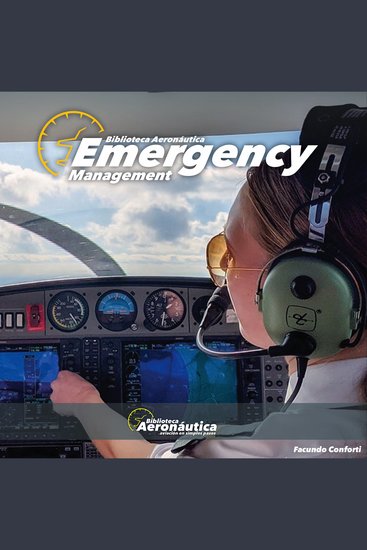
  • Emergency Management - cover

    Emergency Management

    AI Voice Amelia

    • 0
    • 0
    • 0
    This audiobook is narrated by an AI Voice. Emergency situations during a flight can vary in type and characteristics, including in-flight emergencies, ground emergencies, immediate emergencies, non-immediate emergencies or urgencies, among several other categories. The truth is that each aircraft may present a unique type of emergency, making it impossible to learn how to manage all possible emergencies in the aviation field. 
     
    	However, it is possible to learn how to manage cockpit resources to control the emergency and minimize its effects. Cockpit resource management in an emergency not only refers to the various systems of the aircraft, but also to human resources (the pilots) and external resources (air traffic control, company operations, etc.). 
     
    	In this work, you will learn the main theoretical concepts of emergencies in general, and how to manage the main emergencies of a small aircraft (Cessna 172), a mid-sized aircraft (Cessna 218 Grand Caravan), and a large aircraft such as the fabulous Airbus A320.
    Ver livro
  • The Last Wilderness - cover

    The Last Wilderness

    Murray Morgan, Tim McNulty

    • 0
    • 0
    • 0
    Murray Morgan's classic history of the Olympic Peninsula, originally published in 1955, evokes a remote American wilderness "as large as the state of Massachusetts, more rugged than the Rockies, its lowlands blanketed by a cool jungle of fir and pine and cedar, its peaks bearing hundreds of miles of living ice that gave rise to swift rivers alive with giant salmon." 


    Drawing on historical research and personal tales collected from docks, forest trails, and waterways, Morgan recounts vivid adventures of the area's settlers—loggers, hunters, prospectors, homesteaders, utopianists, murderers, profit-seekers, conservationists, Wobblies, and bureaucrats—alongside stories of coastal first peoples and striking descriptions of the peninsula's wildlife and land. 


    Freshly redesigned and with a new introduction by poet and environmentalist Tim McNulty, this humor-filled saga and landmark love story of one of the most formidably beautiful regions of the Pacific Northwest will inform and engage a new generation of listeners.
    Ver livro
  • Creation Care Discipleship - Why Earthkeeping Is an Essential Christian Practice - cover

    Creation Care Discipleship - Why...

    Steven Bouma-Prediger

    • 0
    • 0
    • 0
    Although our planet faces numerous ecological crises, including climate change, many Christians continue to view their faith as primarily a "spiritual" matter that has little relationship to the world in which we live. But Steven Bouma-Prediger contends that protecting and restoring our planet is part and parcel of what it means to be a Christian. 
     
    Making his case from Scripture, theology, and ethics and including insights from the global church, Bouma-Prediger explains why Christians must acknowledge their identity as earthkeepers and therefore embrace their calling to serve and protect their home planet and fellow creatures. To help readers put an "earthkeeping faith" into practice, he also suggests numerous practical steps that concerned believers can take to care for the planet. 
     
    Bouma-Prediger unfolds a biblical vision of earthkeeping and challenges Christians to view care for the earth as an integral part of Christian discipleship.
    Ver livro