¡Acompáñanos a viajar por el mundo de los libros!
Añadir este libro a la estantería
Grey
Escribe un nuevo comentario Default profile 50px
Grey
Suscríbete para leer el libro completo o lee las primeras páginas gratis.
All characters reduced
The Great Gatsby (Unabridged) - Exploring Love Wealth and the Elusive American Dream in the Jazz Age - cover

The Great Gatsby (Unabridged) - Exploring Love Wealth and the Elusive American Dream in the Jazz Age

F Scott itzgerald

Editorial: Good Press

  • 0
  • 0
  • 0

Sinopsis

F. Scott Fitzgerald's "The Great Gatsby" remains a seminal work in American literature, encapsulating the excess and disillusionment of the Jazz Age. Set against the backdrop of the Roaring Twenties, the narrative unfolds through the eyes of Nick Carraway, who becomes entangled in the opulent but hollow world of Jay Gatsby. Fitzgerald employs a lyrical prose style, rich with symbolism and poignant imagery, crafting a critique of the American Dream and its moral decay. The novel's context reflects the tumultuous changes of post-World War I America, illuminating themes of love, betrayal, and the relentless pursuit of wealth. Fitzgerald, born in 1896, navigated the fascinating yet treacherous waters of fame and fortune himself, which heavily informed his writing. His acute observations of societal norms and human ambition stem from his experiences in both affluent circles and struggling artistic communities. The rise and fall of Gatsby mirrors Fitzgerald'Äôs own aspirations and disappointments, rendering the author an astute chronicler of his time, whose insights resonate profoundly. Readers are invited to delve into this unabridged edition of "The Great Gatsby," where each sentence is imbued with the brilliance of Fitzgerald's craftsmanship. This timeless narrative not only entertains but also compels reflection on the nature of success, the illusions of love, and the fragile American Dream. A must-read for anyone seeking to understand the complexities of human desire and ambition.
Disponible desde: 05/12/2023.
Longitud de impresión: 250 páginas.
Otros libros que te pueden interesar

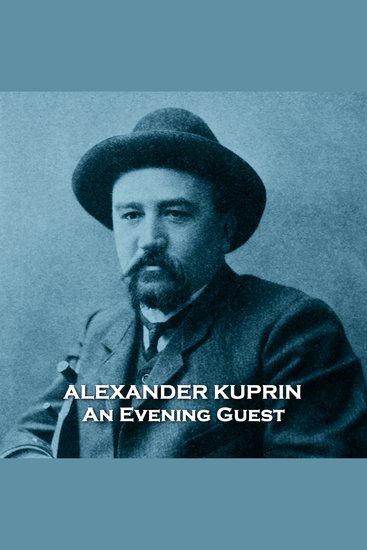
  • Evening Guest An - From their pens to your ears genius in every story - cover

    Evening Guest An - From their...

    Alexander Kuprin

    • 0
    • 0
    • 0
    Alexander Kuprin was born in Narovchat, Penza in Russia on 7th September 1870. 
    At 3 his Father died and he and mother moved to Moscow. By 10 he was enrolled at the Second Moscow Military High School and there his interest in literature began. The Alexander Military Academy followed and two years later he was a sub-lieutenant and posted to an Infantry Regiment for a further four years. 
    Despite his duties he was a now a keen writer and published his first short story at this time. His military duties also garnered him experiences for his breakthrough work ‘The Duel’.  Leaving the military he left for Kiev to work for local newspapers.  He continued to publish both stories and novels and by 1901 he was in St Petersburg becoming part of a group that included Chekhov, Ivan Bunin, Maxim Gorky and Leonid Andreyev.  
    In the years that followed further controversial works and acclaim followed.  His comments on the regime meant he was also put under secret police surveillance.   
    As World War I erupted, Kuprin opened a military hospital but was then given command of an infantry company in Finland. He was soon discharged on grounds of ill health.  
    The October Revolution saw him praise Lenin, but he warned that the Bolsheviks threatened Russian culture and might cause further widespread suffering to the peasants.  As Civil War raged he took his family to Helsinki and then on to Paris. 
    Exile saw his talents decline further and his succumbing to alcoholism. He became lonely and withdrawn. The family's poverty increased his malaise.   
    In May 1937, the Kuprin’s returned to Moscow.  He now saw his work published but wrote almost nothing new.  In 1938 his health rapidly deteriorated.  Already suffering from a kidney problems and sclerosis, he had now developed cancer of the oesophagus.  
    Alexander Kuprin died on 25th August 1938.
    Ver libro
  • Les Misérables: Volume 4: The Idyll in the Rue Plumet and the Epic in the Rue St Denis - Book 9: Whither are They Going? (Unabridged) - cover

    Les Misérables: Volume 4: The...

    Victor Hugo

    • 0
    • 0
    • 0
    Victor-Marie Hugo (26 February 1802 - 22 May 1885) was a French poet, novelist, essayist, playwright, and dramatist of the Romantic movement. During a literary career that spanned more than sixty years, he wrote abundantly in an exceptional variety of genres: lyrics, satires, epics, philosophical poems, epigrams, novels, history, critical essays, political speeches, funeral orations, diaries, and letters public and private, as well as dramas in verse and prose.
    BOOK 9: WHITHER ARE THEY GOING?: That same day, towards four o'clock in the afternoon, Jean Valjean was sitting alone on the back side of one of the most solitary slopes in the Champ-de-Mars. Either from prudence, or from a desire to meditate, or simply in consequence of one of those insensible changes of habit which gradually introduce themselves into the existence of every one, he now rarely went out with Cosette.
    Ver libro
  • Foreordained - From their pens to your ears genius in every story - cover

    Foreordained - From their pens...

    Anthony Hope

    • 0
    • 0
    • 0
    Sir Anthony Hope Hawkins was born on 9th February 1863 in Clapton, London.  
    He was educated at St John's School, Leatherhead, Marlborough College and Balliol College, Oxford.  Hope trained as a lawyer and barrister and was called to the Bar by the Middle Temple in 1887. Despite what was thought to be a promising legal career he had literary ambitions and wrote in his spare time. 
    His early works appeared in various periodicals of the day but for his first book ‘A Man of Mark’ (1890), with no publisher interested, he published with his own resources.  
    More novels and short stories followed, including the mildly successful ‘Mr Witt's Widow’ in 1892. Hope even found time to run as the Liberal candidate for Wycombe in the election that same year but was unsuccessful. 
    His first major literary success came with ‘The Dolly Dialogues’, a collection of previously published magazine pieces followed very quickly by his instant classic, ‘The Prisoner of Zenda’. He now gave up the vestiges of his legal career to pursue writing full-time. 
    Despite never again reaching the same pinnacle of success he was popular and wrote prolifically across novels, plays and of course, short stories though his writing output rapidly diminished after the war. 
    In 1918 he was knighted for his contribution to propaganda efforts during World War I.  
    His short stories are delicate, mannered and often surprising with their wit, humour and interplay of characters who say one thing and usually mean another.  He was very definitely a writer of escapist rather than serious fare but they are no less enjoyable for that. 
    Anthony Hope died of throat cancer on 8th July 1933 at his country home, Heath Farm at Walton-on-the-Hill in Surrey. He was 70.
    Ver libro
  • The Story of the Treasure Seekers - cover

    The Story of the Treasure Seekers

    Edith Nesbit

    • 0
    • 0
    • 0
    "The Story of the Treasure Seekers" by Edith Nesbit follows the spirited Bastable siblings on their quest for wealth to alleviate their family's financial struggles. Through ingenious schemes and misadventures, the children navigate the challenges of London, learning valuable lessons about perseverance, family bonds, and the true meaning of treasure. Nesbit's classic tale combines humor and heart, capturing the essence of childhood dreams and the enduring power of imagination.
    Ver libro
  • In Kent With Charles Dickens - cover

    In Kent With Charles Dickens

    Thomas Frost

    • 0
    • 0
    • 0
    By his own admission, Thomas Frost found it hard to make a living from his writing, and no doubt he used the name of Dickens in the title of this book to boost sales. Frost tells a good tale, and the book is not only of interest to enthusiasts of Dickens and the county of Kent. He includes some of Dickens' own descriptions of locations, as well as regaling us with anecdotes about towns and villages which he visits, including an account of the last armed rising on British soil - the Battle of Bossenden Wood. As well as accounts of his travels through the highways and byways of Kent in the footsteps of Dickens and his characters, he also wanders into the lanes of myth and legend, sometimes making up his own stories along the way.Charles John Huffam Dickens FRSA was an English writer and social critic. He created some of the world's best-known fictional characters and is regarded by many as the greatest novelist of the Victorian era.
    Ver libro
  • The Statement of Randolph Carter - cover

    The Statement of Randolph Carter

    H. P. Lovecraft

    • 0
    • 0
    • 0
    Title: The Statement of Randolph Carter 
    Author: H. P. Lovecraft 
    Narrator: Jonathan Dunne 
    Original Publication: 1919 
    Public Domain: Yes 
    Series Placement: Number 11 in the Timeless Terrors series 
    Description: 
    The Statement of Randolph Carter by H. P. Lovecraft is a haunting tale of the unknown and the incomprehensible. First published in 1920 in The Vagrant, it recounts a disturbing testimony given before authorities, where the narrator struggles to explain the fate of his companion. 
    Told as a sworn statement, the story unfolds through Carter’s account of a midnight exploration of a graveyard and the horrifying events that follow. As his friend descends into a crypt, strange sounds and an overwhelming sense of dread mount, culminating in a final revelation that suggests forces far beyond human understanding. 
    This recording, narrated by Amazon bestselling horror author Jonathan Dunne, captures the eerie tension and creeping inevitability that defines Lovecraft’s early fiction. While the text is in the public domain, this performance is an original work and copyright © 2025 Jonathan Dunne. 
    Listeners should be prepared for an unsettling meditation on forbidden knowledge, cosmic dread, and the terrifying mysteries that lie buried in the dark.
    Ver libro