¡Acompáñanos a viajar por el mundo de los libros!
Añadir este libro a la estantería
Grey
Escribe un nuevo comentario Default profile 50px
Grey
Suscríbete para leer el libro completo o lee las primeras páginas gratis.
All characters reduced
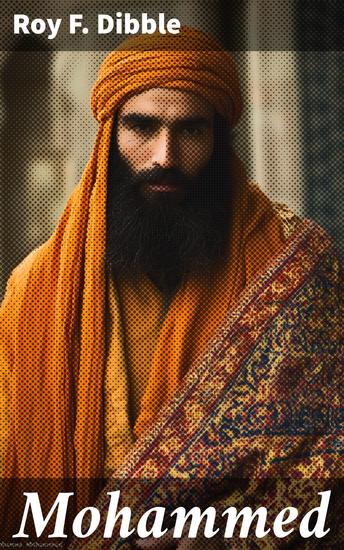
Mohammed - cover

Mohammed

F. Roy Dibble

Editorial: Good Press

  • 0
  • 0
  • 0

Sinopsis

In "Mohammed," Roy F. Dibble presents a meticulously researched and compelling exploration of the life of the Islamic prophet, framed within the intricate socio-political landscape of 7th-century Arabia. Dibble employs a narrative style that seamlessly intertwines scholarly analysis with accessible prose, making this work suitable for both academic audiences and general readers. The book delves into the cultural and religious contexts that shaped Mohammed's teachings, examining the profound impact of his message on the formation of Islamic civilization and its continuing relevance today. Dibble, a noted scholar of religious studies, has dedicated much of his career to the examination of the interplay between faith and history. His extensive background in Middle Eastern cultures and languages, combined with rigorous textual analysis of early Islamic sources, informs every aspect of this book. This dedication reveals his respect for the subject matter, allowing him to present a nuanced portrayal of Mohammed that challenges simplistic interpretations and invites deeper understanding. I highly recommend "Mohammed" to anyone seeking an informed and thought-provoking account of one of history's most influential figures. Dibble's balanced approach not only elevates our comprehension of the prophet's legacy but also encourages a broader appreciation of the complexities within Islamic theology and history.
Disponible desde: 02/03/2025.
Longitud de impresión: 150 páginas.

Otros libros que te pueden interesar

  • Mark Carney Exposed - Canada's Globalist in Chief - cover

    Mark Carney Exposed - Canada's...

    Elias Trent

    • 0
    • 0
    • 0
    Mark Carney has been presented to the public as a savior-steady, smart, and principled. But beneath the polished media persona lies something more dangerous: a man who exemplifies the rise of post-democratic rule through unelected elites. 
    This book tracks Carney's journey from Goldman Sachs to global central banking, from his UN climate roles to his high-powered ESG empire at Brookfield. Along the way, it exposes the mechanics of "stakeholder capitalism," the illusion of green finance, and the use of climate policy as a trojan horse for elite consolidation of power. 
    It explores how financial mandates are being rewritten in real time, how climate activism is monetized by private equity, and how Carney has helped build a system that serves global capital at the expense of sovereign citizens. You'll learn about his connections to Trudeau's inner circle, the King's Privy Council, the World Economic Forum, and a future where democracy is replaced by governance-by-consensus-consensus defined by billionaires. 
    This is a forensic account of how one man's career illustrates the quiet revolution redefining capitalism and democracy in the 21st century. 
    From the so-called transition to net-zero to the manipulation of monetary policy, this exposé unearths the conflicts of interest, ideological agendas, and concentrated authority behind Carney's carefully managed image. 
    If you thought Canada still belonged to its people, this book will make you think again.
    Ver libro
  • A Journey of Little Profit - From their pens to your ears genius in every story - cover

    A Journey of Little Profit -...

    John Buchan

    • 0
    • 0
    • 0
    The Scottish novelist John Buchan enjoyed a remarkable career as politician, historian and Governor General. He was born John Buchan on 26th August 1875 and later added 1st Baron Tweedsmuir PC GCMG GCVO CH to his name.  
    Buchan studied at Hutchesons’ Grammar School, Glasgow and at seventeen won a scholarship to the University of Glasgow to study classics. There he began to write poetry. In 1895 he transferred to Oxford to continue his study of Classics and in 1896 ‘Sir Quixote of the Moors’ was published followed by the non-fiction ‘Scholar-Gipsies’. His prolific literary output now hardly faltered. 
    He graduated in 1900 and became the private secretary to Alfred Milner, the High Commissioner for Southern Africa and other colonies. Buchan found the same inspiration in the African landscape as he had in the Scottish Borders, and would later set many works here. Returning to London he became a partner in a publishing house, and garnered an editorial role at The Spectator. He also completed his law studies. He was called to the bar in 1901 but never practiced.  
    On 15th July 1907 Buchan married Susan Charlotte Grosvenor, the cousin of the Duke of Westminster. In 1910 he wrote ‘Prester John’, the first of a series set in South Africa.  
    In 1911 Buchan entered politics as a Unionist candidate in the Scottish Borders advocating the support of free trade, women’s suffrage, national insurance, and reducing the power of the House of Lords.  
    The Great War saw Buchan writing for the War Propaganda Bureau and as Times correspondent in France. In 1915, he published ‘The Thirty-Nine Steps’, his most famous book and a follow-up Richard Hannay novel, ‘Greenmantle’, in 1916.  
    In 1916 Buchan enlisted in the Intelligence Corps which included writing speeches for Sir Douglas Haig. By 1917 he was Director of Information under Lord Beaverbrook. Buchan called it “the toughest job he ever took on”. He somehow found time to assist in a history of the war magazine. This was later published in 24 volumes: Nelson’s History of the War. 
    After the war his writing focused on historical studies. In 1927 Buchan became the Unionist Party Member of Parliament for the Combined Scottish Universities. In a speech to Parliament he said “I believe every Scotsman should be a Scottish nationalist. If it could be proved that a Scottish parliament were desirable… Scotsmen should support it.”  
    Over the next decade he continued to distinguish himself politically and in literature.  On the 1st June 1935 he became 1st Baron Tweedsmuir of Elsfield in the County of Oxford.  
    He was now also given the position of Governor General in Canada and resolved to travel all over Canada to gain a better insight of the country. Having crossed both length and breadth he saw the cultural shift between areas and their common ground and helped bring about a clear national Canadian identity. 
    On the 6th February 1940 he collapsed from a stroke and sustained a very serious head injury in falling. Two rounds of surgery to stabilise his condition were unsuccessful and Buchan died on the 11th February. After a state funeral in Ottawa his ashes were returned to his estate in Oxfordshire.
    Ver libro
  • Serial Killers - Biographies of Ted Bundy Al Capone and Jack the Ripper - cover

    Serial Killers - Biographies of...

    Kelly Mass

    • 0
    • 0
    • 0
    Today, you will be introduced to three sick serial killers. Their biographies will be summarized and explained. The said individuals are as follows: 
    Ted Bundy - Ted Bundy was one of the most infamous rapists and sexual predators, necrophiles, and murderers in the western part of the United States. Having been abused in his childhood and fed pornographic material from an early age, his crimes became more daring, violent, and vicious as he got a thrill from dismembering or sexually tormenting one victim after another. 
    At the end of his life, after several escapes from prison, he was convicted and got the electric chair. Even then, despite his confessions, his manipulative ways seemed to have so much influence on the women he had dated, that many still proclaimed their love for him and were sad to see him leave this world. 
    Al Capone - Al Capone was an infamous mob boss between the two world wars, in the city of New York and surrounding areas. His name and style have been emulated in movies. The mass shootings, tax evasion, and revenge on Italian murders in the mafia gangs on the United States east coast were so notorious that they have become iconic and stereotyped. 
    How did Al Capone get the scars on his face? How did he manage to control so much of the gangs in the cities? How was he able to bribe the police, evade taxes, and become a terror for anyone who opposed him? And how did his life finally come to an end? 
    Jack the Ripper - Jack the Ripper was an unknown serial killer active in the mainly poor parts around the Whitechapel district of London in the year 1888. In both the criminal case files and modern journalistic books, the killer was referred to as the Whitechapel Killer and Leather Apron. 
    He caused quite some havoc, going after some of the most impoverished neighborhoods and killing victim after victim, without ever being found.
    Ver libro
  • Four Years in the Stonewall Brigade - cover

    Four Years in the Stonewall Brigade

    John O. Casler

    • 0
    • 0
    • 0
    Every memoir of the American Civil War provides us with another view of the catastrophe that changed the country forever. But this is one of the clearest and most informative ever put to paper. 
    As a commander in Stonewall Jackson’s brigade, John Casler experienced all the horrors and comedy of the American Civil War. His time was not so different from his countrymen on the other side, with the exception of point of view. 
    “I was no secessionist, and hoped the trouble would be settled without recourse to arms; but when the war came I shouldered my musket in behalf of my native State and defended her to the last.” 
    Drawn from his diary at the time, Casler recounts his experiences in the ranks, from marches and looting to nail-biting escapades and the monotony of life as a prisoner of war. Four Years in the Stonewall Brigade is a remarkable account of men in war, graphically bringing to light the challenges they faced on a daily basis.
    Ver libro
  • 101 Dumb Financial Mistakes Business Owners Make and How to Avoid Them - cover

    101 Dumb Financial Mistakes...

    Ruth King

    • 0
    • 0
    • 0
    Many business owners downplay the importance of managing their finances—until they’re in trouble. When a business can’t meet payroll and supplier bills are overdue, when a loyal customer leaves and there’s a huge tax bill looming, that’s when owners discover the 101 Dumb Financial Mistakes they’ve been making. 101 Dumb Financial Mistakes and How to Avoid Them helps business owners prevent these mistakes before it is too late and they are in the middle of a financial crisis. Ruth King’s 101 Dumb Financial Mistakes and How to Avoid Them reveals common mistakes that can happen in any business: from pricing and Profit & Loss Statement issues to theft and Balance Sheet mistakes. With over 40 years of experience working with business owners, Ruth King has seen these mistakes repeatedly. She created 101 Dumb Financial Mistakes and How to Avoid Them as a resource for business owners to avoid many common mistakes by providing them the tools they need to avoid sleepless nights and worry.
    Ver libro
  • Hollywood’s Favorite Screwball Actresses: The Lives and Legacies of the Women Who Popularized the Comedy Genre - cover

    Hollywood’s Favorite Screwball...

    Editors Charles River

    • 0
    • 0
    • 0
    “If I couldn't laugh, I'd rather die.” – Claudette Colbert 
    The 1930s were the height of the classical Hollywood era, known for lavish studio productions by heavyweights like MGM, RKO, Warner Brothers, Paramount, and 20th Century Fox, which were operating at the height of their powers. Every major studio possessed a long roster of contract players, and films were released at such a rapid pace that it made for an especially competitive environment within the industry. Even while America remained in the throes of the Great Depression, the film industry continued to flourish, and movies easily supplanted the theater as the main attraction for American entertainment. Indeed, it would be no exaggeration to claim that the film industry reached its zenith during the decade precisely because it offered an affordable (if very temporary) escape from the anxieties of the economic woes of the era. 
    When the American Film Institute ranked its top 50 screen legends of the 20th century, many of the people named had careers spanning several decades, but one of them managed the feat despite living less than three decades. Ranked as the 22nd greatest actress of the 20th century, Jean Harlow was on the screen for less than 10 years, but in that time the “Blonde Bombshell” became the most popular actress of the 1930s, eclipsing superstars like Joan Crawford and Norma Shearer along the way. In fact, the platinum blonde accomplished that feat as a leading lady for just five years before her premature death of renal failure at the age of 26. 
    Carole Lombard has been memorialized in many fitting ways as an actress, and one of her biggest contributions to Hollywood was the blond archetype that the film industry used successfully for decades in screwball comedies, paving the way for the success of women like Marilyn Monroe. Perhaps the most remarkable aspect of that fact is that it was actually based on Carole’s gushing personality. 
    Ver libro