¡Acompáñanos a viajar por el mundo de los libros!
Añadir este libro a la estantería
Grey
Escribe un nuevo comentario Default profile 50px
Grey
Suscríbete para leer el libro completo o lee las primeras páginas gratis.
All characters reduced
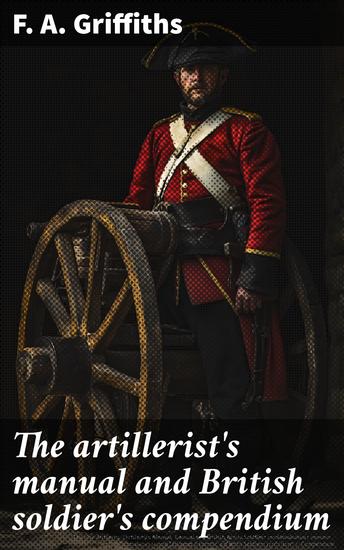
The artillerist's manual and British soldier's compendium - cover

The artillerist's manual and British soldier's compendium

F. A. Griffiths

Editorial: Good Press

  • 0
  • 0
  • 0

Sinopsis

In "The Artillerist's Manual and British Soldier's Compendium," F. A. Griffiths offers a meticulous guide that showcases both the technical expertise and tactical nuances of artillery in the British military context. Written in an accessible yet authoritative style, the compendium blends detailed illustrations, diagrams, and comprehensive descriptions to elucidate complex concepts in military artillery. It serves as a crucial resource for understanding the evolution of British military engagement during the 19th century, reflecting broader themes of industrialization and modernization within armed forces. The book not only instructs on the mechanics and operations of artillery but also provides insights into the soldier's life, emphasizing discipline, strategy, and camaraderie among troops. F. A. Griffiths, a figure deeply entrenched in military studies, draws from his extensive background in both practical artillery service and academic scholarship to deliver this compendium. His experience fosters a unique perspective that marries technical proficiency with historical narrative, offering readers a both hands-on approach and a broader societal perspective on the role of artillery in shaping British military fortunes. Griffiths's expertise is rooted in the 19th-century military milieu, allowing him to capture the zeitgeist of an era poised at the nexus of tradition and innovation. Recommended for historians, military enthusiasts, and professionals alike, Griffiths's work stands as an essential reference that enriches the understanding of British military history. Its blend of practical guidance and historical context makes it a vital tool for both scholars and practitioners seeking knowledge about the complexities of military operations and their sociopolitical implications. This compendium is a significant contribution to the annals of military literature, providing invaluable insights for anyone interested in the legacy of military prowess.
Disponible desde: 02/03/2025.
Longitud de impresión: 150 páginas.


Otros libros que te pueden interesar

  • Fractured - A Memoir - cover

    Fractured - A Memoir

    Susan Mockler

    • 0
    • 0
    • 0
    A collision with a moose on a dark highway left Susan Mockler with an incomplete spinal injury, suddenly compromising her ability to walk and to care for herself. She spent months in a rehabilitation facility learning how to adjust to her new reality, and though her body partially recovered, every aspect of her life changed.
    		 
    Fractured is a compelling illumination of the challenges of acquired disability and the ways in which people with disabilities are sidelined and infantilised. Mockler, a psychotherapist, speaks with frank honesty about her family and friends’ reactions to her injury, and the hard-won lessons that she and those around her learned from her experience.
    Ver libro
  • Out of Italy - Two Centuries of World Domination and Demise - cover

    Out of Italy - Two Centuries of...

    Fernand Braudel

    • 0
    • 0
    • 0
    From the author of Memory and the Mediterranean, a comprehensive history of the Italian city states from 1450 to 1650. 


    In the fifteenth century, even before the city states of the Apennine Peninsula began to coalesce into what would become, several centuries later, a nation, "Italy" exerted enormous influence over all of Europe and throughout the Mediterranean. Its cultural, economic, and political dominance is utterly astonishing and unique in world history. Viewing the Italy (the many Italies?) of that time through the lens of today allows us to gather a fragmented, multi-faceted, and seemingly contradictory history into a single unifying narrative that speaks to our current reality as much as it does to a specific historical period. This is what the acclaimed French historian, Fernand Braudel, achieves here. He brings to life the two extraordinary centuries that span the Renaissance, Mannerism, and the Baroque and analyzes the complex interaction between art, science, politics, and commerce during Italy's extraordinary cultural flowering.
    Ver libro
  • Reagan-Mondale Debate 2 - cover

    Reagan-Mondale Debate 2

    Ronald Reagan, Walter Mondale

    • 0
    • 0
    • 0
    The second of two debates between President Ronald Reagan and former Vice President Walter F. Mondale was held in Kansas City, Missouri on October 21, 1984. Edwin Newman was the debate moderator. Georgie Anne Geyer, Marvin Kalb, Morton Kondracke, and Henry Trewhitt were the four panelists who asked questions. 
    This second debate was on defense and foreign policy. Questions focused on the following topics: Central America, the Soviet Union, regions vital to U.S. interests, Eastern Europe, use of military force, Nicaragua, Lebanon, the president’s age, strategic missiles, the president’s leadership, illegal immigration, Armageddon, the Strategic Defense Initiative, nuclear freeze, support for U.S. allies, nuclear weapons, and closing statements. Reagan won a landslide victory in 1984 winning every state except Minnesota and the District of Columbia. 
    To see both a text version and a video version of this debate, search online for “Ronald Reagan major speeches”. Audio recording courtesy of the Ronald Reagan Presidential Library. 
    aspenleafmedia.com
    Ver libro
  • Narcissistic Abuse Recovery - Understand Accept and Find Peace After Psychological and Emotional Abuse - Includes 20 Phrases to Disarm a Narcissist - cover

    Narcissistic Abuse Recovery -...

    Janis Bryans

    • 0
    • 0
    • 0
    Lying, cheating, minimising, devaluing, humiliating, guilt-tripping, manipulating, triangulating, gaslighting, projection, covert and overt put-downs. 
    Do they sound familiar to you? 
    They apologised, but this time it will be different... or will they just get better at hiding what they are doing? 
    Will they ever change? 
    Narcissism is an overwhelming and confusing subject. But when you remove the mask, you see that it is basically a lie, told to those who are vulnerable and receptive. 
    Narcissistic abuse, by nature, is created to keep you trapped in a spiral based on shame. It doesn't just go away with awareness. Narcissism brings with it a set of paradigms, beliefs and behaviours that need to be rewired from within. 
    Have you ever asked yourself these questions? 
    ◆ What are the different forms of narcissism? 
    ◆ Is my partner a narcissist? 
    ◆ Why do I keep attracting narcissistic personalities? 
    ◆ Why do they make others feel so bad and what are their tactics? 
    ◆ How can I protect myself from a narcissist? 
    ◆ What happens in a narcissistic family? 
    ◆ Why is it so hard to believe in myself and my future? 
    ◆ What are the health problems associated with narcissistic abuse? 
    ◆ How can I heal and finally find peace? 
    If you have ever asked yourself any of these questions, this book was written for you! 
    If you are still struggling with the effects of an abusive narcissistic relationship and tired of extreme pain and twisted mind games, do yourself a favour, take a deep breath, relax that knot in your stomach and take this book. It's the best gift you can give yourself!
    Ver libro
  • Catholics and Contempt - How Catholic Media Fuel Today's Fights and What to Do About It - cover

    Catholics and Contempt - How...

    John L. Allen Jr.

    • 0
    • 0
    • 0
    The culture of contempt—the lust to wound perceived opponents who are seen not just as wrong but as evil—has become global in scope. Fed by the rise of “cheap speech” in media, seismic shifts in digital technology, and a boom industry based on selling outrage, people are increasingly unable to understand, much less dialogue with, their ideological rivals. The Catholic Church understands itself as the evangelizer of culture; yet this culture of contempt has evangelized much of the Church. A distressing range of Catholic media platforms and commentators have introduced the poison of contempt into the heart of Catholic life—and with exacting fidelity. In this timely and important new book, Vatican journalist and Crux Editor John L. Allen Jr. offers a bracing analysis of our fractured Catholic media landscape. Examining six case studies of the culture of contempt wounding the Church—four from around the globe, and two from the United States—Allen offers not only a sobering look at the direction Catholic media has headed, but an urgent call for it to change course.
    Ver libro
  • Teleology - Purpose in Nature: Understanding Design and Intent - cover

    Teleology - Purpose in Nature:...

    Mike Crawford

    • 0
    • 0
    • 0
    Teleology is the study of purpose, design, and goal-directedness in nature. It is a concept that has shaped philosophical, scientific, and theological discourse for centuries, offering explanations for why things exist and function the way they do. The term itself comes from the Greek word telos, meaning "end" or "goal," and logos, meaning "study" or "reason." At its core, teleology seeks to explain natural phenomena by considering their intended purpose or final cause rather than merely their material composition or mechanical processes. This perspective has been a fundamental part of human thought, influencing fields as diverse as biology, ethics, cosmology, and psychology. 
    The significance of teleology lies in its ability to provide a framework for understanding the apparent order and directionality in the world. From the intricate adaptations of biological organisms to the finely tuned laws of the universe, teleological reasoning has historically been used to argue for the presence of intentionality or inherent purpose in natural systems. Philosophers such as Aristotle, who introduced the concept of final causes, and later thinkers like Thomas Aquinas, who integrated teleology into theological arguments, viewed the natural world as inherently purposeful. Even in modern times, teleological thinking persists in various scientific discussions, particularly in debates surrounding evolution, complexity, and emergent phenomena.
    Ver libro