¡Acompáñanos a viajar por el mundo de los libros!
Añadir este libro a la estantería
Grey
Escribe un nuevo comentario Default profile 50px
Grey
Suscríbete para leer el libro completo o lee las primeras páginas gratis.
All characters reduced
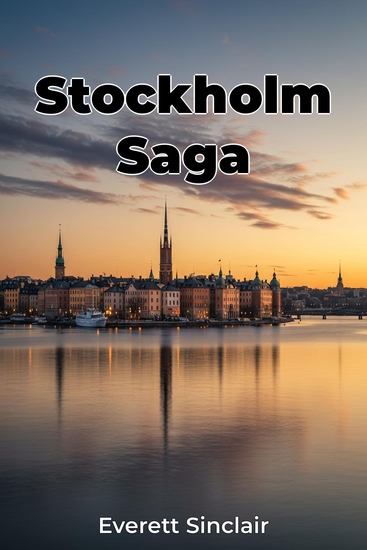
Stockholm Saga - cover

Stockholm Saga

Everett Sinclair

Traductor A AI

Editorial: Publifye

  • 0
  • 0
  • 0

Sinopsis

Stockholm Saga explores the captivating history of Stockholm, Sweden, revealing how its unique blend of Viking heritage, innovative design, and distinctive island landscape has shaped its Scandinavian identity. The book traces the city's evolution from a strategic Viking trading post to a modern metropolis, highlighting key events and cultural shifts.

 
One intriguing aspect is how Stockholm's geographical setting, spread across fourteen islands, has profoundly influenced its urban planning and architectural styles. It also examines Stockholm's significant impact on global design trends, emphasizing the principles of functionality, simplicity, and sustainability that define Swedish design.

 
The book adopts a narrative non-fiction approach, blending historical accuracy with engaging storytelling. Starting with the Viking era, it progresses through the medieval period and the rise of the Swedish Empire, ultimately examining Stockholm's contemporary status as a global city. It demonstrates how history, design, and environment are intertwined, creating a cohesive narrative of Stockholm's cultural and urban development.
Disponible desde: 20/02/2025.
Longitud de impresión: 61 páginas.

Otros libros que te pueden interesar

  • Channels of Delight - Simple Scribblings - cover

    Channels of Delight - Simple...

    Daniel L. French

    • 0
    • 0
    • 0
    Imagine the concept of tuning a radio to different stations. As the reader flips through the dial (turns the page), one frequency is a light whimsical poem, and the turning of the nob brings a sad and thought-provoking analogy of growing old, and next, the warm special enjoyment of holding someone's hand. The reader will enjoy turning the dial and observing the life of two doves, and later, observing two ducks. (Yep, you're "gonna hafta" buy the book to read these fine works of literature.) As you read; enjoy "turning a knob" and finding something heartwarming, or tear-jerking, or humorous or enlightening, or brilliant (well maybe not too bright) observations of life. I Promise, you will look forward to "changing the frequency", as you adjust the dial in "Channels of Delight".
    Ver libro
  • Don't Believe Everything You Think - How to stop making decisions that let you down lead you astray and keep you from success - cover

    Don't Believe Everything You...

    Colin J Browne

    • 0
    • 0
    • 0
    When it comes to making great decisions, the way you think about things is usually a lot more influential than what you actually think.
    If you ever hired a person who 'looks the part', dated someone who 'gives you a good feeling', voted for the party that 'speaks the most sense' or got into an investment that 'cannot be missed', only to realise you made a horrible mistake, you might have wondered how you ever talked yourself into it.
    Yet, still bearing the bruises, you're likely to make exactly the same decision the next time.
    The beliefs that guide your ideas and the instincts that drive your actions, are all informed by your unconscious biases, and literally every single one of us has them, which irrationally tell us one thing is good and another is bad, one thing is absolutely true and another is utterly false, and make you act less smartly than you should.
    But the good news is that you can learn to see them, to manage them and ultimately overcome them.
    In Don't Believe Everything You Think, Colin J Browne shows you how biases work, why they matter, and how to reframe your thinking to make well-founded decisions about life and work, relationships and investing, and much else in between, to vastly improve your chances of success.
    Ver libro
  • Heart of the Anarchist - cover

    Heart of the Anarchist

    Jaron Dagan

    • 0
    • 0
    • 0
    A series of essays, laid out to detail the ethos of postmodern anarchism. 
    Jaron Dagan assembles a unique and unusual array of historical stories, philosophical ideas, and geopolitical catalogues, with the aim of explaining the utility of anarchism in the modern world.
    Ver libro
  • Queering the Runes - Reclaiming Ancestral Wisdom in Rune Magic and Mythology - cover

    Queering the Runes - Reclaiming...

    Siri Vincent Plouff, Lara Vesta

    • 0
    • 0
    • 0
    Queering the Runes is a love letter to the runes, the gods, and the people who follow the Nordic path. The author presents an alternative approach to the runes, one that creates a gentle container for those who want to follow this heathen path. Based on the author's personal gnosis, as well as deep academic research on runes and Nordic culture, this book is an invitation into the root culture of the runes, both in terms of myth and in terms of lived, real folkloric experience. 


    Siri Vincent Plouff presents the traditional meanings of the runes, then helps the listener to queer the runes in their own way. Included is the lore associated with each rune, exercises to apply them to modern life, activities to engage with the rune (layouts, castings, and galdr), and how to use the runes for divination. Throughout, the author provides journal prompts meant to help the listener channel the energy of specific runes, to get to know their energy, as well as to use the runes to help them move forward in a journey of self-discovery. 


    Queering the Runes seeks to blow open perceptions of the runes. Exploring them as active, living symbols available to all, as well as the inherent connection with ancestral magic that comes with rune work.
    Ver libro
  • The Viking Age - Raiders and Traders - cover

    The Viking Age - Raiders and...

    Harris Ropes

    • 0
    • 0
    • 0
    The story of the Vikings begins in the rugged, coastal lands of Scandinavia, where modern-day Norway, Sweden, and Denmark now stand. These northern regions, characterized by their cold climate, deep fjords, and dense forests, shaped a resilient and resourceful people. Isolated by geography and challenged by limited arable land, the early Norse communities developed a strong connection to nature, the sea, and their close-knit societies. Life in Scandinavia during the early Middle Ages was not easy, but it fostered a culture of survival, adaptability, and innovation. 
    At the heart of Viking society was a deep belief in their mythology and gods. Norse mythology offered a complex system of deities, heroes, and mythical creatures that guided the moral and spiritual lives of the people. Central figures like Odin, the wise All-Father; Thor, the thunder god and protector; and Freyja, the goddess of love and fertility, were not just worshipped but also deeply integrated into the everyday lives of the Norse. These myths were passed down through oral storytelling, poetic sagas, and ritual practices, helping to create a shared identity among the diverse Scandinavian tribes. 
    Viking society was organized into a hierarchical structure that valued strength, honor, and loyalty. At the top were the jarls, or chieftains, who held power over clans and led warriors into battle or on raids. Below them were the karls, the free farmers, craftsmen, and traders who formed the backbone of Viking communities. At the bottom were the thralls, or slaves, who were usually captured during raids or born into servitude. Despite this stratification, Viking culture emphasized personal achievement and reputation, allowing individuals to rise in status through bravery, skill, and loyalty.
    Ver libro
  • Waterloo - cover

    Waterloo

    Thomas E. Watson

    • 0
    • 0
    • 0
    Waterloo by Thomas E. Watson delivers a gripping and sharply analytical account of one of history’s most consequential battles. Far from a mere retelling of Napoleon’s final defeat, Watson dissects the clashing egos, failed communications, and fog of war that shaped the campaign’s chaotic conclusion. With a keen eye for contradiction and character, the book reveals the human flaws behind the mythic figures—Napoleon, Wellington, and Blücher—and challenges the often-simplified legacy of Waterloo. 
    Originally written in the early 20th century, this work explores the complex realities behind battlefield decisions, the unraveling of Napoleon’s leadership, and the power of perception in shaping historical truth. A must-listen for history buffs, military enthusiasts, and anyone fascinated by the interplay between fact, failure, and fate.
    Ver libro