¡Acompáñanos a viajar por el mundo de los libros!
Añadir este libro a la estantería
Grey
Escribe un nuevo comentario Default profile 50px
Grey
Suscríbete para leer el libro completo o lee las primeras páginas gratis.
All characters reduced
Mobile Home Living - cover

Mobile Home Living

Everett Sinclair

Traductor A AI

Editorial: Publifye

  • 0
  • 0
  • 0

Sinopsis

Mobile Home Living explores the growing trend of portable housing, examining its unique architecture and societal impact. It addresses the increasing interest in alternative living arrangements, such as minimalist living and eco-friendly designs. The book highlights how mobile homes challenge traditional notions of home, offering flexibility and affordability.

 
Discover how mobile living connects to social science through sociological surveys and interviews. The book delves into the historical roots of mobile homes, from early trailers to modern, technologically advanced designs. It analyzes social and economic factors driving the adoption of nomadic lifestyles, including financial constraints and the pursuit of location-independent living.

 
The text progresses from introducing the concept and its history, to showcasing architectural innovations and sustainable materials, and finally examining the social impact of mobile living and its challenges. This book adopts a balanced approach, presenting both the advantages and disadvantages of mobile living while avoiding excessive jargon.

 
By incorporating case studies and real-world examples, the book provides valuable insights for architects, urban planners, sociologists, and individuals considering mobile housing options. It acknowledges the complexities of mobile living, offering a comprehensive overview of its impact on individuals and society.
Disponible desde: 22/02/2025.
Longitud de impresión: 80 páginas.

Otros libros que te pueden interesar

  • Great Gatsby The: The Original 1925 Edition - cover

    Great Gatsby The: The Original...

    F. Scott Fitzgerald

    • 0
    • 0
    • 0
    The Great Gatsby is a 1925 novel by American writer F. Scott Fitzgerald. Set in the Jazz Age on Long Island, near New York City, the novel depicts first-person narrator Nick Carraway's interactions with mysterious millionaire Jay Gatsby and Gatsby's obsession to reunite with his former lover, Daisy Buchanan. 
    The novel was inspired by a youthful romance Fitzgerald had with socialite Ginevra King, and the riotous parties he attended on Long Island's North Shore in 1922. Following a move to the French Riviera, Fitzgerald completed a rough draft of the novel in 1924. He submitted it to editor Maxwell Perkins, who persuaded Fitzgerald to revise the work over the following winter. After making revisions, Fitzgerald was satisfied with the text, but remained ambivalent about the book's title and considered several alternatives. Painter Francis Cugat's cover art greatly impressed Fitzgerald, and he incorporated aspects of it into the novel. 
    After its publication by Scribner's in April 1925, The Great Gatsby received generally favorable reviews, though some literary critics believed it did not equal Fitzgerald's previous efforts. Compared to his earlier novels, Gatsby was a commercial disappointment, selling fewer than 20,000 copies by October, and Fitzgerald's hopes of a monetary windfall from the novel were unrealized. When the author died in 1940, he believed himself to be a failure and his work forgotten.
    Ver libro
  • Belonging - A History of Indian South Africans - cover

    Belonging - A History of Indian...

    Ashwin Desai, Goolam Vahed

    • 0
    • 0
    • 0
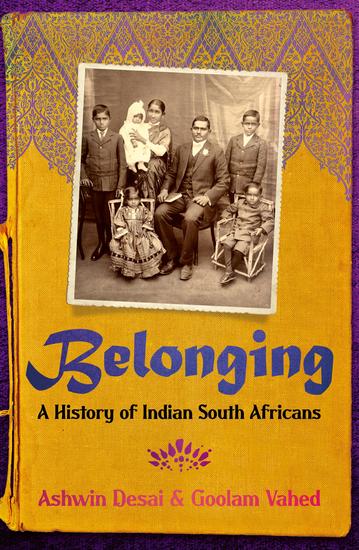
    What does it mean to belong?Across oceans and centuries, this sweeping narrative shuttles between the corridors of the Colonial Office in London, the contested streets of Durban, and the changing power dynamics within the British Raj. The first boatload of indentured Indians arrived in Natal in 1860. Thousands were to follow. In haunting detail, the book captures the plight of these labourers as well as the vicious onslaught faced by the merchant class for daring to outpace their colonial rivals. At its core are the untold struggles of Indian South Africans as they confront the ever-present threat of repatriation.Sensitive to shifting political terrains, the book weaves together seismic events – the independence of India, the coming of apartheid and the threat once more of mass expulsions – with the texture of everyday life. The granting of citizenship in 1961 is accompanied by mass relocations as the Group Areas Act rips communities from their roots. Yet, out of this despair, barren townships on the edges of cities are turned into places of hope.In the final chapters, the fall of apartheid offers a moment of transcendence. Yet it also asks: what does it mean, at last, to belong? It is a fascinating story of the global and the local, of resistance and collaboration, and undefeated optimism. This is a book for anyone who has ever sought a place to
    Ver libro
  • Emotional Intelligence: Unlocking the Power of Self-Awareness - A Practical Guide to Understanding and Enhancing Your EQ - cover

    Emotional Intelligence:...

    Laura Bennett

    • 0
    • 0
    • 0
    "Emotional Intelligence: Unlocking the Power of Self-Awareness: A Practical Guide to Understanding and Enhancing Your EQ" takes readers on an eye-opening adventure into the world of emotional intelligence (EQ) to maximize their potential in all aspects of life. This book provides a thorough guide for readers to understand and manage their emotions and actions with its clear and in-depth writing. It delves into the basics of emotional intelligence, highlighting the need for self-awareness in developing EQ. 
    The book helps readers get a better knowledge of themselves and others around them via thought-provoking exercises, examples from real life, and practical advice. Stronger relationships, greater decision-making, and enhanced personal well-being may be achieved via the development of essential skills, including effective communication, emotional control, and empathy. 
    In addition to providing a theoretical framework, "Emotional Intelligence" serves as a practical manual, providing readers with ideas for how to develop and use their EQ in real-world situations. In this book, you will get the necessary tools to improve your leadership skills, handle difficult relationships, and create a more peaceful workplace. It seeks to enable people to realize their full potential and live more satisfying lives by promoting introspection and proactive emotional regulation.
    Ver libro
  • Against Decolonization - Taking African Agency Seriously - cover

    Against Decolonization - Taking...

    Olúfẹ́mi Táíwò

    • 0
    • 0
    • 0
    Decolonization has lost its way. Originally a struggle to escape the West's direct political and economic control, it has become a catch-all idea, often for performing "morality" or "authenticity;" it suffocates African thought and denies African agency. 


    Olúfemi Táíwò fiercely rejects the indiscriminate application of 'decolonization' to everything from literature, language and philosophy to sociology, psychology and medicine. He argues that the decolonization industry, obsessed with cataloguing wrongs, is seriously harming scholarship on and in Africa. He finds 'decolonization' of culture intellectually unsound and wholly unrealistic, conflating modernity with coloniality, and groundlessly advocating an open-ended undoing of global society's foundations. Worst of all, today's movement attacks its own cause: "decolorizers" themselves are disregarding, infantilizing and imposing values on contemporary African thinkers. 


    This powerful, much-needed intervention questions whether today's 'decolonization' truly serves African empowerment. Táíwò's is a bold challenge to respect African intellectuals as innovative adaptors, appropriators and synthesizers of ideas they have always seen as universally relevant.
    Ver libro
  • Dick Bong: The Life and Legacy of America’s Greatest Combat Ace during World War II - cover

    Dick Bong: The Life and Legacy...

    Editors Charles River

    • 0
    • 0
    • 0
    During World War II, greatly increased engine power allowed these aircraft to slice through the sky at speeds of 200 miles per hour (mph), 300 mph, or even in excess of 400 mph when flying flat-out. Service ceilings jumped to 30,000 feet, altitudes unthinkable to World War I’s aviators.  
    pilots had to adapt to countless technological improvements, and a select few truly mastered the art of dogfighting during history’s deadliest war. In the United States, the top ace came from almost literally out of nowhere. Richard “Dick” Ira Bong was born on September 24, 1920 in Superior, Wisconsin on the westernmost tip of Lake Superior, the son of Swedish immigrants. America was a very popular destination for Swedes seeking a new life during the early 20th century, and many Swedes headed for Wisconsin, with the greatest number arriving between 1880 and 1900. Dick’s father Carl, arrived in America at the age of eight, and he eventually married Dora Bryce, of Scottish-English descent. When Dick was born, they were living on a farm in the very small town of Poplar, in Douglas County, Wisconsin. Even in the 21st century, it is still diminutive, with a population of around 600.  
    	Dick’s first memorable encounter with an aircraft was as a child playing in and around the farm, and in the summer of 1928, when Dick was seven, President Calvin Coolidge had a summer holiday residence at Cedar Island Lodge on the Brule River by Brule, another very small town a few miles east of Poplar, down the Route 2 highway that is now known as the “Major Richard I. Bong Memorial Highway.” Most days a small silver Navy biplane filled the role of a mail plane responsible for delivering and receiving presidential correspondence, and it would fly over the Bong farmstead. This touched off a lifelong fascination that would lead to Bong shooting down 40 enemy planes in the Pacific Theater during the war, making him the country’s top ace before he had even reached the age of 25.
    Ver libro
  • The Occupied City - How Israel Shapes Palestinian Life - cover

    The Occupied City - How Israel...

    Davis Truman

    • 0
    • 0
    • 0
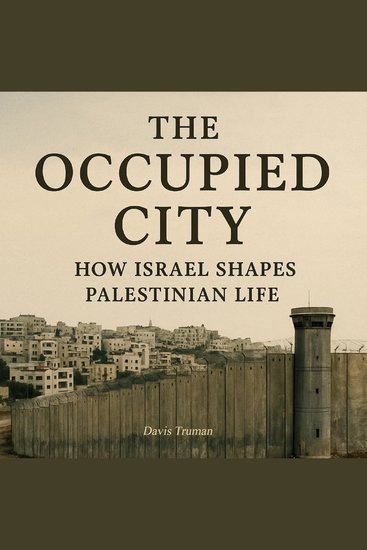
    East Jerusalem is more than a city; it is a battleground of maps, walls, and blueprints. In The Occupied City: How Israel Shapes Palestinian Life, readers are taken inside one of the world’s most contested urban landscapes, where every building permit, zoning law, and planning decision becomes a tool of power. 
    Drawing on years of research and first-hand interviews with Palestinian residents, urban planners, and human rights experts, this book exposes how Israeli urban planning policies restrict Palestinian access to housing, fracture communities, and rewrite the very geography of Jerusalem. It reveals how control is exercised not only through military presence but through bureaucratic procedures, economic pressures, and cultural erasure—quiet mechanisms that determine who gets to build, who is forced to leave, and whose story is allowed to endure. 
    At once rigorous and deeply human, The Occupied City gives voice to those living under the daily weight of planning systems designed to dispossess them. It uncovers the hidden architecture of occupation while also spotlighting acts of resilience, resistance, and visions for a more just future. 
    Essential reading for anyone seeking to understand the Israeli–Palestinian conflict beyond headlines, this book demonstrates how urban planning—often regarded as technical or neutral—is, in fact, one of the most powerful weapons in the struggle over land, rights, and survival.
    Ver libro