Begleiten Sie uns auf eine literarische Weltreise!
Buch zum Bücherregal hinzufügen
Grey
Einen neuen Kommentar schreiben Default profile 50px
Grey
Jetzt das ganze Buch im Abo oder die ersten Seiten gratis lesen!
All characters reduced
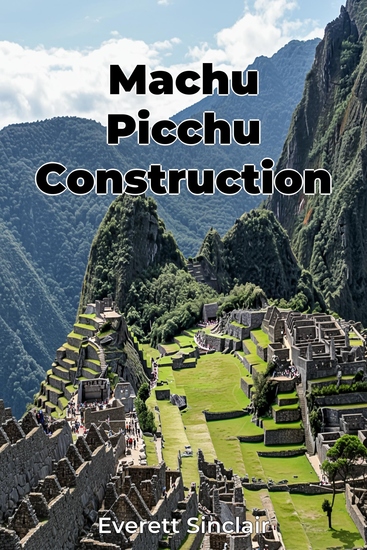
Machu Picchu Construction - cover

Machu Picchu Construction

Everett Sinclair

Übersetzer A AI

Verlag: Publifye

  • 0
  • 0
  • 0

Beschreibung

Machu Picchu Construction explores how the Inca civilization, renowned for Inca stonework, built the iconic citadel of Machu Picchu in the Andes Mountains without the use of iron tools or the wheel. The book examines the sophisticated engineering, architectural design, and the Inca's societal organization that made this feat possible. Readers gain insights into the intricate stone-cutting techniques, the profound understanding of the environment, and the logistical solutions employed to sustain this complex settlement. One intriguing aspect is how the Inca aligned certain structures with astronomical events, revealing their deep connection to the cosmos. The book systematically unveils the construction process, beginning with the historical and geographical context, and then moves into stone quarrying and fitting techniques. It also explores the potential uses of Machu Picchu, considering its agricultural terraces and residential areas, drawing on archaeological evidence. This methodical approach, combined with archaeological surveys, geological studies, and ethnohistorical documents, offers a fresh perspective on the Inca's capabilities in ancient construction techniques and their mastery of sustainable design. The book culminates by discussing the long-term maintenance strategies used by the Inca, providing a comprehensive understanding of this architectural marvel.
Verfügbar seit: 04.03.2025.
Drucklänge: 58 Seiten.

Weitere Bücher, die Sie mögen werden

  • Capitalism - The Story behind the Word - cover

    Capitalism - The Story behind...

    Michael Sonenscher

    • 0
    • 0
    • 0
    What exactly is capitalism? How has the meaning of capitalism changed over time? And what's at stake in our understanding or misunderstanding of it? In Capitalism, Michael Sonenscher examines the history behind the concept and pieces together the range of subjects bound up with the word. Sonenscher shows that many of our received ideas fail to pick up the work that the idea of capitalism is doing for us, without us even realizing it. 


    "Capitalism" was first coined in France in the early nineteenth century. It began as a fusion of two distinct sets of ideas. The first involved thinking about public debt and war finance. The second involved thinking about the division of labor. Sonenscher shows that thinking about the first has changed radically over time. Funding welfare has been added to funding warfare, bringing many new questions in its wake. Thinking about the second set of ideas has offered far less room for maneuver. The division of labor is still the division of labor and the debates and discussions that it once generated have now been largely forgotten. By exploring what lay behind the earlier distinction before it collapsed and was eroded by the passage of time, Sonenscher shows why the present range of received ideas limits our political options and the types of reform we might wish for.
    Zum Buch
  • Black Tax - Burden or Ubuntu? - cover

    Black Tax - Burden or Ubuntu?

    Niq Mhlongo (Ed.)

    • 0
    • 0
    • 0
    The real significance of this book lies in the fact that it tells us more about the everyday life of black South Africans. It delves into the essence of black family life and the secret anguish of family members who often battle to cope. – Niq Mhlongo 
    A secret torment for some, a proud responsibility for others, ‘black tax’ is a daily reality for thousands of black South Africans. In this thought-provoking and moving anthology, a provocative range of voices share their deeply personal stories. 
    With the majority of black South Africans still living in poverty today, many black middle-class households are connected to working-class or jobless homes. Some believe supporting family members is an undeniable part of African culture and question whether it should even be labelled as a kind of tax. 
    Others point to the financial pressure it places on black students and professionals, who, as a consequence, struggle to build their own wealth. Many feel they are taking over what is essentially a government responsibility. 
    The contributions also investigate the historical roots of black tax, the concept of the black family and the black middle class. In giving voice to so many different perspectives, Black Tax hopes to start a dialogue on this widespread social phenomenon.
    Zum Buch
  • What Would You Do If You Ran the World? - Everyday Ideas From Women Who Want to Make the World a Better Place - cover

    What Would You Do If You Ran the...

    Shelly Rachanow

    • 0
    • 0
    • 0
    What would you do if you ran the world? If you knew you couldn't fail? Maybe it's time to stop wondering and start putting it into practice. Shelly Rachanow's daily words of encouragement will give you inspiration, hope, and words of courage to help you discover confidence in yourself. 


    Your acts, both big and small, matter. Learn about a teenage girl and CNN hero, kids in Zimbabwe saving their part of the planet, and a busy mom who is not too busy to work every day to help impoverished families live better lives. 


    Find the confidence and courage to change the world. Shelly Rachanow's book contains a diverse collection of brave, beautiful, brilliant, creative, and totally possible ideas that women have shared, complemented by inspirational quotes from famous women and action lists like "Ten Things You Can Start Doing Now." Rachanow's warm and encouraging voice motivates listeners to join other amazing women who are kicking serious butt for the good of all. Learn to listen to your own guiding voice, get involved in your own community, and live a satisfying life of "inspiration in action." If you enjoyed books that brought out your inner rockstar such as Untamed, Let That Sh*t Go, or You Are a Badass, then you'll love What Would You Do If You Ran the World?
    Zum Buch
  • A Man of Few Words - The Bricklayer of Auschwitz Who Saved Primo Levi - cover

    A Man of Few Words - The...

    Carlo Greppi

    • 0
    • 0
    • 0
    'Nobody knows how much I owe that man', Primo Levi said of his Italian compatriot Lorenzo Perrone, who saved his life at Auschwitz. 'I could never repay him'. Each day for a period of six months, Perrone, who worked beside Auschwitz in desperate conditions, risked his own life to smuggle part of his own soup ration to Levi, quietly leaving the mess tin by a half-constructed brick wall. Without those extra five hundred calories, Levi could not have survived, and would probably not have written If This Is a Man, the first published account by a Holocaust survivor.
    
    In A Man of Few Words, Carlo Greppi pieces together the life of Lorenzo Perrone, a bricklayer from the Piedmontese town of Fossano, not far from Levi's native Turin. Near-destitute and with minimal formal education, Perrone left very few traces of himself. Yet despite their stark differences – Levi was a middle-class chemist – their friendship survived the Holocaust and continued until Perrone's tragic death. Levi never forgot Perrone. In every book he wrote, he mentions that he owes his life to a man named Lorenzo, and he returned persistently, in the last years of his life, to the man of few words who saved his life.
    
    Compassionate, worldly and prescient, Greppi brings us a story that has much to say about the world we live in today, about an individual who kept hope alive in one of the darkest times and places known to humankind.
    Zum Buch
  • The Discovery of Eldorado - cover

    The Discovery of Eldorado

    Stefan Zweig

    • 0
    • 0
    • 0
    1834: Johann August Sutter, a cloth merchant residing in Burgdorf in the canton of Bern in Switzerland, fraudulently went bankrupt and was subsequently wanted by the warrant. To escape the authorities, Suter emigrated to the United States and became the richest man in the world as an entrepreneur. A lot of gold is found on his land in California and from then on, the gold hunters dispute his property rights. Ultimately, Suter looses all his fortunes.
    Zum Buch
  • A Hacker's Mind - How the Powerful Bend Society's Rules and How to Bend them Back - cover

    A Hacker's Mind - How the...

    Bruce Schneier

    • 0
    • 0
    • 0
    It’s not just computers—hacking is everywhere. 
     
    A hack is any means of subverting a system’s rules in unintended ways. The tax code isn’t computer code, but a series of complex formulas. It has vulnerabilities; we call them “loopholes.” We call exploits “tax avoidance strategies.” And there is an entire industry of “black hat” hackers  
    intent on finding exploitable loopholes in the tax code. We call them accountants and tax attorneys. 
     
    In A Hacker’s Mind, Bruce Schneier takes hacking out of the world of computing and uses it to analyze the systems that underpin our society: from tax laws to financial markets to politics. He reveals an array of powerful actors whose hacks bend our economic, political, and legal  
    systems to their advantage, at the expense of everyone else. 
     
    Once you learn how to notice hacks, you’ll start seeing them everywhere—and you’ll never look at the world the same way again. Almost all systems have loopholes, and this is by design. Because if you can take advantage of them, the rules no longer apply to you. 
     
    Unchecked, these hacks threaten to upend our financial markets, weaken our democracy, and even affect the way we think. And when artificial intelligence starts thinking like a hacker—at inhuman speed and scale—the results could be catastrophic. 
     
    But for those who would don the “white hat,” we can understand the hackingmindset and rebuild our economic, political, and legal systems to counter those who would exploit our society. And we can harness artificial intelligence to improve existing systems, predict and defend  
    against hacks, and realize a more equitable world.
    Zum Buch