¡Acompáñanos a viajar por el mundo de los libros!
Añadir este libro a la estantería
Grey
Escribe un nuevo comentario Default profile 50px
Grey
Suscríbete para leer el libro completo o lee las primeras páginas gratis.
All characters reduced
Fashion: Paris London - cover

Fashion: Paris London

Everett Sinclair

Traductor A AI

Editorial: Publifye

  • 0
  • 0
  • 0

Sinopsis

Fashion: Paris London explores the dynamic relationship between clothing and society in revolutionary Paris and Georgian London. It examines how fashion acted as a visual language, reflecting political ideologies, social hierarchies, and economic realities of the late 18th century.

 
This book argues that fashion in these cities served as a battleground for competing ideologies; for example, the French Revolution saw restrictions on aristocratic luxury and a reimagining of dress as a symbol of republican virtue. The book contrasts the suppression of luxury in Paris with London's complex interplay of class ambition and commercial interests. It analyzes the direct impact of political events on clothing, the rise of new social signifiers, and the evolving relationship between fashion and commerce.

 
Supported by primary sources like fashion plates and personal letters, the book employs a multidisciplinary approach, combining art historical analysis, social history, and material culture studies. The study begins with an overview of each city's socio-political landscape and progresses through thematic areas, culminating in an examination of the lasting legacy of these sartorial shifts.
Disponible desde: 25/02/2025.
Longitud de impresión: 58 páginas.
Otros libros que te pueden interesar

  • Avars The: The History and Legacy of the Eurasian Nomads in Central Europe during the Middle Ages - cover

    Avars The: The History and...

    Editors Charles River

    • 0
    • 0
    • 0
    During the period after the collapse of the Roman Empire and the establishment of medieval Europe, which was once commonly referred to as the Dark Ages, many different tribes migrated across Europe, feeding on what was left of Rome and attempting to establish new kingdoms in the vacuum. Most of these tribes were Germanic in ethnicity and language and shared the same goals of either entering Roman territory to become Roman citizens or tearing down Rome completely. These tribes caused havoc on the edge of Roman territory in Europe, and Rome’s cultural and political power gradually transferred to Constantinople, which became the seat of the Byzantine Empire.  
    	The Germanic tribes eventually coalesced into kingdoms and laid the foundation for the Middle Ages in Western Europe, while the Byzantine Empire carried on many Roman traditions and extended its influence into Eastern Europe. The road to the Middle Ages, though, was uneven and often quite violent. Many peoples and kingdoms collapsed at the hands of groups in their earliest stages of development, one of which was the Avars. 
    	The Avars entered Eastern Europe from the Central Asian steppes in the 6th century, and like the Huns before them and the Cumans and Magyars after them, the Avars were raiders and warriors who lived on their horses. The Avars’ impact on Europe was immediately felt, and from the Byzantine Empire to the Merovingian Kingdom in Gaul, some of Europe’s strongest powers had to learn how to deal with these new people through a combination of diplomacy and warfare. Eventually, the Avars established themselves in what is today Hungary and played an important role in the development of European history during its transitional period by earning a reputation as a fearsome and sometimes avaricious group. The medieval sources described the Avars as efficient and brutal horseback warriors who could devastate entire kingdoms in a matter of days and leave just as quickly.
    Ver libro
  • State of the Union 1984 - cover

    State of the Union 1984

    Ronald Reagan

    • 0
    • 0
    • 0
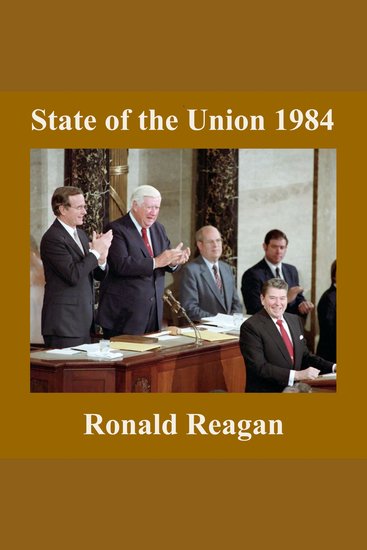
    The 1984 State of the Union address, delivered January 25, 1984, praises “bipartisan cooperation” and says: “For a time we forgot the American dream isn't one of making government bigger; it's keeping faith with the mighty spirit of free people under God.” “Inflation has been beaten down from 12.4 to 3.2 percent…” “Real after-tax income increased 5 percent last year.” “We're seeing rededication to bedrock values of faith, family, work, neighborhood, peace, and freedom…” 
    Let us agree on goals to keep America free and secure. Our first goal is vigorous economic growth. “We can begin by limiting the size and scope of government.” The Grace Commission has 2500 recommendations to reduce wasteful spending. Also, the line-item veto which 43 of the 50 States, including California, grant their Governors is a powerful tool against wasteful spending. 
    Additional programs are proposed including a permanently manned space station. Tuition tax credits are recommended for parents who pay private school tuition to improve education by increasing competition among schools. School prayer and a law to protect unborn children from abortion are advocated, as are enterprise zones for high-unemployment areas. 
    Finally, peace is our great goal and highest aspiration. “The future is best decided by ballots, not bullets.” We will seek concerted action to combat terrorism, and work for “freer world trade, greater competition, and more open markets.” “A nuclear war cannot be won and must never be fought.”  
    Carl Sandburg said, “I see America in the crimson light of a rising sun fresh from the burning, creative hand of God… I see great days ahead for men and women of will and vision.'' 
    Audio recording courtesy of the Ronald Reagan Presidential Library. 
    AspenLeafMedia.com
    Ver libro
  • Soviet Union - cover

    Soviet Union

    Kelly Mass

    • 0
    • 0
    • 0
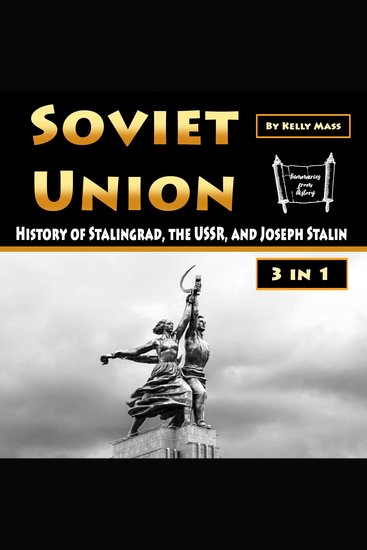
    This title consists of 3 books, which are about these topics:1 - Stalingrad has changed names. It's now called Volgograd and is still one of the largest cities in Russia. But we can't ignore the fact that for a significant time in history, it was called Stalingrad, named after the tyrant and leader of the Soviet Union in the Second World War, Joseph Stalin. Let's explore the history of this city during the Second World War, and why the battles fought there were so horrendous and pivotal in history.2 - From 1924 till his death in 1953, Joseph Vissarionovich Stalin was a Georgian revolutionary and Soviet politician who ruled the Soviet Union. He was General Secretary of the Communist Party of the Soviet Union from 1922 to 1952 and Chairman of the Soviet Union's Council of Ministers from 1941 to 1953. In spite of ruling the nation as part of a collective management, he ultimately combined power and ended up being the totalitarian of the Soviet Union by the 1930s. Stalin, a communist dedicated to Lenin's grasp of Marxism, formalized these concepts as Marxism-- Leninism, while his personal policies were called Stalinism.3 - From 1922 till 1991, the Soviet Union, officially the Union of Soviet Socialist Republics (USSR), was a socialist state that covered Europe and Asia. It was in theory a federal union of different sovereign republics; but, till its closing years, its administration and economy were highly centralized.
    Ver libro
  • The Life in the UK Test Questions & Study Guide 2026 - cover

    The Life in the UK Test...

    Michael Condon

    • 0
    • 0
    • 0
    Your One & Only Guide to Pass the Life in the UK Test in 2026—Including 3 Practice Exam Tests  
    Are you ready to take the next step in your journey? The Life in the UK Test Questions & Study Guide 2026 is more than just a book—it's your gateway to passing the UK citizenship test and becoming a proud UK citizen.Why This Book Is a Must-Have: 
    • Navigate with Confidence: Understanding the UK’s complex systems can be daunting. Our book breaks down essential topics—like the government system, history, and cultural etiquette—into easy-to-digest sections, so you’ll feel at home in no time. 
    • Master the Citizenship Test: The UK citizenship test can be challenging, but with our comprehensive guide, you’ll get all the insights you need. We provide practice questions, expert tips, and 3 practice exam tests. 
    • Embrace the Culture: Immerse yourself in British culture through engaging stories and practical advice. Learn about customs, local traditions, and the history that shapes everyday life, so you can connect with your community and build lasting relationships.Why Wait? 
    Embarking on your journey in the UK is an exciting adventure, and with this guide, you’ll be equipped to face it head-on. Don’t leave your future to chance—arm yourself with knowledge, confidence, and the tools you need to succeed. 
    Get your copy today and turn your aspirations into reality, your new life awaits!
    Ver libro
  • Summary: The Rise and Fall of the Third Reich - A History of Nazi Germany by William L Shirer: Key Takeaways Summary & Analysis Included - cover

    Summary: The Rise and Fall of...

    Brooks Bryant

    • 0
    • 0
    • 0
    Disclaimer: This book is not the official, but a summary & it does not accompany the official. 
    Unveil the dark corridors of history as you explore the meticulously researched summary of William L. Shirer's landmark work, 'The Rise and Fall of the Third Reich.' Understand how a nation succumbed to the magnetism of a maniac, how the dream of prosperity turned into a nightmare of warfare and genocide. 
    Our condensed version of Shirer's monumental narrative captures the grim realities of Adolf Hitler’s rise to power, the ensuing terror of Nazi rule, and the cataclysmic downfall of a regime that almost consumed the world. Shirer's book serves as both a cautionary tale and a record of one of the darkest chapters in human history. 
    Decades of careful journalism and first-hand experience have been distilled into a summary that retains the gravity of its source material while being accessible to a modern audience. Here, the complexities of political maneuvering, military strategy, and social dynamics are brought to light in a compelling read that's both informative and chilling. 
    Discover how an empire built on cruelty and deceit crumbled under its own weight, leaving behind lessons that are as relevant today as they were over half a century ago. A must-read for anyone seeking to understand the mechanics of tyranny and the variables that allow it to flourish.
    Ver libro
  • B H Mangal Maharaj My Spiritual Master - Living With A Pure Devotee - cover

    B H Mangal Maharaj My Spiritual...

    Sripad Jaganantha Das

    • 0
    • 0
    • 0
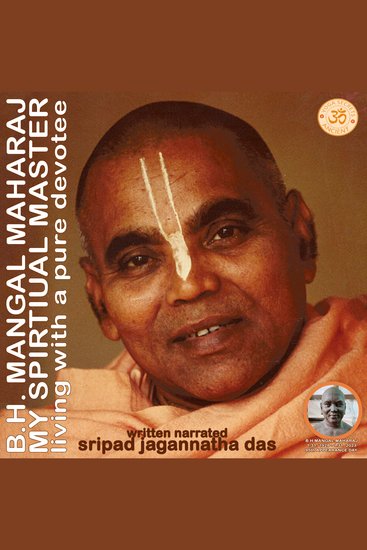
    His Divine Grace Tridandi Gosvami Bhakti Hirday Mangalniloy Maharaj was the longtime secretary of the Sri Chaitanya Gaudiya Math of India and so much more. He was born Madan Mohan Chandra on January 31, 1928, in Anandapur (Midnapur), West Bengal. After graduating first from university in 1949 he took up a career as a high school teacher. Madan, inwardly yearned to embrace a genuine spiritual process culminating in meeting his guru, Bhakti Dayita Gosvami Maharaj Of the Sri Chaitanya Gaudiya Math at the Kumba Mela, Hardwar. Entering the monastic order at the age of twenty one Mangal Niloy Brahmachari, as he was known, undertook Devotion Yoga (Bhakti). Several years later, he was accepted into the sanyasi order by Bhakti Promode Puri Gosvami Maharaj. From that day Maharaj traveled the world preaching the gospel of Krishna and Sri Chaitanya Mahaprabhu. 
     
    A longtime friend and confidant of ISKCON founder A.C. Bhaktivedanta Swami Prabhupada, in 1966 Maharaj were asked by the leader to join him in the States to become president of what the world knows as the Hare Krishna Movement. Unfortunately, Maharaj could not accompany the Swami and had to wait some years before finally reaching America. 
     
    In 1980 while on one of his many preaching tours of North America Maharaja met the struggling young writer, Geoffrey Giuliano in Toronto at the temple of the International Society for Krishna Consciousness. Two years later Giuliano was given initiation along with his wife Brenda and the names Jagannatha Dasa and Vrndarani Devi. From 1986 to 2004 Maharaj presided over a large rural ashram, goshalla (cow protection facility), and international media center overseen by his disciples in Lockport, New York. Until his death in Vrndavana, India the fully self-realized master continued to teach the philosophy of God consciousness freely around the globe.
    Ver libro