Junte-se a nós em uma viagem ao mundo dos livros!
Adicionar este livro à prateleira
Grey
Deixe um novo comentário Default profile 50px
Grey
Assine para ler o livro completo ou leia as primeiras páginas de graça!
All characters reduced
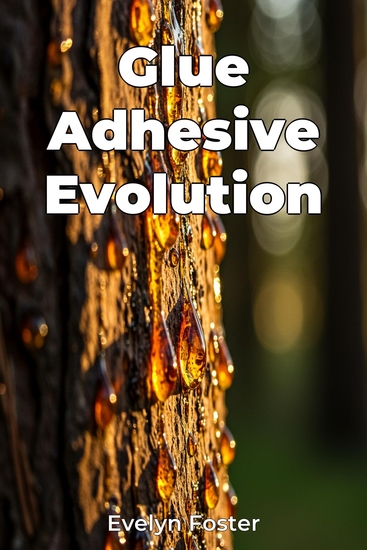
Glue Adhesive Evolution - cover
LER

Glue Adhesive Evolution

Evelyn Foster

Tradutor A AI

Editora: Publifye

  • 0
  • 0
  • 0

Sinopse

Glue Adhesive Evolution explores the captivating story of adhesives, those unsung heroes holding our world together. From ancient natural resins to today's advanced synthetic polymers, the book examines how these bonding agents have revolutionized crafting, manufacturing, and engineering. You'll discover how the relentless pursuit of stronger, more versatile, and sustainable adhesives has driven innovation across numerous scientific fields, fundamentally changing how we create and construct objects.

 
The book takes you on a journey through time, beginning with the fundamental principles of adhesion and the historical use of natural adhesives in ancient civilizations. It then delves into the rise of synthetic polymers like epoxy resins and cyanoacrylates, highlighting the chemical breakthroughs that propelled industries such as aerospace and automotive. Finally, it addresses the ecological impact of adhesive production and explores the exciting advancements in bio-based and self-healing alternatives, offering a glimpse into the future of bonding technology.

 
This integrated approach, combining historical analysis with scientific explanations, makes the book a valuable resource for both technical professionals and avid hobbyists.
Disponível desde: 27/02/2025.
Comprimento de impressão: 98 páginas.

Outros livros que poderiam interessá-lo

  • 101 questions about hair transplants - cover

    101 questions about hair...

    Artur Kierach

    • 0
    • 0
    • 0
    101 Questions About Hair Transplants is a collection of genuine questions asked by my patients during consultations and visits. Their curiosity and candor have allowed me to gather and organize the knowledge that I hope will help future patients better understand the process, the possibilities, and the limitations of hair transplants. My goal has been to answer these questions in an accessible and reliable manner, grounded in years of professional experience.
    Ver livro
  • Why Do We All Behave In The Way We Do? - The Secrets of Life - From Big Bang to Trump - cover

    Why Do We All Behave In The Way...

    Ss O'Connor

    • 0
    • 0
    • 0
    Why is life like a poker game? How did a failed robbery help to explain human nature? Why are we so certain bad men will win - and yet we're so wrong? In this, the third volume of The Secrets of Life quartet, SS O'Connor once more uses his easy-going, conversational style to explain how the science of decision analysis developed, and why it has come to show us not only the reasoning behind how humans arrive at their choices in life, but why so much of the apparently bizarre behaviour of the natural world has the same hard logic to it.Instead of the confusion and chaos one might expect, O'Connor lays out how the options organisms face when they interact can actually be analysed, and how we humans then refined this process through the addition of our intelligence and language skills. Starting with the extraordinary new ways of thinking that Adam Smith opened the world's eyes to, the book progresses to the 20th century - and shows how the mathematical reasoning behind our thought processes was revealed at a time when the very future of the world was at stake. From these earliest investigations, through to the fevered disagreements of later experts, this third volume of the Secrets of Life series explains how the science of game theory illuminates the reasons for our behaviour. In particular, the book provides insights into how the interests of the individual should be balanced against those of the group, and why the mechanism of trading would extend far further into our lives than we could ever have imagined. As the story unfolds it becomes ever clearer how cooperation has evolved to be the catalyst at every level of life. It explains how it was the force that built our world, and why it would settle so deeply in our hardwiring that it's become instinctive and innate in us. Perhaps most pleasingly, the same logic also shows that the benefits of collaboration are always bound to ratchet upwards - and how this will inevitably lead humans to ever-increasing levels of moral behaviour.
    Ver livro
  • No Country for Eight-Spot Butterflies - A Lyric Essay - cover

    No Country for Eight-Spot...

    Julian Aguon

    • 0
    • 0
    • 0
    Part memoir, part manifesto, Chamorro climate activist Julian Aguon's No Country for Eight-Spot Butterflies is a coming-of-age story and a call for justice—for everyone, but in particular, for Indigenous peoples. 


    In bracing poetry and compelling prose, Aguon weaves together stories from his childhood in the villages of Guam with searing political commentary about matters ranging from nuclear weapons to global warming. Undertaking the work of bearing witness, wrestling with the most pressing questions of the modern day, and reckoning with the challenge of truth-telling in an era of rampant obfuscation, he culls from his own life experiences—from losing his father to pancreatic cancer to working for Mother Teresa to an edifying chance encounter with Sherman Alexie—to illuminate a collective path out of the darkness. 


    A powerful, bold, new voice writing at the intersection of Indigenous rights and environmental justice, Julian Aguon is entrenched in the struggles of the people of the Pacific to liberate themselves from colonial rule, defend their sacred sites, and obtain justice for generations of harm. In No Country for Eight-Spot Butterflies, Aguon shares his wisdom and reflections on love, grief, joy, and triumph and extends an offer to join him in a hard-earned hope for a better world.
    Ver livro
  • The Final Pandemic - An Antidote To Medical Tyranny - cover

    The Final Pandemic - An Antidote...

    Dr Samantha Bailey, Dr Mark Bailey

    • 0
    • 0
    • 0
    Humanity is under assault from pandemics but not for the reasons that the mainstream sources portray. This book examines the claims regarding alleged “contagious” disease outbreaks such as COVID-19 to shed more light on what they are, or perhaps more importantly, what they are not. The belief that germs from the natural environment (or a laboratory) are attacking us has led most of the population to go along with lockdowns, civil rights restrictions, unprecedented peacetime censorship and more vaccines. However, when the foundational science is exposed and it is understood how the cases are created, no “pandemic” looks the same ever again. 
    In line with our other content we dissect multiple aspects of what has been put forward as scientific evidence for germ theory, alleged “viruses,” diagnostic tests, and “treatments” whether they be drugs or vaccines. It is all too often a world of mythology with carefully constructed narratives designed to benefit the medico-pharmaceutical industry and other vested interests. Unfortunately, it pulls the public into a belief system that is not only counterproductive to health but frequently life shortening and sometimes deadly. We have endeavoured to illustrate this with famous case examples to demonstrate how the media promotes deception with fear-inducing sensationalised headlines that are often bereft of scientific evidence. Just as important is how the illusions are maintained and we share our own experiences of what happens when doctors speak out against the prevailing narrative. The Final Pandemic is a title that announces that the concept of contagious and death-dealing ‘germs’ is finished. Hopefully this helps people realise that there is no need to participate in these man-made “crises” ever again. 
    "...the evidence the authors have presented here is quite simply, irrefutable, however alarming that conclusion might be." - Prof. Tim Noakes
    Ver livro
  • Assembly Language - The Ultimate Guide to Programming and Virtual Machines - cover

    Assembly Language - The Ultimate...

    Jonathan Rigdon

    • 0
    • 0
    • 0
    Assembly language is often considered a bridge between high-level programming languages and machine code. Unlike high-level languages such as Python or C, which use human-readable syntax and abstract away many details of the underlying hardware, assembly language provides a more direct representation of the CPU's operations. 
      
    Each assembly language instruction corresponds to a specific operation that the CPU can perform, such as loading data from memory, performing arithmetic calculations, or branching based on conditions. These instructions are typically represented using mnemonic codes, which are easier for humans to understand compared to the binary machine code instructions that the CPU actually executes. 
      
    One of the key benefits of programming in assembly language is the level of control it provides over hardware resources. Because assembly language instructions map closely to CPU operations, programmers can fine-tune their code to optimize performance or interact directly with hardware peripherals.
    Ver livro
  • The Book of Eels - Our Enduring Fascination with the Most Mysterious Creature in the Natural World - cover

    The Book of Eels - Our Enduring...

    Anônimo

    • 0
    • 0
    • 0
    Part H Is for Hawk, part The Soul of an Octopus, The Book of Eels is both a meditation on the world’s most elusive fish—the eel—and a reflection on the human condition. 
    Remarkably little is known about the European eel, Anguilla anguilla. So little, in fact, that scientists and philosophers have, for centuries, been obsessed with what has become known as the “eel question”: Where do eels come from? What are they? Are they fish or some other kind of creature altogether? Even today, in an age of advanced science, no one has ever seen eels mating or giving birth, and we still don’t understand what drives them, after living for decades in freshwater, to swim great distances back to the ocean at the end of their lives. They remain a mystery. 
    Drawing on a breadth of research about eels in literature, history, and modern marine biology, as well as his own experience fishing for eels with his father, Patrik Svensson crafts a mesmerizing portrait of an unusual, utterly misunderstood, and completely captivating animal. In The Book of Eels, we meet renowned historical thinkers, from Aristotle to Sigmund Freud to Rachel Carson, for whom the eel was a singular obsession. And we meet the scientists who spearheaded the search for the eel’s point of origin, including Danish marine biologist Johannes Schmidt, who led research efforts in the early twentieth century, catching thousands upon thousands of eels, in the hopes of proving their birthing grounds in the Sargasso Sea. 
    Blending memoir and nature writing at its best, Svensson’s journey to understand the eel becomes an exploration of the human condition that delves into overarching issues about our roots and destiny, both as humans and as animals, and, ultimately, how to handle the biggest question of all: death. The result is a gripping and slippery narrative that will surprise and enchant.
    Ver livro