Junte-se a nós em uma viagem ao mundo dos livros!
Adicionar este livro à prateleira
Grey
Deixe um novo comentário Default profile 50px
Grey
Assine para ler o livro completo ou leia as primeiras páginas de graça!
All characters reduced
Flax Processing Days - cover
LER

Flax Processing Days

Evelyn Foster

Tradutor A AI

Editora: Publifye

  • 0
  • 0
  • 0

Sinopse

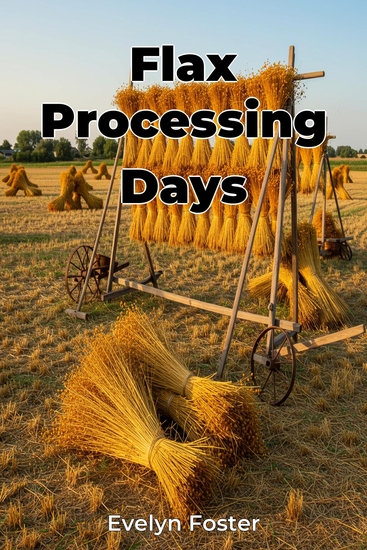
Flax Processing Days explores the fascinating history of linen production, focusing on the traditional methods of flax cultivation and processing. This book illuminates how families for generations transformed flax into linen, a once ubiquitous fabric. Discover the intricate steps, from planting to weaving, that were essential before industrialization. It highlights the resourcefulness required and the deep connection to sustainable practices in pre-industrial times. The book uniquely combines practical knowledge with social and familial contexts to present the complete flax-to-linen journey.

 
Chapters guide you through the seasons of flax cultivation, the detailed processes of rippling, retting, scutching, and heckling, as well as spinning, weaving, and finishing techniques. Learn how linen production was deeply embedded in family structures, community networks, and cultural values, serving as both a means of survival and a source of identity.

 
By drawing from historical agricultural manuals, oral histories, and museum collections, Flax Processing Days offers a comprehensive look at textile history. It emphasizes the significant role of family traditions in preserving these skills across generations, providing valuable insights for textile enthusiasts, craftspeople, and anyone interested in historical crafts and agricultural history.
Disponível desde: 27/02/2025.
Comprimento de impressão: 63 páginas.
Outros livros que poderiam interessá-lo

  • King Darius the Great: The Life and Legacy of the Achaemenid Persian Empire's Ruler during the First Invasion of Greece - cover

    King Darius the Great: The Life...

    Charles River Editors

    • 0
    • 0
    • 0
    It was not until the excavations of the 1930s that many of the relics, reliefs, and clay tablets that offer so much information about Persian life could be studied for the first time. Through archaeological remains, ancient texts, and work by a new generation of historians, a picture can today be built of this remarkable civilization and their capital city. Although the city had been destroyed, the legacy of the Persians survived, even as they mostly remain an enigma to the West and are not nearly as well understood as the Greeks, Romans, or Egyptians. In a sense, the Achaemenid Persian Empire holds some of the most enduring mysteries of ancient civilization.  
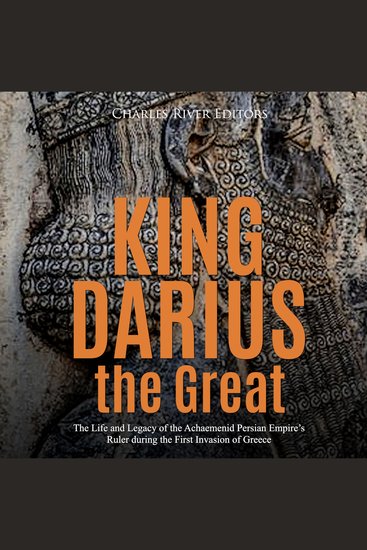
    	When considering this empire’s rulers, the two most often referenced are Xerxes, the leader of the Persian invasion of Greece which caused the heroic sacrifice of the Spartans and their allies at Thermopylae, or Cyrus the Great, the man who created the Persian Empire. But the Persians had another critical ruler sandwiched between them, and Cyrus’s accomplishments and Xerxes’s defeats would not have been possible without him. That king was Xerxes’s own father, Darius I, best known as Darius the Great. 
    	Darius I took the throne after the death of Cyrus’s son, Cambyses II, and though his reign would not have been possible without the construction of the empire and the administrative groundwork laid by Cyrus the Great before him, Darius proved himself just as worthy of the epithet. Reigning for over 35 years, Darius kept control of the massive Persian Empire despite numerous rebellions and uprisings, and he also managed to implement reforms and improvements that established the empire’s golden age. He followed the example of Cyrus before him in his foreign policy and mode of kingship as well, offering tolerance and patience to various cultures and religions, and even treating his enemies fairly in most cases. 
    Ver livro
  • A Comprehensive Guide to Bhagavad-gita With Literal Translation - cover

    A Comprehensive Guide to...

    Howard J. Resnick (H.D.Goswami)

    • 0
    • 0
    • 0
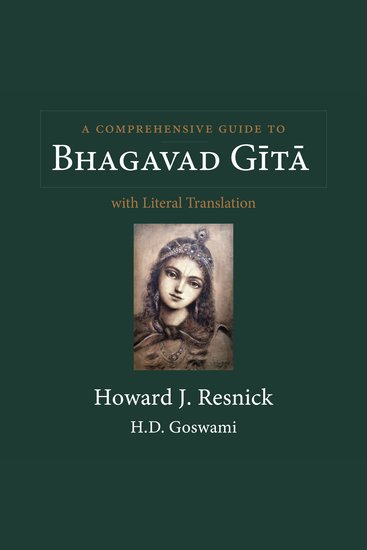
    Widely revered as a work of spiritual and philosophic genius, Bhagavad-gītā excels in providing reasonable, satisfying responses to life’s biggest issues: Who am I? Why do I exist? What is the universe? What is God? This Comprehensive Guide, with its systematic analysis of major Gītā themes, provides a unique companion for beginners, advanced students and mature scholars alike. With encyclopedic knowledge and an insider’s grasp of the text, the author guides us in simple elegant prose to the very heart of the Gītā’s sublime conclusions.
    Ver livro
  • European Imperialism in China: The History and Legacy of the European Powers’ Attempts to Establish Chinese Trade Routes - cover

    European Imperialism in China:...

    Editors Charles River

    • 0
    • 0
    • 0
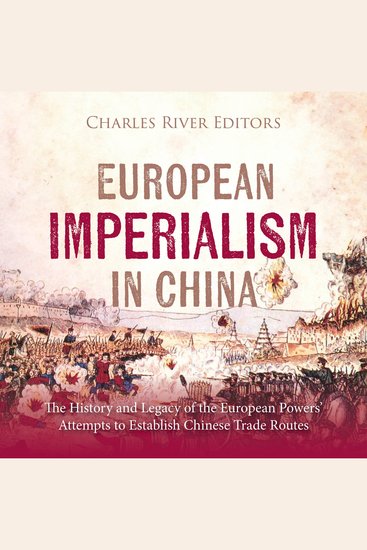
    During the 15th century, China had become economically and technologically advanced compared to civilizations in Europe at the time, and its fleet, which had reached a total of 3,500 ships, was unmatched by any other world power. Nevertheless, after conducting several trade expeditions with the massive fleet, the Chinese ships were either burned in the docks or left to rot. With that, China began to revert to the xenophobic policies of its past and reduce its presence in other lands. By 1525, the largest naval fleet in the world had essentially been destroyed or dismantled by China itself.  
    While China was in the process of isolating itself from the rest of the world, the European explorers were beginning to discover new lands, such as North America and South America. Among the countries doing the most exploring during this time were the Portuguese. The Portuguese had reached India in 1498, and by 1509 they had established part of their empire in India. This allowed the Portuguese to have a base of operations to further expand east into Asia. In 1511, the Portuguese captured the large spice trading center of Malacca in Malaysia, and like their base in India, Malacca allowed the Portuguese to have a foothold, thereby providing access to China and Southeast Asia. 
    The location of Macau was beneficial and strategically chosen by the Portuguese, as it was in close communication with Guangzhou and connected via a river system. In contrast to their earlier dealings with the Chinese, the Portuguese attempted to appear more humble and comply with the wishes of the Chinese rather than with force. As it turned out, the policy, in conjunction with increased European activities in the region, would help the Portuguese Empire hold on to Macau even as its fortunes dwindled everywhere else across the world.
    Ver livro
  • Behind Academy Doors - Yuri Anime - cover

    Behind Academy Doors - Yuri Anime

    Rainbow Press

    • 0
    • 0
    • 0
    The things that go on behind closed doors… 
      
    Hanita and Oni — schoolmates, yes. But more?
    Ver livro
  • Admiral Chester W Nimitz: The Life and Legacy of the US Pacific Fleet's Commander in Chief during World War II - cover

    Admiral Chester W Nimitz: The...

    Charles River Editors

    • 0
    • 0
    • 0
    “It is the function of the Navy to carry the war to the enemy so that it is not fought on U.S. soil.” – Admiral Nimitz  
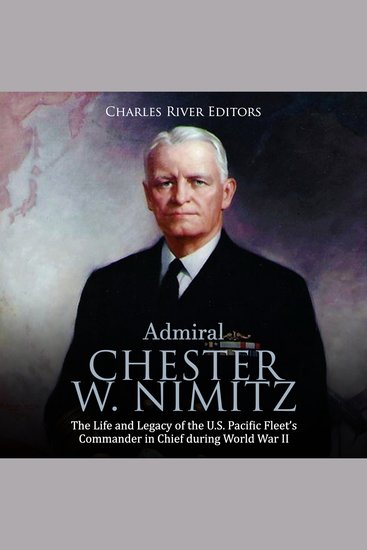
    	All Americans are familiar with the “day that will live in infamy.” At 9:30 a.m. on Sunday, December 7, 1941, Pearl Harbor, the advanced base of the United States Navy’s Pacific Fleet, was ablaze. It had been smashed by aircraft launched by the carriers of the Imperial Japanese Navy. All eight battleships had been sunk or badly damaged, 350 aircraft had been knocked out, and over 2,000 Americans lay dead. Indelible images of the USS Arizona exploding and the USS Oklahoma capsizing and floating upside down have been ingrained in the American conscience ever since. In less than an hour and a half the Japanese had almost wiped out America’s entire naval presence in the Pacific.  
    	Despite fighting in North Africa and the Atlantic, the United States still had the resources and manpower to fight the Japanese in the Pacific. Though the Japanese had crippled the American fleet at Pearl Harbor, its distance from Japan made an invasion of Pearl Harbor impossible, and Japan had not severely damaged important infrastructure. Thus, the United States was able to quickly rebuild a fleet, still stationed at Pearl Harbor right in the heart of the Pacific. This forward location allowed the United States to immediately push deeply into the Pacific theater. 
    	The Americans would eventually push the Japanese back across the Pacific, and one of the most instrumental leaders in the effort was Admiral Chester W. Nimitz, who commanded the U.S. Pacific Fleet and helped coordinate joint operations with the legendary General Douglas MacArthur, the Supreme Commander, Southwest Pacific Area. The ensuing strategies would lead to decisive operations at places like Midway, Iwo Jima, Okinawa, and others before the use of the atomic bombs compelled Japan’s surrender in August 1945. 
    Ver livro
  • Lesbian Erotica – 10 First Time Stories - Lesbian Bundle 2 - cover

    Lesbian Erotica – 10 First Time...

    Conner Hayden

    • 0
    • 0
    • 0
    Want older women seducing younger women? Sex Toys? Doctor Threesome? Boss Domination? Spanking Action? BDSM? Innocent college coeds? First-time lesbian experiences? Find all this and more in this sizzling collection of lesbian erotica. These naughty stories are sure to leave you full of hot and relentless desire.  
     
    The books:  
    Used by the Doctor and her Receptionist 
    Dominating the Escort 
    The College Girl’s First Time 
    Seduced by the Asian Teacher 
    Spanked by the Gym Instructor 
    Spread on the Doctor’s Gynecology Table 
    Tied up by the Boss 
    The Cheerleader Next Door 
    The Housemaid’s Sex Toy Party 
    A Cowgirl’s Erotic Massage 
     
    ***All characters are over 18 and fictional***
    Ver livro