Junte-se a nós em uma viagem ao mundo dos livros!
Adicionar este livro à prateleira
Grey
Deixe um novo comentário Default profile 50px
Grey
Assine para ler o livro completo ou leia as primeiras páginas de graça!
All characters reduced
NFT Gaming - The Play-to-Earn Model - cover
LER

NFT Gaming - The Play-to-Earn Model

Euvouria LLC

Editora: Euvouria

  • 0
  • 0
  • 0

Sinopse

In the last decade, cryptocurrency (crypto) has become a worldwide phenomenon, garnering the attention of those interested in technology—and that have money to spend. Although many people who aren’t keenly aware of crypto are often led to believe that it has only been around for a few years, it has been around since the mid-90s, with some people stating that the concepts for crypto stem back as far as the late 80s.
Without getting too much into the history of crypto, the first iteration of crypto was something called Digicash; however, it never really took off. After many attempts (albeit with nearly all of them failing throughout the 90s) Satoshi Nakamoto developed the crypto that we all know (and love) today, Bitcoin. 
Part of the success of Bitcoin, and the reason that it was able to be developed was because of a technology called blockchain. Blockchain can most simply be thought of as a hyper-secure online ledger system that can store digital data. An explanation as to how blockchain works can be found in Appendix A. It is highly suggested that this explanation is reviewed before diving into further chapters of this document to ensure a full understanding of the technology and functions discussed.
Nevertheless, blockchain is the technology that has laid the foundation for crypto and allowed Bitcoin to become the global phenomenon that it is today. Not only this, but the growth of blockchain technology has allowed for new cryptos to be developed, and for other decentralized blockchain apps to be explored. That is, the fundamental functions of blockchain being a secure, decentralized platform have allowed various applications to be developed using blockchain as the secure ‘building blocks’, and for crypto to be used as the financial extension of any digital, decentralized application or software.
One such application of these decentralized apps (DApps) that has gained tremendous momentum in the last few years is video gaming. Traditionally, video games have been developed as standalone software, often either being played on handheld devices, consoles, or on computers via online hosting platforms. In the most basic form, this involves a large amount of coding, planning, and designing to make video games into what people know and play today.
However, with more growth and increasing understanding of the various applications of blockchain technologies, there has been tremendous interest in merging blockchain with traditional video games to make DApps known as NFT Games or Crypto-Games. Definitions of “NFTs”, “NFT Games” and “Crypto Games” will be given in subsequent chapters of this document, as well as in the “Terms and Glossary” at the beginning of this document.
Nevertheless, as many traditional video games have been merged with crypto and blockchain technologies, there has emerged an entirely new video game and income generation model, Play to Earn. This will be discussed in later chapters of this document. The key difference between NFT games and traditional video games is that (as the model would suggest) people can play NFT games to earn money. More specifically, they can earn cryptocurrencies while playing these games.
As the core focus of this document, the following chapters will delve into what exactly NFT and Crypto games are, how they function, the technology that allows them to function, the model this has given rise to, and nearly every other aspect of these games—including popular games that are playable today. To understand all this information, the following chapters will also discuss what NFTs are, how the market for NFTs work, and how people can make money not only with NFTs but playing NFT games.
Disponível desde: 23/01/2022.
Outros livros que poderiam interessá-lo

  • The Perfect Organism - An Alien: Isolation Companion - cover

    The Perfect Organism - An Alien:...

    Andy Kelly

    • 0
    • 0
    • 0
    An unofficial guide to Alien: Isolation, the greatest, scariest horror game ever made. 
     
    There aren’t many computer games that can justify an entire book, but for superfans, Alien: Isolation is truly extraordinary and Perfect Organism reveals all there is to know about every aspect of this masterful game. 
     
    Discover the rationale and authenticity of the set design and art direction, learn about the alien’s unnerving abilities to second-guess the players and the importance of its unique height, find out more about the importance of the dynamic audio and the use of seventies archive soundbites, as well as the darkly beautiful music. And immerse yourself in the technical brilliance of the level design and the user interface, before reading about the deleted content, and the scenes and features that never made the final cut. 
     
    Alien: Isolation is a game of remarkable depth, complexity, and detail, and together with a level-by-level mission guide, this audiobook will answer all of your questions, as well as many you haven’t yet thought to ask!
    Ver livro
  • Drawing Out Leviathan - Dinosaurs and the Science Wars - cover

    Drawing Out Leviathan -...

    Keith M. Parsons

    • 0
    • 0
    • 0
    " . . . are dinosaurs social constructs? Might not all of our beliefs about dinosaurs merely be figments of the paleontological imagination? A few years ago such questions would have seemed preposterous, even nonsensical. Now they must have a serious answer." 


    At stake in the "Science Wars" that have raged in academe and in the media is nothing less than the standing of science in our culture. One side argues that science is a "social construct," that it does not discover facts about the world, but rather constructs artifacts disguised as objective truths. This view threatens the authority of science and rejects science's claims to objectivity, rationality, and disinterested inquiry. Drawing Out Leviathan examines this argument in the light of some major debates about dinosaurs: the case of the wrong-headed dinosaur, the dinosaur "heresies" of the 1970s, and the debate over the extinction of dinosaurs. 


    Keith Parsons claims that these debates show that evidence and logic remained vitally important. They show science to be a complex set of activities, pervaded by social influences, and not easily reducible to any stereotype. Parsons acknowledges that there are lessons to be learned by scientists from their would-be adversaries, and the book concludes with some recommendations for ending the Science Wars.
    Ver livro
  • Game Theory - Applications to Economics and Economic Theory - cover

    Game Theory - Applications to...

    Daniel Shore

    • 0
    • 0
    • 0
    Here are some fundamental concepts and terms in game theory and economics: 
      
    Game Theory: A branch of mathematics and economics that studies how people make decisions in strategic situations, where the outcome of one person's decision depends on the decisions of others. 
      
    Players: Individuals, groups, or entities making decisions in a game. Each player typically has a set of possible actions they can take. 
      
    Strategy: A plan of action for a player that specifies what they will do in each possible situation or contingency in the game. 
      
    Payoff: The outcome or result that a player receives as a consequence of their actions and the actions of others in the game. Payoffs are often represented in terms of utility, profits, or some other measurable outcome. 
      
    Nash Equilibrium: A concept in game theory where no player has an incentive to unilaterally change their strategy, given the strategies chosen by the other players. In other words, each player's strategy is optimal given the strategies chosen by the other players.
    Ver livro
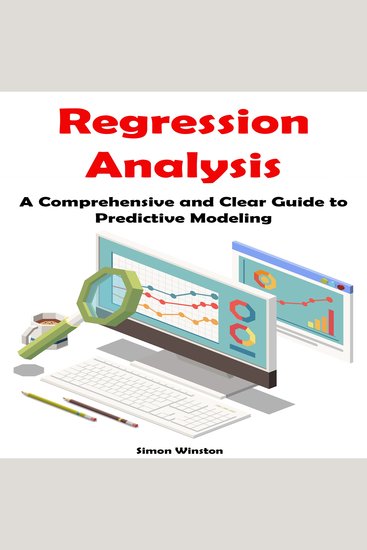
  • Regression Analysis - A Comprehensive and Clear Guide to Predictive Modeling - cover

    Regression Analysis - A...

    Simon Winston

    • 0
    • 0
    • 0
    In this insightful and accessible book, readers will embark on a journey through the intricate world of regression analysis, gaining a profound understanding of how this statistical technique empowers businesses, researchers, and analysts to make informed predictions and optimize outcomes. 
    "Regression Analysis: A Comprehensive and Clear Guide to Predictive Modeling" is your go-to resource for mastering the art and science of regression analysis. Empower yourself with the skills to unlock the potential hidden within your data and make data-driven decisions that drive success. 
     
    Ver livro
  • Mastering Scrum Master Interviews: 200 Situational Questions and Answers - Practical Insights and Expert Answers for Tackling Scrum Master Role Interviews - cover

    Mastering Scrum Master...

    Jimmy Mathew

    • 0
    • 0
    • 0
    Mastering Scrum Master Interviews: 200 Situational Questions and Answers. 
    Practical Insights and Expert Answers for Tackling Scrum Master Role Interviews. 
    This book is designed to help you excel in Scrum Master role interviews by providing 200 carefully curated situational questions along with detailed answers. Each question addresses real-world scenarios that Scrum Masters often face, covering key challenges related to team dynamics, stakeholder engagement, Agile transformation, and organizational change. With comprehensive explanations, this course empowers you to understand the logic behind each answer, helping you build your own personalized responses during interviews. Whether you're an aspiring Scrum Master or looking to refine your interview skills, this course equips you with the insights needed to succeed. 
    A few things to keep in mind: there is often no single correct answer to these questions. The responses provided here are based on personal experience, but interviewers may have different perspectives shaped by their own challenges and background. The goal is not to memorize exact answers but to understand the logic and reasoning behind them so that you can adapt and craft your responses during the interview. 
    We've provided detailed answers to give you a range of ideas to draw from, allowing you to build a solid answer even if you only recall a few key points during the interview. Now, let’s dive into the questions.
    Ver livro
  • Palliative Care - Managing Chronic and End-of-Life Conditions - cover

    Palliative Care - Managing...

    Ava Westwood

    • 0
    • 0
    • 0
    Palliative care is a specialized approach to medical care that focuses on improving the quality of life for individuals facing serious, chronic, or life-limiting illnesses. Unlike curative treatments aimed at eradicating disease, palliative care prioritizes symptom management, pain relief, and holistic support for both patients and their families. This field of healthcare is rooted in compassion, emphasizing dignity, comfort, and individualized care tailored to the needs of each patient. 
    The principles of palliative care are guided by a patient-centered philosophy that considers physical, emotional, social, and spiritual well-being. It is not limited to end-of-life situations but can be integrated alongside curative treatments at any stage of a serious illness. Patients suffering from conditions such as cancer, heart failure, chronic obstructive pulmonary disease (COPD), kidney disease, and neurodegenerative disorders like Alzheimer’s or Parkinson’s can benefit from palliative interventions. The goal is to enhance quality of life, alleviate distress, and provide support to both the patient and their loved ones. 
    A defining feature of palliative care is its interdisciplinary approach. A team of healthcare professionals—including physicians, nurses, social workers, chaplains, and therapists—collaborates to address the complex needs of patients. This holistic model ensures that care extends beyond the physical symptoms of illness to include emotional and psychological support. Effective communication is essential in palliative care, as clinicians must navigate sensitive conversations about prognosis, treatment goals, and advance care planning. By fostering open dialogue, healthcare providers empower patients to make informed decisions that align with their values and preferences.
    Ver livro