¡Acompáñanos a viajar por el mundo de los libros!
Añadir este libro a la estantería
Grey
Escribe un nuevo comentario Default profile 50px
Grey
Suscríbete para leer el libro completo o lee las primeras páginas gratis.
All characters reduced
How to build a house: an architectural novelette - cover

How to build a house: an architectural novelette

Eugène-Emmanuel Viollet-le-Duc

Editorial: Librorium Editions

  • 0
  • 0
  • 0

Sinopsis

Who is happier than the young student from the Lyceum when he comes home for the summer vacation, bringing with him proofs of a well-spent year? Everything smiles upon him. The sky is serene, the country wears its loveliest dress, and the fruit is ripe.
Everyone congratulates him on his success, and predicts for him, after his six weeks’ repose, an energetic recommencement of congenial labour, crowned by a brilliant career in the future.
Yes, our student is a happy fellow; the air seems preternaturally light, the sun shines more brightly, and the meadows wear a richer green. Even the unwelcome rain is laden with perfume.
As soon as the morning breaks he hastens to revisit his favourite haunts in the park—the stream, the lake, and the farm—to see the horses, the boat, and the plantations.
He chats with the farmer’s wife, who smilingly presents him with a nice galette, hot from the oven. He walks with the gamekeeper, who tells him all the news of the neighbourhood while going his rounds. The sound of the sheep bells is musical—nay, even the monotonous song of the shepherd-boy, now grown a tall fellow, and aspiring to the full dignity of shepherd.
Disponible desde: 15/10/2023.
Otros libros que te pueden interesar

  • Hoysala Empire - The Architectural Splendor of Southern India - cover

    Hoysala Empire - The...

    Rolf Hedger

    • 0
    • 0
    • 0
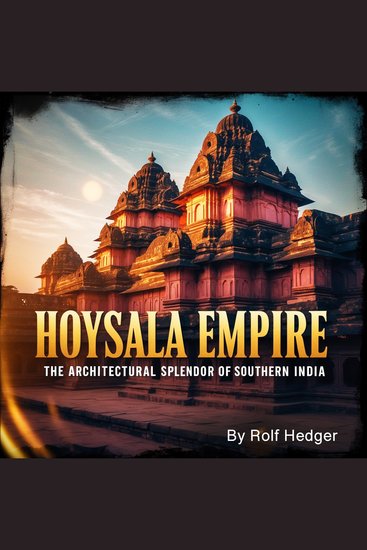
    The Hoysala Empire was one of the most influential dynasties in South Indian history, known for its patronage of art, culture, and architecture. Flourishing between the 10th and 14th centuries, the empire left an indelible mark on the Deccan region, particularly in present-day Karnataka. The Hoysalas emerged as a powerful force after the decline of the Western Chalukyas, establishing their capital first at Belur and later at Halebidu. Their rule was characterized by military conquests, administrative efficiency, and an enduring legacy of architectural splendor that continues to captivate historians and art enthusiasts. 
    The origins of the Hoysala dynasty are traced to a chieftain named Sala, who, according to legend, was instructed by a Jain monk to kill a tiger that was attacking them. This act of bravery led to the adoption of the royal emblem depicting a warrior slaying a tiger, symbolizing the valor of the Hoysala rulers. Over the centuries, the dynasty expanded its influence through strategic alliances and military campaigns, gaining control over vast territories in the Deccan. Prominent rulers such as Vishnuvardhana and Veera Ballala II played a crucial role in consolidating the empire and fostering a rich cultural heritage. 
    A significant aspect of Hoysala rule was its deep connection with religious and artistic traditions. The dynasty was known for its support of Hinduism, Jainism, and, to some extent, Buddhism, leading to the construction of numerous temples and religious institutions. These temples were not just places of worship but also centers of learning and artistic expression. The Hoysalas employed skilled artisans and sculptors who developed a distinctive architectural style, characterized by intricate carvings, star-shaped temple layouts, and finely detailed sculptures depicting gods, celestial beings, and mythological narratives.
    Ver libro
  • Contemporary Native American Artists - cover

    Contemporary Native American...

    Kitty Leaken

    • 0
    • 1
    • 0
    Contemporary Native American artists have a strong presence in the North  American and international art markets. This talented group’s work can  be found in many annual events, an ever-changing array of fine art  galleries, and a number of museums throughout North America. These  artists give visible form to the past, present, and future of American  Indian life. In Contemporary Native American Artists, key luminaries of  the Native American art world are brought together through stunning  photography and intimate portrayals of their lives and art.
    Ver libro
  • Kingdom of Kongo - Christianity Trade and the Kingdom That Resisted Colonization - cover

    Kingdom of Kongo - Christianity...

    Rolf Hedger

    • 0
    • 0
    • 0
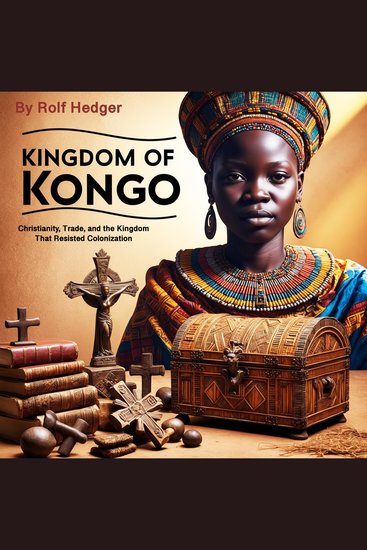
    The Kingdom of Kongo emerged as one of the most powerful and centralized states in Central Africa. Its origins can be traced back to the early Bantu migrations, which spread agriculture, ironworking, and complex social structures across the region. By the 14th century, various smaller chiefdoms in present-day Angola and the Democratic Republic of Congo began to coalesce under a single authority, forming what would become the Kingdom of Kongo. 
    The region’s fertile lands and access to major rivers facilitated both agriculture and trade. Kongo’s early economy relied on the cultivation of crops such as millet, sorghum, and bananas, as well as the production of iron tools and weapons. The abundance of natural resources allowed the ruling elite to accumulate wealth and expand their influence. As trade networks developed, Kongo became a center of commerce, linking the interior regions of Central Africa with coastal markets. 
    Kongo's social and political organization was highly structured. At the top of the hierarchy was the king, known as the Manikongo, who ruled from the capital, Mbanza Kongo. The Manikongo exercised authority over provincial rulers, who governed different regions of the kingdom. This system allowed for centralized administration while also granting local leaders autonomy in managing their territories. The kingdom was further divided into districts and villages, with a bureaucratic structure that ensured tax collection, military organization, and judicial functions.
    Ver libro
  • Writing And Drawing As Art Forms - How To Express Yourself In Articles Books And Drawings On- And Off-Line! - cover

    Writing And Drawing As Art Forms...

    Owen Jones

    • 0
    • 0
    • 0
    In this digital age, artists have discovered a new frontier for sharing and selling their creations. From ebooks to paintings, the online world offers a vast array of platforms and strategies for artists to showcase and monetise their work. “Writing and Drawing As Art Forms” is a concise guide designed to help artists navigate this digital landscape and turn their passion into profit. 
    This book explores the various avenues available for artists to monetise their art, whether through selling ebooks, prints, or original artworks. It provides practical insights into understanding the market, choosing the right platforms, pricing artwork effectively, promoting art strategically, building a brand, and providing exceptional customer service. 
    Whether you’re an author seeking to self-publish your writing or an illustrator looking to sell your digital art, this guide offers valuable tips and resources to help you succeed in the online art market.
    Ver libro
  • The Emirates Code - cover

    The Emirates Code

    Birgit Maria Kemphues

    • 0
    • 0
    • 0
    The Emirates Code – Unlocking the Secrets of Tradition + Vision = Future 
    What if a country could write its own future—based on legacy, led by innovation, and powered by ambition? 
    Welcome to the United Arab Emirates. A land where ancient Bedouin wisdom meets futuristic AI, where the scent of oud lingers in the air beneath sky-piercing towers, and where a vision has transformed golden desert into global brilliance. 
    In this captivating and visionary audiobook, international businesswoman and cultural ambassador Birgit Maria Kemphues reveals the hidden formula behind the UAE’s meteoric rise. With humour, insight, and heartfelt stories, she decodes the unwritten laws of success—from boardrooms to desert tents, from high heels to humility. 
    Through vivid conversations with locals like Saleh and Ibrahim, encounters with trailblazing women, and reflections from her own bold journey, this audiobook unveils: 
    ✅ The invisible etiquette behind real influence 
    ✅ Why “thinking big” isn’t just a slogan—it’s a lifestyle 
    ✅ How the Emirates blend hospitality, heritage, and hyper-innovation into a singular code of progress 
    ✨ This is not a guidebook. It’s an experience. A cinematic, deeply personal soundscape that takes you behind the scenes of one of the most extraordinary nations on earth. 
    For dreamers, doers, and those who believe that tradition and technology can walk hand in hand. 
    🎧 Listen now and discover the code that shapes tomorrow. 
    👉 The Emirates Code—because the future doesn’t wait. Follow me on YouTube @kemphues
    Ver libro
  • A Classic Interview with Music Icon Buddy Holly - cover

    A Classic Interview with Music...

    Buddy Holly

    • 0
    • 0
    • 0
    Charles Hardin Holley (September 7, 1936 - February 3, 1959), known as Buddy Holly, was an American singer, songwriter, and musician who was a central and pioneering figure of mid-1950s rock and roll. He was born to a musical family in Lubbock, Texas, during the Great Depression, and learned to play guitar and sing alongside his two siblings. In 1956 Holly created the band, The Crickets, with drummer Jerry Allison, bassist Joe B. Mauldin, and, from 1956 to 1958, rhythm guitarist Niki Sullivan. On February 3, 1959, Holly, Ritchie Valens, and "The Big Bopper" J. P. Richardson were all killed in a plane crash near Clear Lake, Iowa, together with pilot Roger Peterson. The event became known as "The Day the Music Died" after singer-songwriter Don McLean referred to it as such in his 1971 song "American Pie." The following audio includes several brief interviews Holly made in the late 1950s.
    Ver libro