¡Acompáñanos a viajar por el mundo de los libros!
Añadir este libro a la estantería
Grey
Escribe un nuevo comentario Default profile 50px
Grey
Suscríbete para leer el libro completo o lee las primeras páginas gratis.
All characters reduced
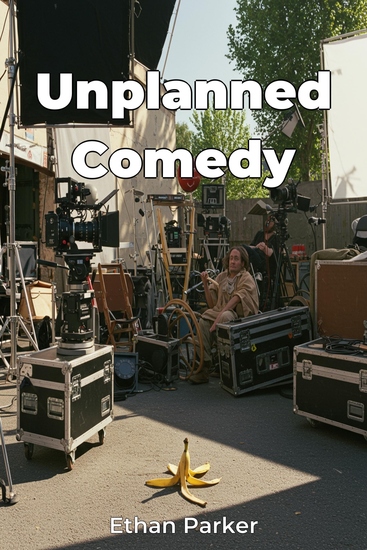
Unplanned Comedy - cover

Unplanned Comedy

Ethan Parker

Traductor A AI

Editorial: Publifye

  • 0
  • 0
  • 0

Sinopsis

"Unplanned Comedy" explores the fascinating world of unintentional humor found in history, film, and television. It delves into moments where serious events unexpectedly become comedic, offering a unique perspective on political gaffes, media blunders, and on-set accidents. This book examines why we laugh at the unexpected, revealing insights into societal norms and human fallibility.

 
One intriguing aspect is how historical events, initially perceived seriously, gain comedic value over time. Another is the way live broadcast errors or unscripted moments can become legendary, blurring the lines between reality and performance.

 
The book approaches the topic by defining "unplanned comedy" and distinguishing it from intentional forms of humor like satire. It then investigates the psychological and sociological reasons behind our amusement. Progressing from historical and political contexts to the film and television industry, the book analyzes examples ranging from diplomatic incidents turned comedic fodder to on-set accidents in movies. It supports its analysis with archival footage, transcripts, and interviews, offering a comprehensive overview of how unintentional comedy shapes our perception of the world.
Disponible desde: 29/03/2025.
Longitud de impresión: 59 páginas.

Otros libros que te pueden interesar

  • No Daylight in That Face - Adventures in Film Noir - cover

    No Daylight in That Face -...

    Barry Gifford

    • 0
    • 0
    • 0
    For a tour of noir cinema, No Daylight in That Face is the perfect companion, and Barry Gifford is an ideal guide. His choice selection of films exposes the menacing, moody, and oftentimes violent underbelly of this dark movie genre that occupies a favorite niche in American popular culture. Some are classics, some are little known and seldom seen, but all, once viewed, are deeply remembered by aficionados of noir. Gifford's roll call of unforgettables includes these, and more: The Asphalt Jungle, Body and Soul, Body Heat, Charley Varrick, Chinatown, The Devil Thumbs a Ride, D.O.A., Double Indemnity, High Sierra, Key Largo, Kiss of Death, Mean Streets, Mildred Pierce, Mr. Majestyk, Out of the Past, The Strange Love of Martha Ivers, Strangers on a Train, and White Heat. 


    Gifford identifies the directors and names the many noir stars, the greats and not-so-greats who were cast in the indelible roles of hoods, B-girls, psychopaths, grifters, gumshoes, waifs, tarts, femme fatales, mobsters, molls, and ex-cons. 


    With a connoisseur's insight and an offbeat sensitivity perfectly tailored to his subjects, Gifford's brief essays cover a hundred of the noir buff's favorites. His highly polished impressions take the listener through five decades of noir to find both the heart and the art of the plotline.
    Ver libro
  • Re-Composing YouTube - Vernacular Musical Aesthetics in the Digital Age - cover

    Re-Composing YouTube -...

    Jonas Wolf

    • 0
    • 0
    • 0
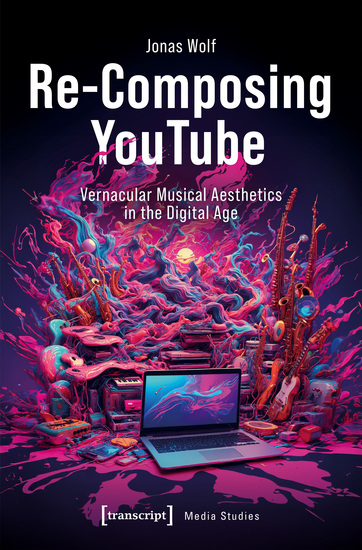
    YouTube features a wide array of multimodal musical figurations, including fan-made music videos, musical aestheticisations of pre-circulating content, and musical self-performances. Jonas Wolf explores open-ended forms of musical creative relay on YouTube, delving into formal, imitative, affective, and (non-)institutional aspects of networked media remix and (self-)aestheticisation. Beyond creating value for non-musical fields of discourse, this study is directed at filling a gap in a largely ocularcentric domain of study. It provides a concise theory of vernacular composition within our time's total digital archive that accounts for socio-aesthetic phenomena and their relation to systems of knowledge, control, and discourse.
    Ver libro
  • The Inward Stage - A Performer's Notes On Presence and Meaning - cover

    The Inward Stage - A Performer's...

    Alexander Beresford

    • 0
    • 0
    • 0
    The Inward Stage is not a memoir. It is not a manual. It is not a book of secrets. 
    It is a quietly luminous document, part philosophical journal, part poetic confession, written by a mindreader who spends his life performing illusions for others while quietly unraveling deeper truths for himself. 
    Drawn from times spent backstage, between cities, between minds, and between silences, these pages reveal the reflections of a man who reads thoughts not for applause, but for understanding. He writes of wonder, failure, silence, intimacy, and the sacred art of disappearing at just the right moment. 
    This is a book for those who have performed, on stages or in life, and for anyone who has ever longed to be understood beneath the surface. 
    Written in fragments, aphorisms, and meditations, The Inward Stage is a love letter to mystery, a witness to the sacredness of connection, and a guide for those who find themselves standing quietly at the edge of the visible world.
    Ver libro
  • Vincent van Gogh - Sunflowers and Silence - the Intensity of Being - cover

    Vincent van Gogh - Sunflowers...

    Victoria Charles

    • 0
    • 0
    • 0
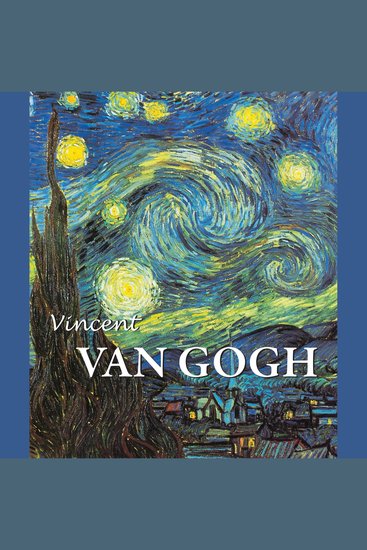
    Vincent van Gogh's life and work are so intertwined that it is hardly possible to observe one without thinking of the other. Van Gogh has indeed become the incarnation of the suffering, misunderstood martyr of modern art, the emblem of the artist as an outsider. An article, published in 1890, gave details about van Gogh's illness. The author of the article saw the painter as "a terrible and demented genius, often sublime, sometimes grotesque, always at the brink of the pathological." Very little is known about Vincent's childhood. At the age of eleven he had to leave "the human nest", as he called it himself, for various boarding schools. The first portrait shows us van Gogh as an earnest nineteen year old. At that time he had already been at work for three years in The Hague and, later, in London in the gallery Goupil & Co. In 1874 his love for Ursula Loyer ended in disaster and a year later he was transferred to Paris, against his will. After a particularly heated argument during Christmas holidays in 1881, his father, a pastor, ordered Vincent to leave. With this final break, he abandoned his family name and signed his canvases simply "Vincent". He left for Paris and never returned to Holland. In Paris he came to know Paul Gauguin, whose paintings he greatly admired. The self-portrait was the main subject of Vincent's work from 1886c88. In February 1888 Vincent left Paris for Arles and tried to persuade Gauguin to join him. The months of waiting for Gauguin were the most productive time in van Gogh's life. He wanted to show his friend as many pictures as possible and decorate the Yellow House. But Gauguin did not share his views on art and finally returned to Paris. On 7 January, 1889, fourteen days after his famous self-mutilation, Vincent left the hospital where he was convalescing. Although he hoped to recover from and to forget his madness, but he actually came back twice more in the same year. During his last stay in hospital, Vincent painted landscapes in which he recreated the world of his childhood. It is said that Vincent van Gogh shot himself in the side in a field but decided to return to the inn and went to bed. The landlord informed Dr Gachet and his brother Theo, who described the last moments of his life which ended on 29 July, 1890: "I wanted to die. While I was sitting next to him promising that we would try to heal him. [...], he answered, 'La tristesse durera toujours (The sadness will last forever).'"
    Ver libro
  • The New Brownies' Book - A Love Letter to Black Families - cover

    The New Brownies' Book - A Love...

    Karida L. Brown, Charly Palmer

    • 0
    • 0
    • 0
    "[A] heartfelt tribute to young people of color and their 'reflection of resplendent beauty, ancient history ... and irreplaceable value.' It's a standout."—Publishers Weekly, starred review 
     
    Inspired by the groundbreaking work of W. E. B. Du Bois, this beautiful collection brings together an outstanding roster of Black creative voices to honor, celebrate, and foster Black excellence. 
     
    Give yourself a joyful smile as you look at your beautiful skin. Hug yourself. You are as unique as your fingerprints. This is TRUTH.—Halima Taha, “A Love Letter for You” from The New Brownies’ Book 
     
    In 1920, as art and writing flourished during the Harlem Renaissance, W. E. B. Du Bois published The Brownies’ Book: A Monthly Magazine for Children of the Sun—the first periodical for African American youth, collecting original art, stories, letters, and activities to celebrate their identities  
    and inspire their imaginations and ambitions. 
     
    Building upon Du Bois’s mission, esteemed professor and scholar Karida L. Brown and celebrated artist Charly Palmer reimagine the groundbreaking publication with The New Brownies’ Book, gathering the work of more than 50 contemporary Black writers, including Ntozake Shange, Frank X  
    Walker, Danny Simmons, and Alice Faye Duncan. Created by and for Black families today, this anthology is filled with inspiring essays, poems, and short stories reflecting on the joy and depth of the Black experience. 
     
    Delivering delight to adults and children alike, this powerful celebration of twenty-firstcentury Black culture fulfills the promise of its source material by reminding readers of all ages that Black is brilliant, beautiful, and bold.
    Ver libro
  • Harmonica for Beginners: Discover the Joy of Playing Music - An Easy-to-Follow Guide to Mastering Harmonica Basics - cover

    Harmonica for Beginners:...

    Brian Wilson

    • 0
    • 0
    • 0
    For anyone who wants to learn how to play the harmonica, "Harmonica for Beginners: Discover the Joy of Playing Music: An Easy-to-Follow Guide to Mastering Harmonica Basics" is the best resource. This book is written with the novice in mind, providing easy-to-follow directions that make learning fun and approachable. Regardless of your prior musical experience, this tutorial will enable you to rapidly grasp the fundamentals of harmonica playing. 
    The first section of the book provides an overview of the harmonica, including key details regarding its sorts, parts, and how to pick the best one for you. The basics are then covered, such as how to hold a harmonica correctly, make notes that are consistent and clear, and read simple musical notation. Each chapter builds upon the one before it with thorough visuals and simple-to-understand explanations, making the learning curve gradual. 
    The focus on real-world applicability in this book is one of its best qualities. There are several exercises and well-known tunes that help you practice and enjoy playing straight immediately by reinforcing the skills you've learned. As you develop, you'll learn increasingly complex methods like chord playing, note bending, and even improvisation, which will provide you with the skills you need to express yourself musically. 
    "Harmonica for Beginners" is an invitation to discover the joy of creating music rather than merely a guidebook. You'll be well on your way to mastering the harmonica and being able to inspire and amuse others with your newly acquired ability if you follow this instruction.
    Ver libro