¡Acompáñanos a viajar por el mundo de los libros!
Añadir este libro a la estantería
Grey
Escribe un nuevo comentario Default profile 50px
Grey
Suscríbete para leer el libro completo o lee las primeras páginas gratis.
All characters reduced
Unbelievable Movie Stunts - cover

Unbelievable Movie Stunts

Ethan Parker

Traductor A AI

Editorial: Publifye

  • 0
  • 0
  • 0

Sinopsis

Unbelievable Movie Stunts explores the high-stakes world of Hollywood stunts, revealing the evolution, techniques, and dangers behind cinema's most breathtaking moments. Delving into film history, the book examines the critical role of practical effects and the risks stunt performers undertook for entertainment. Early filmmaking often lacked adequate safety measures, leading to serious injuries and even fatalities, highlighting the changing attitudes toward on-set safety over time. 

 
The book traces the development of stunt work from the silent film era to the age of CGI, showcasing key stunts, performers, and techniques. One intriguing aspect covered is how the pursuit of realism has sometimes led to tragic outcomes, emphasizing the ethical considerations involved. The central argument focuses on how the history of Hollywood stunts reflects society's evolving relationship with risk and spectacle. 

 
Beginning with the definition of a "movie stunt," the narrative progresses through specific eras, such as the action-packed 1980s and the modern era of digital effects. By drawing on first-hand accounts, production notes, and historical footage, the book offers a comprehensive look at the stunt industry, including current safety regulations and the future of stunt work.
Disponible desde: 29/03/2025.
Longitud de impresión: 64 páginas.


Otros libros que te pueden interesar

  • Brutal Campaign - How the 1988 Election Set the Stage for Twenty-First-Century American Politics - cover

    Brutal Campaign - How the 1988...

    Robert L. Fleegler

    • 0
    • 0
    • 0
    At 8:00 p.m. eastern standard time on election night 1988, NBC news anchor Tom Brokaw informed the country that they would soon know more about the outcome of "one of the longest, bloodiest presidential campaigns that anyone can remember." It was a landslide victory for George H. W. Bush over Michael Dukakis, and yet Bush would serve only one term. The 1988 presidential race quickly receded into history, but it was marked by the beginning of the modern political sex scandals, the first major African American presidential candidacy, the growing power of the religious right, and other key trends that came to define the elections that followed. Bush's campaign tactics clearly illustrated the strategies and issues that allowed Republicans to control the White House for most of the 1970s and 1980s, and the election set the stage for the national political advent of both Joe Biden and Donald Trump. 


    Robert L. Fleegler's narrative history of the 1988 election draws from untapped archival sources and revealing oral history interviews to uncover just how consequential this moment was for American politics. Identifying the seeds of political issues to come, Fleegler delivers an engaging review of an election that set a template for the political dynamics that define our lives to this day.
    Ver libro
  • A Rare Recording of John Cheever - cover

    A Rare Recording of John Cheever

    John Cheever

    • 0
    • 0
    • 0
    John William Cheever (May 27, 1912 - June 18, 1982) was an American short story writer and novelist. His fiction is mostly set in the Upper East Side of Manhattan, Westchester suburbs, and old New England villages. A compilation of his short stories, The Stories of John Cheever, won the 1979 Pulitzer Prize for Fiction, a National Book Critics Circle Award, and a 1981 National Book Award. The following is from a 1977 interview where Cheever discusses his novel 'Falconer'.
    Ver libro
  • Poetry - The Basics - cover

    Poetry - The Basics

    Jeffrey Wainwright

    • 0
    • 0
    • 0
    Now in its fourth edition, Poetry: The Basics remains an engaging exploration of the exciting and diverse world of poetry. Jeffrey Wainwright's accessible introduction demystifies poetic forms and traditions, which can at first seem bewildering. 
     
    Drawing on examples ranging from Chaucer to children's rhymes, Cole Porter to Dylan Thomas, and from around the English-speaking world, it shows how any reader can understand and gain pleasure from poetry. This comprehensive guide explores poetry's relationship to everyday language and introduces major genres and technical aspects. Each chapter proceeds through chronological examples from a wide range of English language poems. They cover all the major genres with informative studies of meter, rhyme, and stanza, showing how these features have developed through traditional to contemporary forms like rap.  
     
    This clear and concise guide offers detailed insight into the nuts and bolts of poetry, as well as exploring its ability to inspire. It is a must-listen for anyone interested in the art of poetry, whether as a reader, writer, or student.
    Ver libro
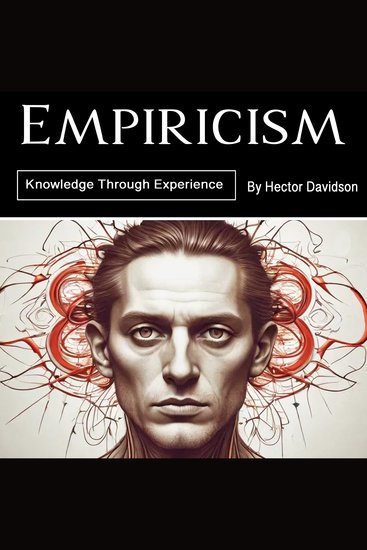
  • Empiricism - Knowledge Through Experience - cover

    Empiricism - Knowledge Through...

    Hector Davidson

    • 0
    • 0
    • 0
    Empiricism, as a philosophical doctrine, asserts that knowledge is primarily derived from sensory experience. This perspective contrasts sharply with rationalism, which emphasizes reason and innate knowledge. Empiricism has shaped our understanding of the world and influenced numerous fields, from the natural sciences to ethics and epistemology. The essence of empiricism lies in the conviction that the mind begins as a "blank slate" (tabula rasa) and that experience, rather than pre-existing ideas or concepts, forms the foundation of all knowledge. 
    At the heart of empiricist thought is the belief that all human knowledge starts with perception. We acquire information about the world through our senses—sight, hearing, touch, taste, and smell—which provide the raw data from which we form concepts and beliefs. For empiricists, knowledge is not something we discover internally, but something we gather from external reality. This view stands in contrast to the rationalist emphasis on a priori knowledge, which is independent of experience and accessible only through reason. 
    Empiricism's roots can be traced back to ancient philosophy, with early proponents like Aristotle, who argued that all knowledge comes from sensory observation. However, the modern development of empiricism is largely credited to three major figures: John Locke, George Berkeley, and David Hume. Locke introduced the idea of the mind as a tabula rasa, arguing that individuals are born without innate ideas and that all knowledge comes from experience. Berkeley took this further by suggesting that even the existence of the external world depends on perception, encapsulating the notion that "to be is to be perceived." Hume, the most radical empiricist of the three, questioned the very basis of causality and inductive reasoning, asserting that our beliefs in cause-and-effect relationships were not rationally justified but arose from habitual experience.
    Ver libro
  • The Journey Begins - Tales of the Sea (Book One) - cover

    The Journey Begins - Tales of...

    Cynthia Elder

    • 0
    • 0
    • 0
    The year is 1830. In the small seafaring town of West Barnstable, Massachusetts, young James Jenkins follows the sailor’s life. Ruth Fish, the daughter of a ship’s captain, bristles with passion to see the world and escape the confines of her small town. Separated for years at a time from home and family, James binds himself to them through letters that span the vastness of oceans and time. Torn between the competing desires of her heart, Ruth imagines a life on the sea, going as far as any man might go.
    Ver libro
  • The Psychology of Money - cover

    The Psychology of Money

    Morgan Housel

    • 0
    • 0
    • 0
    This work offers concise Key Insights & Analysis of The Psychology of Money, by Morgan Housel. It is not the original book and is not affiliated with or endorsed by Morgan Housel. Designed for readers seeking a clear, thought-provoking overview that captures the novel’s central themes and emotional depth. 
    Money is not just about numbers, charts, or financial strategies—it is a story shaped by human behavior, emotions, and perception. This book explores the hidden psychological forces that govern how people think about wealth, risk, and success. Through compelling stories and timeless lessons, it reveals why rational financial decisions often collide with emotional impulses, and how understanding these patterns can transform the way we build, preserve, and enjoy money. Rather than focusing on technical formulas, it examines the role of luck, ego, patience, and perspective in shaping financial outcomes. Practical, insightful, and deeply human, this work provides a new lens to understand the real drivers of financial well-being.
    Ver libro