¡Acompáñanos a viajar por el mundo de los libros!
Añadir este libro a la estantería
Grey
Escribe un nuevo comentario Default profile 50px
Grey
Suscríbete para leer el libro completo o lee las primeras páginas gratis.
All characters reduced
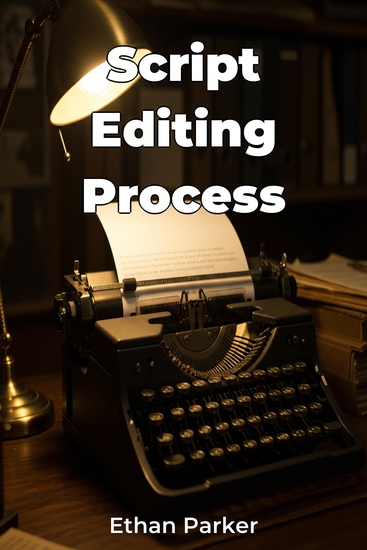
Script Editing Process - cover

Script Editing Process

Ethan Parker

Traductor A AI

Editorial: Publifye

  • 0
  • 0
  • 0

Sinopsis

Script Editing Process explores the vital role of the script editor in transforming a raw screenplay or play script into a polished, production-ready piece. It emphasizes that effective script editing involves more than just fixing errors; it's a comprehensive process that can elevate the narrative and ensure the story deeply resonates with audiences. The book uniquely highlights the editor as a crucial collaborator, enhancing the writer's vision. Did you know that even some of the most successful films and plays have undergone extensive script editing to hone their impact? The book progresses methodically, beginning with the fundamental principles of script editing and the responsibilities of the editor. It then dissects three core elements: cut decisions, pacing adjustments, and textual clarification. For example, cutting unnecessary scenes can sharpen the focus of the narrative, while adjusting pacing can build suspense or enhance comedic timing. Through case studies, interviews, and textual analysis, the book provides a practical, hands-on approach to understanding and applying these essential editing skills. This resource provides aspiring script editors, screenwriters, playwrights, and students of performing arts with actionable advice and real-world examples. It demonstrates how careful attention to narrative structure, dialogue, and the overall editing process can significantly impact the success of any film or television project.
Disponible desde: 05/05/2025.
Longitud de impresión: 89 páginas.

Otros libros que te pueden interesar

  • The Master of Drums - Gene Krupa and the Music He Gave the World - cover

    The Master of Drums - Gene Krupa...

    Elizabeth J. Rosenthal

    • 0
    • 0
    • 0
    From the early 1930s onward, Gene Krupa was a drum-centric rarity in the jazz world. Never before had a drummer been in the forefront as a solo artist. His galvanizing, unrestrained passion for percussion demanded it. Rocking the rafters, Gene thrilled audiences in ballrooms, nightclubs, and movies. 


    Seemingly born jazz-drum crazy in 1909 to a Polish-immigrant working-class family in South Chicago, Gene was a professional by the age of thirteen and soon made his first recordings. By the early 1930s, he was New York City's most in-demand drummer, and in 1934, joined brilliant clarinetist Benny Goodman's band, helped inaugurate the Swing Era, and played the first-ever swing concert at Carnegie Hall. He formed his own band and shattered racial boundaries by sharing the spotlight with the African-American trumpeter Roy Eldridge. But after a skyrocketing ride to the top, Gene experienced a rollercoaster ride of good and bad luck, emotional highs, and devastating depths. 


    In The Master of Drums, biographer Elizabeth J. Rosenthal crafts a celebratory, honest, and exhaustively researched portrait of a twentieth-century music legend. When he died, Gene Krupa may have left behind a world of grieving friends, colleagues, fans, students, and progeny, but as The Master of Drums proves, his dynamic musical and cultural influences live on.
    Ver libro
  • Ride Lonesome - cover

    Ride Lonesome

    Kirk Ellis

    • 0
    • 0
    • 0
    Ride Lonesome, the fifth film in the "Ranown cycle," is both the best and most representative of the whole series, which has been called "the most remarkable convergence of artistic achievement in the history of low-budget moviemaking." Director Bud Boetticher captures the alienation and loneliness of an America faced with the Cold War and the daily threat of nuclear annihilation. Shot in seventeen days for under a half-million dollars, Ride Lonesome is a masterpiece of cinematic minimalism. 


    Veteran screenwriter Kirk Ellis brilliantly unpacks the themes, narrative, visual language, and editing in this seminal film. In Ride Lonesome Ellis not only shows how this one film embodies a turning point for the Western, but he also explores the unique vision and contributions of director Boetticher and his writing partner Burt Kennedy.
    Ver libro
  • Say "Please" and "Thank You!" - cover

    Say "Please" and "Thank You!"

    Kim Mitzo Thompson, Karen Mitzo...

    • 0
    • 1
    • 0
    Say "Please" and "Thank You!” is an entertaining story/song combination perfect to teach young children the importance of being kind, and saying “Please” and “Thank You!” Adorable illustrations, coupled with an easy to follow “word-for-word” song, will entertain pre-readers and reinforce early literacy skills. Children and parents alike will enjoy reading and singing along to “Say Please and Thank You” over and over again!
    Ver libro
  • Skirts - Fashioning Modern Femininity in the Twentieth Century - cover

    Skirts - Fashioning Modern...

    Kimberly Chrisman-Campbell

    • 0
    • 0
    • 0
    In a sparkling social history, Skirts traces the shifting roles of women over the twentieth century through the era's most iconic and influential dresses. 


    While the story of women's liberation has often been framed by the growing acceptance of pants over the twentieth century, the most important and influential female fashions of the era featured skirts. Suffragists and soldiers marched in skirts; the heroines of the Civil Rights Movement took a stand in skirts. As women made strides towards equality in the vote, the workforce, and the world at large, their wardrobes evolved with them. 


    Kimberly Chrisman-Campbell's Skirts looks at the history of twentieth-century womenswear through the lens of game-changing styles like the little black dress and the Bar Suit, as well as more obscure innovations like the Taxi dress or the Pop-Over dress, which came with a matching potholder. These influential garments illuminate the times in which they were first worn—and the women who wore them—while continuing to shape contemporary fashion and even opening the door for a genderfluid future of skirts. At once an authoritative work of history and a delightfully entertaining romp through decades of fashion, Skirts charts the changing fortunes, freedoms, and aspirations of women themselves.
    Ver libro
  • The Collected Works of Jim Morrison - Poetry Journals Transcripts and Lyrics - cover

    The Collected Works of Jim...

    Jim Morrison

    • 0
    • 0
    • 0
    Performed by Jim Morrison, Patti Smith, Liz Phair, Oliver Ray, Tom Robbins, Frank Lisciandro, Anne Morrison Chewning, Sefton Graham, and Ian Morrison. Includes Jim Morrison’s final poetry recording, now available for the first time, at the Village Recorder in West Los Angeles on his 27th birthday, December 8, 1970. 
    The definitive anthology of Jim Morrison's writings with rare photographs and numerous handwritten excerpts of unpublished and published poetry and lyrics from his 28 privately held notebooks. 
    Created in collaboration with Jim Morrison’s estate and inspired by a posthumously discovered list entitled “Plan for Book,” The Collected Works of Jim Morrison is an almost 600-page anthology of the writings of the late poet and iconic Doors’ front man. This landmark publication is the definitive opus of Morrison’s creative output—and the book he intended to publish. Throughout, a compelling mix of 160 visual components accompanies the text: excerpts from his 28 privately held notebooks—all written in his own hand and published here for the first time—as well as an array of personal images and commentary on the work by Morrison himself.   
    This oversized, beautifully produced collectible volume contains a wealth of new material—poetry, writings, lyrics, and audio transcripts of Morrison reading his work. Not only the most comprehensive book of Morrison’s work ever published, it is immersive, giving readers insight to the creative process of and offering access to the musings and observations of an artist whom the poet Michael McClure called “one of the finest, clearest spirits of our times.”   
    This remarkable collector’s item includes: Foreword by Tom Robbins; introduction and notes by editor Frank Lisciandro that provide insight to the work; prologue by Anne Morrison ChewningPublished and unpublished work and a vast selection of notebook writings The transcript, the only photographs in existence, and production notes of Morrison’s last poetry recording on his twenty-seventh birthday The Paris notebook, possibly Morrison’s final journal, reproduced at full reading sizeExcerpts from notebooks kept during his 1970 Miami trialThe shooting script and gorgeous color stills from the never-released film HWYComplete published and unpublished song lyrics accompanied by numerous drafts in Morrison’s handEpilogue: “As I Look Back”: a compelling autobiography in poem form Family photographs as well as images of Morrison during his years as a performer 
    Hear Jim Morrison’s final poetry recording, now available for the first time, on CD or digital audio book, at the Village Recorder in West Los Angeles on his twenty-seventh birthday, December 8, 1970. The digital audio book also includes performances by Patti Smith, Oliver Ray, Liz Phair, Tom Robbins, and others reading Morrison’s work.  
    Supplemental enhancement PDF accompanies the audiobook.
    Ver libro
  • Expanded Choreographies - Choreographic Histories - Trans-Historical Perspectives Beyond Dance and Human Bodies in Motion - cover

    Expanded Choreographies -...

    Anna Leon

    • 0
    • 0
    • 0
    From objects to sounds, choreography is expanding beyond dance and human bodies in motion. This book offers one of the rare systematic investigations of expanded choreography as it develops in contemporaneity, and is the first to consider expanded choreography from a trans-historical perspective. Through case studies on different periods of European dance history - ranging from Renaissance dance to William Forsythe's choreographic objects and from Baroque court ballets to digital choreographies - it traces a journey of choreography as a practice transcending its sole association with dancing, moving, human bodies.
    Ver libro