Junte-se a nós em uma viagem ao mundo dos livros!
Adicionar este livro à prateleira
Grey
Deixe um novo comentário Default profile 50px
Grey
Assine para ler o livro completo ou leia as primeiras páginas de graça!
All characters reduced
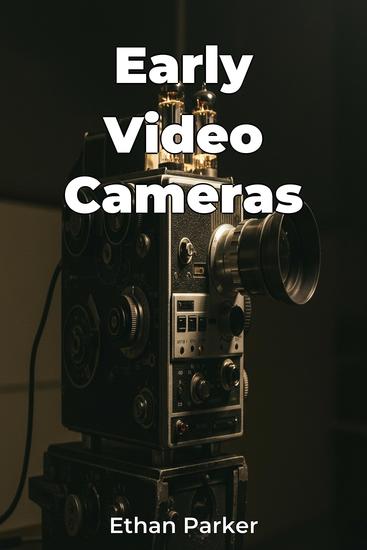
Early Video Cameras - cover
LER

Early Video Cameras

Ethan Parker

Tradutor A Ai

Editora: Publifye

  • 0
  • 0
  • 0

Sinopse

Early Video Cameras explores the fascinating history and impact of the first video cameras, devices that profoundly reshaped media and our perception of the world. The book examines how these early innovations revolutionized news reporting, filmmaking, and personal documentation, laying the groundwork for contemporary visual culture. Early video cameras were more than just tools; they transformed how we record and disseminate information, forever altering the relationship between events and their representation.

 
For instance, early news segments captured on these cameras provided unprecedented immediacy, while advancements in video technology enabled new forms of storytelling in documentary filmmaking. The book approaches this history by blending technical analysis with a broader cultural and historical context, showing how these devices reflected changing social values.

 
It is structured into three main sections. First, the technical underpinnings of early video cameras are detailed, including the engineering challenges and social factors that drove innovation. Next, the impact of these cameras on news, documentary filmmaking, and home entertainment is explored. Finally, the book analyzes notable historical events captured by these early video cameras, emphasizing their role in shaping public understanding.

 
The book is a valuable resource for film and media students, historians, and anyone interested in the origins of modern visual culture.
Disponível desde: 26/02/2025.
Comprimento de impressão: 58 páginas.
Outros livros que poderiam interessá-lo

  • Philippians - The World English Bible Book 50 (Unabridged) - cover

    Philippians - The World English...

    Various Authors

    • 0
    • 0
    • 0
    The Epistle to the Philippians is a Pauline epistle of the New Testament of the Christian Bible. The epistle is attributed to Paul the Apostle and Timothy is named with him as co-author or co-sender. The letter is addressed to the Christian church in Philippi. Paul, Timothy, Silas (and perhaps Luke) first visited Philippi in Greece (Macedonia) during Paul's second missionary journey from Antioch, which occurred between approximately 49 and 51 AD. In the account of his visit in the Acts of the Apostles, Paul and Silas are accused of "disturbing the city".
    Ver livro
  • The Slippery Slope Fallacy - Arguing That One Action Will Lead to Extreme Consequences - cover

    The Slippery Slope Fallacy -...

    William Rands

    • 0
    • 0
    • 0
    Fallacies are errors in reasoning that undermine the logical validity of an argument. They often appear persuasive on the surface, yet, when examined closely, they reveal flaws that can mislead individuals or entire groups. In an increasingly complex world, recognizing these logical fallacies is crucial for navigating discussions, making informed decisions, and engaging in rational debate. The ability to identify fallacious reasoning helps individuals critically evaluate arguments and avoid being swayed by flawed logic. 
    Among the various types of fallacies, the Slippery Slope fallacy is one of the most prevalent. It involves the assumption that a particular action will inevitably lead to extreme and undesirable consequences, often without sufficient evidence to support such a claim. This form of argument relies heavily on fear and exaggeration, suggesting that even a small step in a certain direction will set off a chain of events leading to catastrophic results. The Slippery Slope fallacy is commonly used in political, legal, and social debates, where the consequences of a decision or policy are often portrayed as extreme and far-reaching. 
    The importance of understanding fallacies like the Slippery Slope lies in their widespread use in everyday life. From political campaigns to media coverage and even casual conversations, individuals are often presented with arguments that rely on fallacious reasoning. These arguments, though compelling, can lead to faulty conclusions, influencing public opinion and decision-making in harmful ways. By recognizing the Slippery Slope fallacy, we can avoid being manipulated by fear-based rhetoric and instead focus on making decisions grounded in evidence and logical reasoning.
    Ver livro
  • A Chance to Harmonize - How FDR's Hidden Music Unit Sought to Save America from the Great Depression—One Song at a Time - cover

    A Chance to Harmonize - How...

    Sheryl Kaskowitz

    • 0
    • 0
    • 0
    In 1934, the Great Depression had destroyed the US economy, leaving residents poverty-stricken. First Lady Eleanor Roosevelt urged President Roosevelt to take radical action to help those hit hardest. They set up government homesteads in rural areas across the country, an experiment in cooperative living where people could start over. To boost morale and encourage the homesteaders to find community in their own traditions, the administration brought in artists to lead group activities—including folk music.Working almost entirely (and purposely) under the radar, the music unit would collect more than 800 songs and operate for nearly two years, until they were shut down under fire from a conservative coalition in Congress that deemed the entire homestead enterprise dangerously "socialistic."Despite its early demise, the music unit proved that music can provide hope and a sense of belonging even in the darkest times. It also laid the groundwork for the folk revival that followed.A Chance To Harmonize reveals this untold story and will delight listeners with the revelation of a new and previously undiscovered chapter in American cultural history.
    Ver livro
  • Mother Teresa: A short biography - 5 Minutes: Short on time – long on info! - cover

    Mother Teresa: A short biography...

    5 Minutes, 5 Minute Biographies,...

    • 0
    • 0
    • 0
    Mother Teresa, nun and Nobel peace prize laureate: Life and work in a short biography! Everything you need to know, brief and concise. Infotainment, education and entertainment at its best!
    Ver livro
  • W E B DuBois on Sociology and the Black Community - cover

    W E B DuBois on Sociology and...

    W.E.B. DuBois

    • 0
    • 0
    • 0
    Historian, journalist, educator, and civil rights advocate W. E. B. Du Bois was perhaps most accomplished as a sociologist of race relations and of the black community in the United States. This volume collects his most important sociological writings from 1898 to 1910. The eighteen selections include five on Du Bois’s conception of sociology and sociological research, especially as a tool in the struggle for racial justice; excerpts from studies of black communities in the South and the North, including The Philadelphia Negro; writings on black culture and social life, with a selection from The Negro American Family; and later works on race relations in the United States and elsewhere after World War II. This section includes a powerful fiftieth-anniversary reassessment of his classic 1901 article in the Atlantic in which he predicted that “the problem of the twentieth century is the problem of the color line.“ 
     
    The editors provide an annotated bibliography, a lengthy overview of Du Bois’s life and work, and detailed introductions to the selections.
    Ver livro
  • Omaha Beach - D-Day June 6 1944 - cover

    Omaha Beach - D-Day June 6 1944

    Joseph Balkoski

    • 0
    • 0
    • 0
    Includes maps, photos, and firsthand accounts of participants: “There is no better book on this vital chapter in American history.” —Terry Copp, author of Fields of Fire   Combining the personal recollections of soldiers with historical narrative and analysis of the actual invasion as it unfolded, this detailed description of the action at Omaha Beach during the Normandy invasion of World War II comes from “the top living D-Day historian” (USA Today).   “Anyone who wants to know anything about Omaha Beach, where the fighting was heaviest and bloodiest, must begin with this foundational book…The research is unparalleled and comprehensive enough to satisfy even the most skeptical scholar, yet the story is absorbing. The carnage of Omaha Beach comes to life with vivid contemporary descriptions from participants and witnesses, while the whole tale is deftly steered along by Balkoski’s steady narration and his sense of the battle’s larger significance. ‘History can provide at least a little solace that there was some meaning to it all,’ he writes movingly. ‘D-Day was the decisive chapter of a twentieth century Iliad.’ Indeed it was—and Balkoski is its Homer.” —The Wall Street Journal   “Balkoski makes officer and enlisted-men’s first-person testimony the center of this account.” —Publishers Weekly   “Intensely researched and definitive.” —Army magazine   “Balkoski’s depiction of ‘Bloody Omaha’ is the literary accompaniment to the white-knuckle Omaha Beach scene that opens Steven Spielberg’s Saving Private Ryan.” —The New York Post   “The best D-Day-related book I have read.” —Pittsburgh Post-Gazette
    Ver livro