¡Acompáñanos a viajar por el mundo de los libros!
Añadir este libro a la estantería
Grey
Escribe un nuevo comentario Default profile 50px
Grey
Suscríbete para leer el libro completo o lee las primeras páginas gratis.
All characters reduced
The Hidden Costs of Convenience - How Automation Affects Our Lives - cover

The Hidden Costs of Convenience - How Automation Affects Our Lives

Ethan Monroe

Editorial: Lulu.com

  • 0
  • 0
  • 0

Sinopsis

As automation becomes increasingly embedded in our daily lives, convenience has reached unprecedented levels—but at what cost? "The Hidden Costs of Convenience - How Automation Affects Our Lives" delves into the often-overlooked impacts of automation, examining how the pursuit of efficiency and ease is reshaping our relationships, work, privacy, and even our sense of self. From smart devices and self-checkouts to algorithm-driven decisions and AI-powered services, automation is transforming how we live, often in ways we may not fully realize.

This book takes a critical look at the trade-offs involved in embracing a world where machines handle tasks we once did ourselves. With thought-provoking insights, case studies, and a balanced analysis of both the benefits and drawbacks, "The Hidden Costs of Convenience" helps readers understand the broader implications of an automated world. Ideal for anyone interested in the social, psychological, and economic effects of technology, this book invites you to consider what we gain—and what we may be losing—in the name of convenience.

Inside this book, you’ll explore:

The rise of automation and its role in streamlining everything from shopping to communication.
How automation affects employment, changing the nature of work and displacing traditional jobs.
Privacy concerns in the age of smart technology, and the cost of personal data in exchange for convenience.
The psychological impact of automation, including its effects on human connection, autonomy, and critical thinking.
Environmental consequences of increased automation, from energy consumption to electronic waste.
The impact on consumer behavior as convenience becomes a primary factor in decision-making.
Strategies for navigating an automated world mindfully, finding balance between convenience and meaningful experiences.
"The Hidden Costs of Convenience" offers a timely exploration of how automation is reshaping our world, urging readers to consider the broader consequences of this technological shift. Whether you’re a tech enthusiast, a professional in an automated field, or simply curious about the future, this book will open your eyes to the trade-offs involved in a world where convenience reigns supreme. Embrace a deeper understanding of how automation affects our lives, and discover ways to make conscious choices in a rapidly changing world.
Disponible desde: 13/10/2024.

Otros libros que te pueden interesar

  • Strange Religion - How the First Christians Were Weird Dangerous and Compelling - cover

    Strange Religion - How the First...

    Nijay K. Gupta

    • 0
    • 0
    • 0
    The first Christians were weird. Just how weird is often lost on today's believers. 


    Within Roman society, the earliest Christians stood out for the oddness of their beliefs and practices. They believed unusual things, worshiped God in strange ways, and lived a unique lifestyle. They practiced a whole new way of thinking about and doing religion that would have been seen as bizarre and dangerous when compared to Roman religion and most other religions of the ancient world. 


    Award-winning author, blogger, speaker, and New Testament teacher Nijay Gupta traces the emerging Christian faith in its Roman context in this accessible and engaging book. Christianity would have been seen as radical in the Roman world, but some found this new religion attractive and compelling. The first Christians dared to be different, pushed the boundaries of what was acceptable, transformed how people thought about religion, and started a movement that grew like wildfire. This book shows how the example of the earliest Christians can offer today's believers encouragement and hope.
    Ver libro
  • When Others Dont Understand Your Illness - 5 Ways to Feel Well When You're Sick and Alone - cover

    When Others Dont Understand Your...

    Heather Coleske

    • 0
    • 0
    • 0
    A diagnosis and treatment plan for a chronic illness has brought your world crashing down - When Others Don’t Understand Your Illness can help get your well-being back on track again. 
    Stress in our everyday life is common but add the shock of diagnosis and grief of the loss of health, and it’s a perfect storm of stress and overthinking, which can lead to depression and anxiety. 
    This book teaches you how to leverage your existing resources rather than expending your finite energy on reinventing the wheel. 
    This chronic illness book can help you alter your view of the future! It offers a well-being plan that can propel you from feeling sick and sad to thriving! If you’re feeling overwhelmed by your new reality and tired of sifting through the myriad of conflicting advice about everything from fatigue to fibromyalgia and dealing with the indifference of people around you, this book may help to declutter, prioritize, and put things into perspective. 
    The book covers:5 Ways to feel well - practical ways to incorporate and optimize simple things you already have at your disposal to improve your wellbeingUnderstanding autoimmune disease and moodNavigating relationshipsHow to Live with pain - strategies for managing pain before it manages youWays to help you feel better when you’re feeling sick and aloneCoping with loss - future prospects including hopes and dreams are often lost when chronic illnesses strike, and their loss is always accompanied by griefStress managementWays to stop overthinkingAnxiety techniques that are simple yet effective 
    Living with chronic illness is complicated, but this practical guide to intentional physical, mental, spiritual, and relational well-being offers a pathway to flourishing. For anyone coming to terms with a diagnosis, there is hope to live your best life by developing a personalized well-being plan.
    Ver libro
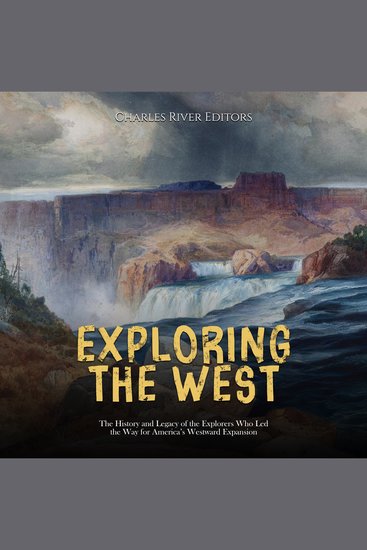
  • Exploring the West: The History and Legacy of the Explorers Who Led the Way for America’s Westward Expansion - cover

    Exploring the West: The History...

    Editors Charles River

    • 0
    • 0
    • 0
    The Louisiana Purchase encompassed all or part of 15 current U.S. states and two Canadian provinces, including Arkansas, Missouri, Iowa, Oklahoma, Kansas, Nebraska, parts of Minnesota that were west of the Mississippi River, most of North Dakota, nearly all of South Dakota, northeastern New Mexico, Northern Texas, the portions of Montana, Wyoming, and Colorado east of the Continental Divide, and Louisiana west of the Mississippi River, including the city of New Orleans (parts of this area were still claimed by Spain at the time of the Purchase.) In addition, the Louisiana Purchase contained small portions of land that would eventually become part of the Canadian provinces of Alberta and Saskatchewan. The purchase, which doubled the size of the young nation, comprises around 23% of current American territory.  
    	In the aftermath of the Louisiana Purchase, the Lewis and Clark expedition was a much-heralded blow for American rights in the face of international competition, but that was only one of four expeditions authorized by Jefferson. Four years before Lewis and Clark set off, an army officer from New Jersey led two long-distance treks, one northward to the headwaters of the Mississippi River and the other to the Southwest. These were the only expeditions authorized by Jefferson while they were already en route, planned and launched by subordinates within the military. 
    	Of all the legends and folk heroes who lived in the 19th century, men such as Daniel Boone and Davy Crockett, few actually accomplished as much as Kit Carson. A frontier boy who hopped onto the Santa Fe Trail as a teen, Carson became the quintessential mountain man during the 1830s and was literally a trailblazer for John C. Fremont’s historic expeditions through the West in the 1840s. Along the way, Carson learned so many Native American dialects that he was considered nearly as proficient talking with them as he was fighting them.
    Ver libro
  • Thanks for Your Service - The Causes and Consequences of Public Confidence in the US Military - cover

    Thanks for Your Service - The...

    Peter D. Feaver

    • 0
    • 0
    • 0
    A definitive study on the decades-long run of high public confidence in the military and why it may rest on some shaky foundations. 


    What explains the high levels of public confidence in the US military and does high confidence matter? In Thanks for Your Service, the eminent civil-military relations scholar Peter D. Feaver addresses this question and focuses on what it means for the military. Proprietary survey data show that confidence is partly based on public beliefs about the military's high competence, adherence to high professional ethics, and a determination to stand apart from the bitter divisions of partisan politics. However, as Feaver argues, confidence is also shaped by a partisan gap and by social desirability bias, the idea that some individuals express confidence in the military because they believe that is the socially approved attitude to hold. Not only does Feaver help us understand how and why the public has confidence in the military, but he also exposes problems that policymakers need to be aware of. Specifically, this book traces how confidence in the institution shapes public attitudes on the use of force and may not always reinforce best practices in democratic civil-military relations.
    Ver libro
  • Exploring Shakespeare - A Director's Notes from the Rehearsal Room - cover

    Exploring Shakespeare - A...

    Bill Alexander

    • 0
    • 0
    • 0
    'Theatre is the greatest of collaborative art forms, and Shakespeare its greatest exponent: he used the form better than anyone else ever has to speak truth about the world.'
    In Exploring Shakespeare, acclaimed theatre director Bill Alexander takes us inside the rehearsal room to reveal – in unprecedented and captivating detail – exactly what happens there. He examines the key relationship between the actors and the director, how they work together to bring Shakespeare's vision to life, and how choices are made that will shape every aspect of the play in production.
    Full of acute observations and perceptions drawn from a long and brilliant career, the book covers the essential aspects of any Shakespeare production, from understanding the world of the play, to preparing and cutting the text, deciding on costumes and set design, handling soliloquies, and considering character and backstory.
    There are detailed studies of eight plays spanning the full length and breadth of the Shakespearean canon, from Titus Andronicus and The Shrew to The Tempest, via Othello, Hamlet, Lear, The Merchant of Venice and Twelfth Night. Alexander also provides first-hand case studies of three of his own productions, including his famous Richard III starring Antony Sher.
    Personal, forthright, and full of pragmatic advice, Exploring Shakespeare is a masterclass for directors and actors, and a fascinating insight for anyone interested in Shakespeare.
    Bill Alexander was an Associate Director of the Royal Shakespeare Company, and then Artistic Director of Birmingham Rep. His landmark productions include Richard III and The Merry Wives of Windsor (both Olivier Award-winners), The Merchant of Venice, The Taming of the Shrew, Titus Andronicus and King Lear with Corin Redgrave.
    'Bill Alexander is a brilliant director, whose work has powerfully shaped my understanding of Shakespeare's plays, Richard III most of all' James Shapiro, author of 1599: A Year in the Life of William Shakespeare
    Ver libro
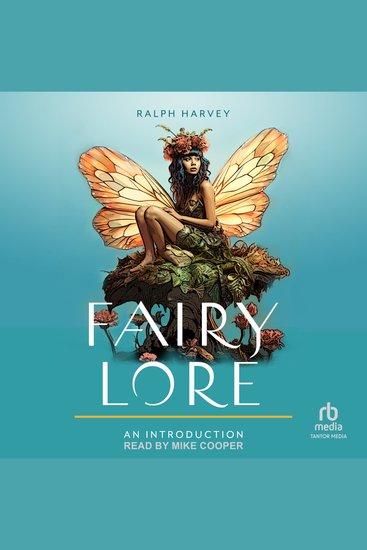
  • Fairy Lore - An Introduction: Your Plain & Simple Guide to the Mystery of Nature Spirits and Their Magical Realm - cover

    Fairy Lore - An Introduction:...

    Ralph Harvey

    • 0
    • 0
    • 0
    Fairies abound in the realms of myth and folklore. They have enchanted humans for centuries—but are these mischievous, ethereal creatures more than just myth? One could ask for no better guide to the fairy realm than Ralph Harvey, one of England's foremost modern-day witches. In Fairy Lore he intersperses his own intriguing fairy encounters (among them, a mysterious musical interlude in an Irish valley) with succinct yet interesting introductions to the folktales of the fae. 


    Within Fairy Lore you will learn: 


    ● How fairies influenced everyone from Henry III to Sir Arthur Conan Doyle 


    ● The best ways to seek out fairies (hint: aligning your chakras will help) and how to express gratitude for fairy favors 


    ● How to create charms to protect against fairies and other supernatural beings 


    ● Which gemstones and crystals draw specific types of fairy and elemental beings 


    ● Why roses have special meaning to fairies and why "elf bolts" are significant as well
    Ver libro