Junte-se a nós em uma viagem ao mundo dos livros!
Adicionar este livro à prateleira
Grey
Deixe um novo comentário Default profile 50px
Grey
Assine para ler o livro completo ou leia as primeiras páginas de graça!
All characters reduced
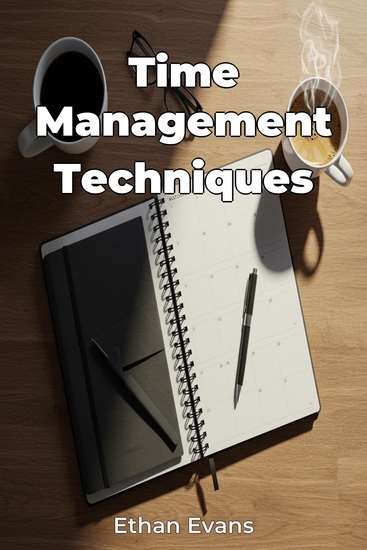
Time Management Techniques - cover
LER

Time Management Techniques

Ethan Evans

Tradutor A AI

Editora: Publifye

  • 0
  • 0
  • 0

Sinopse

"Time Management Techniques" delves into the science of productivity, offering a psychologically informed approach to mastering your schedule. It emphasizes that effective time management isn't just about doing more, but about doing the right things, aligning actions with values for a fulfilling life.

 
The book explores prioritization, using concepts like the Eisenhower Matrix and Pareto Analysis to focus efforts effectively. It also tackles attention management, detailing techniques such as mindfulness and time blocking to combat distractions and optimize cognitive focus.

 
This book stands out by grounding its strategies in psychological principles, like self-determination theory, rather than superficial tips. Readers will understand why certain techniques work and how to adapt them. Addressing procrastination with cognitive behavioral therapy (CBT) techniques is also discussed.

 
The book progresses from foundational concepts to specific techniques, culminating in a personalized time management system. It draws evidence from psychology, management science, and behavioral economics, offering practical exercises to empower readers in reclaiming control of their time, and reducing stress.
Disponível desde: 03/03/2025.
Comprimento de impressão: 121 páginas.

Outros livros que poderiam interessá-lo

  • Pay Up! - Conservative Myths About Tax Cuts for the Rich - cover

    Pay Up! - Conservative Myths...

    John L. Campbell

    • 0
    • 0
    • 0
    Since the Reagan era, conservatives in the United States have championed cutting taxes, especially for wealthy individuals and corporations, as the best way to achieve economic prosperity. In his new book, Pay Up!, John L. Campbell shows that while these claims are highly influential, they are also wrong. Using historical and cross-national evidence, the book challenges and refutes every justification conservatives have made for tax cuts—that American taxes are too high; they hurt the economy; they facilitate government waste; they constitute an unfair downward redistribution of income; and they threaten individual freedom—and conversely shows that countries can actually benefit from higher taxes, especially when tax increases fall most heavily on those most able to pay them. Through clear prose and a well-reasoned argument, Campbell's book provides an accessible, engaging, and much-needed perspective on the role of taxes in American society.
    Ver livro
  • Why People Kill - cover

    Why People Kill

    Raphael Terra

    • 0
    • 0
    • 0
    This audiobook has been recorded using Text to speech (TTS). 
     
    Nothing can be more terrifying than knowing the streets are being prowled by a twisted serial killer. To be a female of a certain age and profession on the streets of 19th century London, with the knowledge that one of your clients could be Jack the ripper himself. 
     
    There were many more Jack the Rippers in the world. 
     
    Every human has a capacity for good or evil. We are all dark and light. This has been known for thousands of years. It has been written, preached and symbolised across the world. 
     
    Just as there are those in history who have stood out for their compassion and good works, there are also those who have become infamous for their propensity to evil. From serial killers who murder one human after another to dictators who order mass genocide upon their own citizens - evil knows no bounds. 
     
    But what is it that creates these people? Is there an inbuilt genetic lock inside awaiting the turning of a key? Or are these people the result of their life experiences? Does abuse by parents play a key role? Does society itself have to answer for the actions of the murderers that it creates? 
     
    It is time to delve deep into the world and mind of serial killers and discover why they kill.
    Ver livro
  • Why should I worry when I can face the world? - cover

    Why should I worry when I can...

    Shibu Nair

    • 0
    • 0
    • 0
    All of us want to be happy yet why do we never make sincere efforts to become happy? All of us want peace of mind yet why do we keep worrying and overthinking for most part of our life? We are all born happy yet why do we fall prey to anxiety and depression as we grow in age? We all know we have to enjoy our present yet why do we regret our past and fear our future? 
    'Why should I worry when I can face the world?' is a sincere attempt to provide credible answers to all these questions. If read, understood and practiced well, this book can help you overcome your worries and bring you everlasting peace and happiness.
    Ver livro
  • Liberty and Crisis: The History of the American Revolution during 1776 - cover

    Liberty and Crisis: The History...

    Editors Charles River

    • 0
    • 0
    • 0
    Although the Declaration of Independence is now considered one of the most important political documents in history, the men that drafted it did not initially favor such a move at the start of the American Revolution. Despite its assumption of governing duties, the Second Continental Congress never intended, at least initially, to become the governing body of a new nation. Instead, it merely hoped to transform the relationship between Britain and her colonies to allow for greater self-government on their side of the Atlantic. Separation between the two was rarely favored, and this initial sentiment coalesced into the Olive Branch Petition, which sought a reasonable motion of reconciliation between George III and the colonies. It was drafted by one of Virginia’s delegates, Thomas Jefferson.  
    	By April of 1776, talk had heated up concerning independence, and a consensus was quickly growing in Congress. However, one problem was in the way: did the Congress have the authority to declare independence for its 13 member colonies? The process was riddled with confusion across the colonies. independence. And of course, simply declaring independence did not mean the British were going to grant it, and during that time, things were looking quite dire for the cause. After the siege of Boston forced the British to evacuate that city in March 1776, Continental Army commander George Washington suspected that the British would move by sea to New York City, the next logical target in an attempt to end a colonial insurrection. He thus rushed his army south to defend the city. 
    In the summer of 1776, the British conducted the largest amphibious expedition in North America’s history at the time, landing over 20,000 troops on Long Island. They easily captured Staten Island, which Washington was incapable of defending without a proper navy. Washington’s army attempted to fight, but Washington was badly outmaneuvered, and his army was nearly cut off from escape. 
    Ver livro
  • Beyond Good and Evil - cover

    Beyond Good and Evil

    Friedrich Nietzsche

    • 0
    • 0
    • 0
    "He who fights with monsters should look to it that he himself does not become a monster. And if you gaze long into an abyss, the abyss also gazes into you."
    
    
    In 1886, Friedrich Nietzsche released a "prelude to a philosophy of the future" that would shatter the foundations of Western ethics. Beyond Good and Evil is a fierce, poetic, and uncompromising attack on the "dogmatism" of traditional philosophers and the herd mentality of modern society. Nietzsche invites the reader to step out of the shadows of inherited values and into the sunlight of intellectual independence.
    
    
    The Will to Power: Moving beyond the simple binaries of "good" and "evil," Nietzsche introduces the Will to Power—the fundamental driving force of all living things to grow, dominate, and create. He argues that morality is not a universal truth but a tool used by different classes to assert their will. Through a series of 296 searing aphorisms, he challenges us to become "Free Spirits" capable of creating our own values in a world without absolute certainties.
    
    
    A Blueprint for the Individual: Nietzsche's prose is a "hammer" meant to test the resonance of existing idols. He critiques everything from the "prejudices of philosophers" to the rise of nationalism and democracy, which he views as a leveling of human potential. Beyond Good and Evil remains one of the most provocative works in history, essential for anyone brave enough to question the very fabric of their reality and the origin of their convictions.
    
    
    Challenge everything you believe. Purchase "Beyond Good and Evil" today and begin your journey toward the Overman.
    Ver livro
  • Common Sense Economics - What Everyone Should Know About Wealth and Prosperity Fourth Edition - cover

    Common Sense Economics - What...

    James D. Gwartney, Tawni Hunt...

    • 0
    • 0
    • 0
    The fully revised and updated fourth edition of the classic Common Sense Economics. 


    As the global economy recovers from the COVID-19 pandemic and debates over the future of work challenge our long-held preconceptions about what careers and the market can be, learning the basics of economics has never been more essential. Principles such as gains from trade, the role of profit and loss, and the secondary effects of government spending, taxes, and borrowing risk continue to be critically important to the way America's economy functions, and critically important to understand for those hoping to further their professional lives—even their personal lives. Common Sense Economics discusses these key points and theories and more, using them to show how any listener can make wiser personal choices and form more informed positions on policy. 


    Now in its fourth edition, this classic from James D. Gwartney, Dwight R. Lee, Tawni Hunt Ferrarini, Joseph P. Calhoun, and Jane Shaw Stroup has been fully updated to include commentary on the effects of the pandemic on the global economy and the workplace; it offers insight into political processes and the many ways in which economics informs policy, illuminating our world and what might be done to make it better.
    Ver livro