Join us on a literary world trip!
Add this book to bookshelf
Grey
Write a new comment Default profile 50px
Grey
Subscribe to read the full book or read the first pages for free!
All characters reduced
Cultural Intelligence - cover

Cultural Intelligence

Ethan Evans

Translator A AI

Publisher: Publifye

  • 0
  • 0
  • 0

Summary

In today's global landscape, Cultural Intelligence explores why some leaders excel in diverse settings while others falter, emphasizing the importance of cultural intelligence (CQ). It presents a framework for understanding and effectively navigating cultural differences, crucial for success in global business and diverse workplaces. The book highlights that CQ, a measurable and developable capability, significantly impacts individual and organizational performance.

 
The book focuses on understanding cultural dimensions, developing CQ skills (like cognitive flexibility and emotional intelligence), and applying CQ in real-world scenarios such as leading diverse teams and negotiating across cultures. Drawing on empirical research, the book demonstrates links between CQ and positive outcomes like increased sales and improved team collaboration.

 
It provides practical exercises, case studies, and self-assessment tools to enhance your CQ, offering actionable strategies applicable in everyday scenarios. The book is structured to provide a clear path to developing CQ, starting with an introduction to the concept and its four key capabilities: CQ-Drive, CQ-Knowledge, CQ-Strategy, and CQ-Action.

 
Connections to fields like organizational behavior and human resource management enrich the argument, providing a holistic view of CQ's impact. This approach makes the book a valuable resource for managers, leaders, and anyone seeking to enhance their effectiveness in multicultural environments.
Available since: 03/03/2025.
Print length: 102 pages.
Other books that might interest you

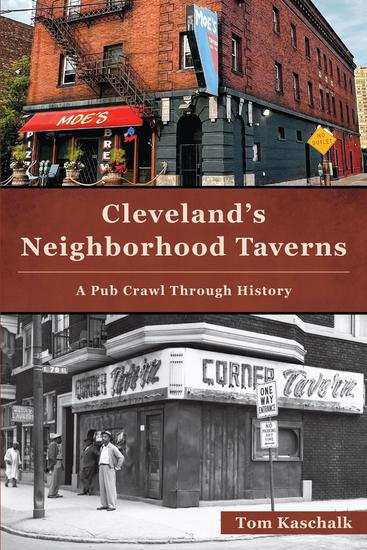
  • Cleveland's Neighborhood Taverns - A Pub Crawl Through History - cover

    Cleveland's Neighborhood Taverns...

    Tom Kaschalk

    • 0
    • 0
    • 0
    Cleveland's neighborhood taverns are more than just places to grab a drink—they're snapshots of the city's history, rich with tales of community, celebration and even scandal.
    Built by hardworking immigrants chasing the American Dream, these taverns were where workers cashed their paychecks, swapped stories, celebrated victories and sometimes witnessed late-night crimes. Family-run bars were often passed down through generations, becoming intertwined with the ever-changing face of the city. Although many did not survive the 1960s and '70s, their memory lives on.
    Native Clevelander and founder of My Cleveland History Tom Kaschalk honors the legendary watering holes that shaped Cleveland's communities, hosted vibrant music scenes and served as the backdrop to both good times and life-changing events.
    Show book
  • Late Ottoman Gaza - An Eastern Mediterranean Hub in Transformation - cover

    Late Ottoman Gaza - An Eastern...

    Johann Buessow, Yuval Ben-Bassat

    • 0
    • 0
    • 0
    In contemporary public discourse, Gaza tends to be characterized solely as a theater of the ongoing conflict between Israel and the Palestinians. However, little is known about Gaza's society, politics, economy, and culture during the Ottoman era. Drawing on a range of previously untapped local and imperial sources, Yuval Ben-Bassat and Johann Buessow explore the city's history from the mid-nineteenth century through WWI. They show that Gaza's historical importance extends far beyond the territory of the 'strip' since the city was an important hub for people, goods, and ideas in the Eastern Mediterranean from Antiquity until the twentieth century. Using new digital methodologies, Ben-Bassat and Buessow introduce listeners to the world of Gazans from various walks of life, from the traditional Muslim elites to the commoners and minority communities of Christians and Jews. In so doing, they tell the lively story of this significant but frequently misunderstood city.
    Show book
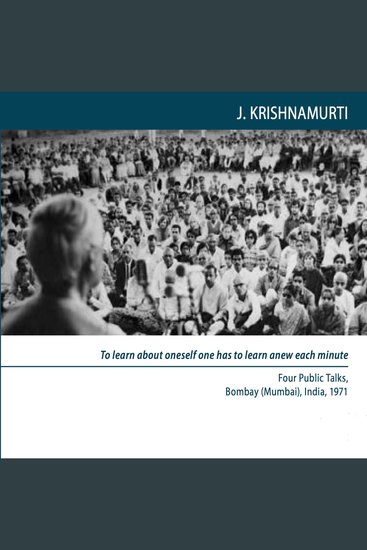
  • To Learn About Oneself One Has to Learn Anew Each Minute - Four Public Talks Bombay (Mumbai) India 1971 - cover

    To Learn About Oneself One Has...

    Jiddu Krishnamurti

    • 0
    • 0
    • 0
    "To perceive 'what is' is the basis of truth," 7 February 1971. Duration: 86 minutes.
    Where there is division, there must be conflict. A mind in conflict must inevitably be distorted, and therefore it cannot possibly see clearly what is truth.
    
    We need a total change, a deep revolution, psychological revolution, the inward revolution, without which you cannot possibly create a new society. Is it possible to observe, to perceive without the observer?
    
    How are images formed? Can the image building come to an end? Knowledge is absolutely necessary. Is it possible that knowledge, which the brain has accumulated through centuries, does not interfere with relationships?
    
    "Direct perception is freedom," 10 February 1971. Duration: 80 minutes.
    Can the mind living in this world ever be free, not only superficially but profoundly, at the very root of its existence? 'Freedom from' is an abstraction, but freedom in observing 'what is' and going beyond it is actual freedom.
    
    How do I observe greed? Do I observe it as an outsider looking in, or do I observe it without the observer? Without the mind being free, you cannot live in order. Three years have passed; I have no energy to be aware of my reactions. Can we seek God through observation?
    
    "Love is that quality of mind in which there is no division," 14 February 1971. Duration: 89 minutes.
    To live in this world with intelligence, in spite of all the complications. Is it possible to be free of fear, not only the superficial fear in relationship but the deep-rooted fear? Thought nourishes, sustains and gives continuity to fear and pleasure.
    
    When you are learning, your mind is awake. Truth isn't second-hand; you can't get it through a guru, a book; you have to learn about it. The beauty of learning is that you don't know what truth is.
    
    What is love? A man who has not love in his heart but the things made by thought will make a monstrous world, will construct a society that is totally immoral. To find out, you must undo everything that you have done.
    
    What does it mean to die?
    
    "A mind in meditation is concerned only with meditation, not with the meditator," 17 February 1971. Duration: 87 minutes.
    If you can put aside your favourite systems, if you can understand that concentration is merely a resistance and therefore constant conflict and wastage of energy, then we can find out for ourselves what is necessary for a mind that is in a state of meditation. To learn about oneself, a living thing, you have to watch, learn anew each minute.
    
    What is will? Consciousness is heritage, the result of time. Consciousness is the content of itself, which is time, sorrow, confusion, misery. Intelligence has no heritage.
    
    What is a mind that is completely silent? How does one cope with the extraordinary energy that human beings have?
    Show book
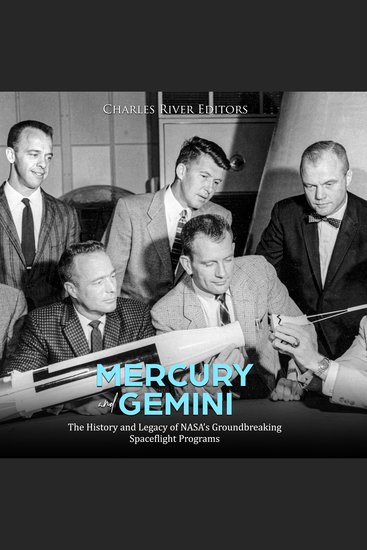
  • Mercury and Gemini: The History and Legacy of NASA’s Groundbreaking Spaceflight Programs - cover

    Mercury and Gemini: The History...

    Editors Charles River

    • 0
    • 0
    • 0
    The successful Apollo 11 mission was certainly an astonishing technological triumph, but what is less well remembered now are that many programs preceded Apollo and were essential to its success. Project Mercury was one of those, and in many ways it represented the greatest step forward in terms of the conquest of space. Before Project Mercury, there was no certainty that a human could survive the rigors of a space launch or live outside Earth’s atmosphere. There was no agreement on just what an astronaut should be, and various individuals involved debated whether they should be pilots, technicians, scientists, or even merely observers in an automated craft. Before Project Mercury, no one was entirely certain what a rocket capable of taking a person into space would look like, or even whether building such a craft was within the capabilities of engineering in the 1950s. 
    Gemini also marked another important milestone as America finally surpassed the Soviet Union in space technology. Before Gemini, the US was playing a desperate game of catch-up as it attempted to match Soviet accomplishments. The last Project Mercury flight launched in May 1963, and before then, Russia had put the first satellite in Earth’s orbit and the first man in space and had followed these with longer flights than the tiny Mercury spacecraft. In terms of military significance, it was recognized that the ability to dominate space was very important, and to many people in America, it seemed that Russia was well on the way to doing this. No one could have guessed that it would be almost three years before the next American manned space flight occurred when Gemini 3 left the launch pad in March 1965. It seemed to many people that the Russian lead in space exploration had become unassailable and, in order to reestablish the credibility of the US space program, the Gemini flights simply had to succeed.
    Show book
  • Anubis—Ancient Egypt’s Lord of Death and Protection - cover

    Anubis—Ancient Egypt’s Lord of...

    Charlie Larson

    • 0
    • 0
    • 0
    “A poignant, powerful, inclusive, and deeply personal journey to meet the Great God Anubis. Filled with solid historical information, as well as practical contemporary rituals, magick, healing practices, and prayers, this book drew me in, opened my heart, and made me love dear Anubis even more.” —Michael Butler Smith, author of Embracing Isis   Anubis is Egypt’s original Lord of the Dead. That title was eventually transferred to Osiris, but even then, Anubis continued to be the most active participant in the after-death process, supervising rituals that determined what would befall the dead soul. He is credited as the inventor of mummification. A shrine to Anubis, one of the most significant gods of ancient Egypt, was discovered within Tutankhamun’s tomb. The image of Anubis has evolved into a veritable symbol of ancient Egypt.   Usually identified as a jackal or as a jackal-headed man, Anubis’s domain extends beyond death—he is a guardian of children and travelers and a finder of lost things. Anubis’s adopted mother, the goddess Isis, became popular outside Egypt, with temples in Rome and as far as the British Isles. As her guardian, Anubis traveled with her. He is as modern as he is ancient, appearing in comic books, video games, and in the book American Gods and its television adaptation. In modern times, Anubis has emerged as a sacred patron of mediums and occultists.   In this practical guide to working with Anubis, author Charlie Larson focuses the spotlight squarely on the jackal-headed god. Steeped in history and mythology, Anubis—Ancient Egypt’s Lord of Death and Protection features devotional practices and modern worship that includes rituals, prayers, invocations, correspondences, altars, and epithets. The book leads the reader on a journey of exploration into all things Anubis, delving into his various facets—death deity, psychopomp, and protector.
    Show book
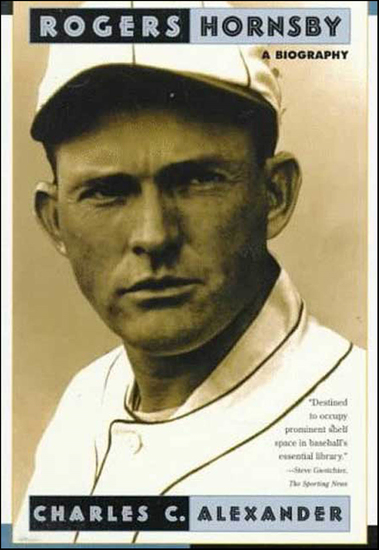
  • Rogers Hornsby - A Biography - cover

    Rogers Hornsby - A Biography

    Charles C. Alexander

    • 0
    • 0
    • 0
    The true life story of one of early twentieth century's baseball legends—a Most Valuable Player and Hall of Famer who was as difficult as he was talented.A relentless competitor, Rogers Hornsby—arguably the finest right-handed hitter in baseball's history—was supremely successful on the baseball field but, in many ways, a failure off it.In this biography, Charles Alexander turns his skilled eye to this complex individual, weaving the stories of his personal and professional life with a lively history of the sport.“Destined to occupy prominent shelf space in baseball's essential library.” —The Sporting News“The author delves into Hornsby's professional and personal life: his relationship with managers Miller Huggins, Branch Rickey and John McGraw; his scandalous affair and subsequent 20-year marriage to a 'flapper'; his personal prohibition on drinking and smoking; his reluctance to watch movies because they might impinge on his eyesight; and his obsession with horse racing-although he never learned to read a racing form. Alexander reviews Hornsby's successful tenure as player-manager of the Cardinals; his subsequent stints with the Giants, Braves, Cubs and Browns; and his career as manager and coach.” —Publishers Weekly
    Show book