¡Acompáñanos a viajar por el mundo de los libros!
Añadir este libro a la estantería
Grey
Escribe un nuevo comentario Default profile 50px
Grey
Suscríbete para leer el libro completo o lee las primeras páginas gratis.
All characters reduced
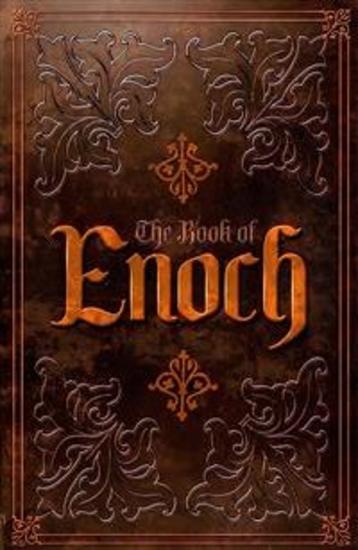
The Book of Enoch - cover

The Book of Enoch

Enoch, Thomas R., Horn

Editorial: Crux Press

  • 0
  • 0
  • 0

Sinopsis

The Bible, as we hold it today, is esteemed by many religious institutions and especially Conservative Christians to be the inspired, inerrant Word of God. This doctrinal position affirms that the Bible is unlike all other books or collections of works in that it is free of error due to having been given by inspiration of God, and is profitable for doctrine, for reproof, for correction, for instruction in righteousness: that the man of God may be perfect, thoroughly furnished unto all good works (2 Tim. 3:16, 17). While no other text can claim this same unique authority, the Book of Enoch is an ancient Jewish religious work, ascribed by tradition to Enoch, the great-grandfather of Noah, which played a crucial role in forming the worldview of the authors of the New Testament, who were not only familiar with it but quoted it in the New Testament, Epistle of Jude, Jude 1:14 15, and is attributed there to "Enoch the Seventh from Adam" (1 En 60:8). The text was also utilized by the community that originally collected and studied the Dead Sea Scrolls. While some churches today include Enoch as part of the biblical canon (for example the Ethiopian Orthodox Tewahedo Church and Eritrean Orthodox Tewahedo Church), other Christian denominations and scholars accept it only as having historical or theological non-canonical interest and frequently use or assigned it as supplemental materials within academic settings to help students and scholars discover or better understand cultural and historical context of the early Christian Church. The Book of Enoch provides commentators valuable insight into what many ancient Jews and early Christians believed when, God, who at sundry times and in divers manners spake in time past unto the fathers by the prophets (Heb. 1:1). As Dr. Michael S. Heiser in the Introduction to his important book Reversing Hermon so powerfully notes: For those to whom 1 Enoch sounds unfamiliar, this is the ancient apocalyptic literary work known popularly (but imprecisely) as the Book of Enoch. Most scholars believe that 1 Enoch was originally written in Aramaic perhaps as early as the 3rd century B.C. The oldest fragments of the book were found among the Dead Sea Scrolls and dated to roughly the second century B.C. This places the book squarely in the middle of what scholars call the Second Temple Period (ca. 500 B.C. 70 A.D.), an era more commonly referred to as the Intertestamental Period. This book will use the more academic designation ( Second Temple Period ) [...] The Watcher story of 1 Enoch, as many readers will recall, is an expansion of the episode described in Genesis 6:1-4, where the sons of God (Hebrew: beney ha- elohim) came in to the daughters of man (Gen 6:4; ESV). Consequently, Watchers is the Enochian term of choice (among others) for the divine sons of God. While the story of this supernatural rebellion occupies scant space in Genesis, it received considerable attention during the Second Temple Period [...] The Enochian version of the events of Gen 6:1-4 preserves and transmits the original Mesopotamian context for the first four verses of the flood account. Every element of Gen 6:1-4 has a Mesopotamian counterpoint a theological target that provides the rationale for why these four verses wound up in the inspired text in the first place. Connections to that backstory can be found in the Old Testament, but they are scattered and unsystematically presented. This is not the case with Second Temple Jewish literature like 1 Enoch. Books like 1 Enoch preserve all of the Mesopotamian touchpoints with Gen 6:1-4 when presenting their expanded retelling of the events of that biblical passage. The Book of Enoch is therefore intended to be an important supplemental resource for assisting serious researchers and students in the study of the Bible.
Disponible desde: 10/06/2023.


Otros libros que te pueden interesar

  • A Child's History of England - cover

    A Child's History of England

    Charles Dickens

    • 0
    • 0
    • 0
    "A Child's History of England" by Charles Dickens offers an engaging journey through the rich tapestry of England's history, specially tailored for young readers. Spanning from ancient Britain to the reign of William and Mary, Dickens brings history to life with vibrant storytelling, making key events and figures both accessible and fascinating. Through lively prose, he turns centuries of England's past into an educational adventure that captivates and informs, fostering a lasting interest in history.
    Ver libro
  • Thus Spoke My Therapist - Nietzsche Without the Mental Breakdown - cover

    Thus Spoke My Therapist -...

    Sophia Blackwell

    • 0
    • 0
    • 0
    hus Spoke My Therapist: Nietzsche Without the Mental Breakdown is your one-way ticket to understanding one of history’s most misunderstood philosophers—without needing a doctorate or a prescription for existential dread. 
    This isn’t your professor’s Nietzsche. It’s Nietzsche with a cocktail of sarcasm, clarity, and just enough emotional damage to be relatable. Philosophy grad student and sarcasm connoisseur Sophia Blackwell slices through the fog of German metaphysics to deliver a book that actually explains what the mustachioed madman was on about—and makes you laugh so hard you forget you're spiraling. 
    Inside, you'll find: 
    Why "God is dead" isn’t just something said by goth teenagers. 
    How Christianity pulled off history’s greatest guilt trip. 
    What the "will to power" has to do with office politics and Instagram likes. 
    How eternal recurrence is basically Groundhog Day with higher stakes. 
    Why the Übermensch is less Hitler, more “that weirdly self-assured friend who makes their own almond milk.” 
    Perfect for people who want to understand philosophy without having to fake a seizure halfway through Thus Spoke Zarathustra. Whether you're a moody teenager, recovering philosophy major, or just someone who wants to win arguments online, this book will arm you with Nietzschean insights and the comedic timing to survive modern life’s absurdity. 
    Warning: Reading this may result in increased self-awareness, spontaneous existential crises, and the irresistible urge to quote Nietzsche at brunch
    Ver libro
  • The Last Island - Discovery Defiance and the Most Elusive Tribe on Earth - cover

    The Last Island - Discovery...

    Adam Goodheart

    • 0
    • 0
    • 0
    In November 2018, a zealous American missionary was killed while attempting to visit an island he called "Satan's last stronghold," a small patch of land known as North Sentinel in the Andaman Islands, a remote archipelago in the Indian Ocean. News of the tragedy fascinated people around the world. Most were unaware such a place still existed in our time: an island unmolested by the advances of modern technology. 


    Twenty years before the American missionary's ill-fated visit, a young American historian and journalist named Adam Goodheart also traveled to the waters off North Sentinel. During his time in the Andaman Islands, he witnessed another isolated tribe emerge into modernity for the first time. 


    Now, Goodheart—a bestselling historian—has returned to the Andamans. The Last Island is a work of history as well as travel, a journey in time as well as place. It tells the stories of others drawn to North Sentinel's mystery through the centuries, from imperial adventurers to an eccentric Victorian photographer to modern-day anthropologists. It narrates the tragic stories of other Andaman tribes' encounters with the outside world. And it shows how the web of modernity is drawing ever closer to the island's shores.
    Ver libro
  • The Last Courtesan - Writing My Mother's Memoir - cover

    The Last Courtesan - Writing My...

    Anónimo

    • 0
    • 0
    • 0
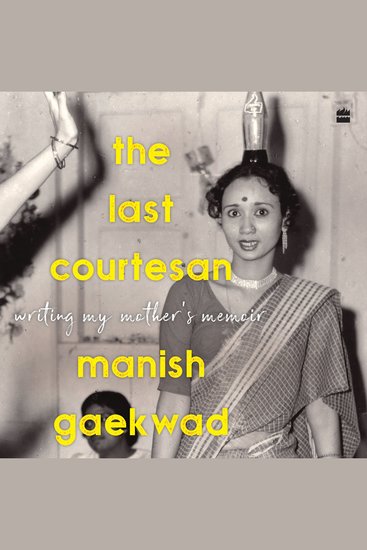
    The 1993 Bow Bazaar bomb blast in Calcutta brought an end to the kothas in the busy commercial district. Over the next few years, as dance bars and disco music replaced the old-world charm of mujras, kathak and thumri, the tawaifs began to abandon the profession. Rekhabai, a courtesan, found herself at a crossroads, facing an uncertain future. Where should she go? What should she do next?  
    Originally from the Kanjarbhat tribe, Rekhabai was sold and trained as a tawaif while she was still a child. In the 1980s, when kothas were no longer recognized as centres for aesthetics, and society disapproved of the tawaif's art, as they felt it was sex work in the guise of adakari (performance), Rekhabai made a name for herself in Calcutta and Bombay as a singing-dancing star. It was an era when she had to dodge guns, goons and Ghalib's ghazals to carve out her own destiny, provide for her large family and raise her son in an English-medium boarding school. 
    In this poignant memoir, she narrates the unbelievable story of her survival to her son with candour, grace and humour, never missing a beat and always full of heart.
    Ver libro
  • The Science of Rights - cover

    The Science of Rights

    Johann Gottleib Fitche

    • 0
    • 0
    • 0
    The Science of Rights (originally in German: Grundlage des Naturrechts nach Principien der Wissenschaftslehre) by Johann Gottlieb Fichte, was originally written in 1796 and laterly translated by Adolph Ernst Kroeger into English.
    Ver libro
  • Titans of Capital - How Concentrated Wealth Threatens Humanity - cover

    Titans of Capital - How...

    Peter Phillips, Dan Kovalik

    • 0
    • 0
    • 0
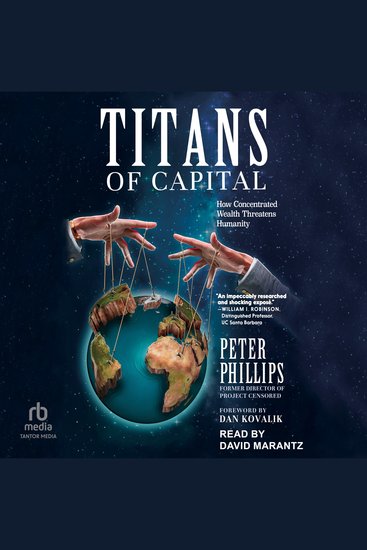
    A fascinating examination of the rapid concentration of global capital, with chapters that focus on China and Russia. 


    In Titans of Capital, Peter Phillips, a political sociologist, poses three key research questions: To what extent do the wealthy influence—or even dominate—decision making that affects all of us in society? Who are the most powerful people? And how does the accumulation of capital work? 


    Networks of wealthy individuals have evolved since the COVID-19 pandemic, and Titans of Capital shows how the financial investments of transnational elites threaten human rights and the future of the planet. Phillips warns that while continued concentration of global capital increases the profits enjoyed by the global economy's "Titans,", it also increases global inequality, starvation, and civil unrest, threatening the lives of the hundreds of millions of people living in extreme poverty. It is imperative to ask how we can reverse the concentration of Titan wealth and revitalize grassroots democracy unbridled by extreme wealth. Identifying 117 global Titans by name and exposing the networks and interests that unite them provides listeners opposed to militarism and committed to economic equality with crucial tools to directly engage the power elite who endanger life on earth.
    Ver libro