Junte-se a nós em uma viagem ao mundo dos livros!
Adicionar este livro à prateleira
Grey
Deixe um novo comentário Default profile 50px
Grey
Assine para ler o livro completo ou leia as primeiras páginas de graça!
All characters reduced
The Meditations of the Emperor Marcus Aurelius Antoninus - A new rendering based on the Foulis translation of 1742 - cover
LER

The Meditations of the Emperor Marcus Aurelius Antoninus - A new rendering based on the Foulis translation of 1742

Emperor of Rome Marcus Aurelius

Tradutor George W. Chrystal

Editora: DigiCat

  • 0
  • 0
  • 0

Sinopse

In "The Meditations of the Emperor Marcus Aurelius Antoninus", readers are invited into the introspective mind of one of history's most revered rulers. Written in Greek, this work is not a formal treatise but rather a series of personal reflections and philosophical musings. It embodies Stoicism, a philosophy that advocates resilience and virtue, emphasizing the importance of rationality and self-discipline in the face of life's challenges. Each entry is a glimpse into Marcus's continual struggle with the moral and ethical dilemmas of leadership, offering profound insights that transcend time, as his thoughts reveal a tapestry of insights on duty, humility, and the nature of human existence within the broader cosmos of interconnection and fate. Marcus Aurelius, a Stoic philosopher, ruled as Emperor from 161 to 180 AD and is often regarded as the last of the
Disponível desde: 28/05/2022.
Comprimento de impressão: 107 páginas.
Outros livros que poderiam interessá-lo

  • Flowers Guns and Money - Joel Roberts Poinsett and the Paradoxes of American Patriotism - cover

    Flowers Guns and Money - Joel...

    Lindsay Schakenbach Regele

    • 0
    • 0
    • 0
    A fascinating historical account of a largely forgotten statesman, who pioneered a form of patriotism that left an indelible mark on the early United States. 
     
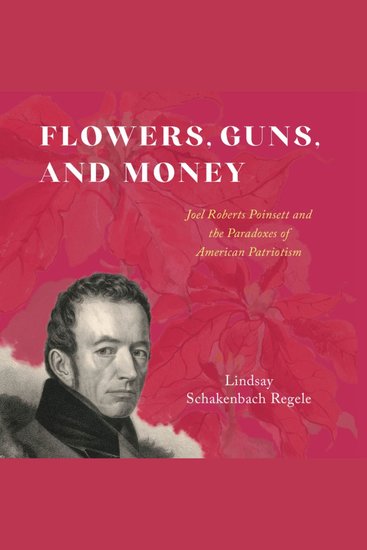
    Joel Roberts Poinsett’s (1779–1851) brand of self-interested patriotism illuminates the paradoxes of the antebellum United States. He was a South Carolina investor and enslaver, a confidant of Andrew Jackson, and a secret agent in South America who fought surreptitiously in Chile’s War for Independence. He was an ambitious Congressman and Secretary of War who oversaw the ignominy of the Trail of Tears and orchestrated America’s longest and costliest war against Native Americans, yet also helped found the Smithsonian. In addition, he was a naturalist, after whom the poinsettia—which he appropriated while he was serving as the first US ambassador to Mexico—is now named. 
      
    As Lindsay Schakenbach Regele shows in Flowers, Guns, and Money, Poinsett personified a type of patriotism that emerged following the American Revolution, one in which statesmen served the nation by serving themselves, securing economic prosperity and military security while often prioritizing their own ambitions and financial interests. Whether waging war, opposing states’ rights yet supporting slavery, or pushing for agricultural and infrastructural improvements in his native South Carolina, Poinsett consistently acted in his own self-interest. By examining the man and his actions, Schakenbach Regele reveals an America defined by opportunity and violence, freedom and slavery, and nationalism and self-interest.
    Ver livro
  • Fear Conditioning - Training Someone to Associate Fear with Certain Stimuli - cover

    Fear Conditioning - Training...

    Cito Harder

    • 0
    • 0
    • 0
    Fear conditioning is a psychological phenomenon in which individuals learn to associate fear with a specific stimulus. This process is a form of classical conditioning, where a neutral stimulus becomes linked to an aversive experience, causing a conditioned fear response. Fear conditioning is fundamental to human and animal behavior, playing a crucial role in survival, but it can also contribute to anxiety disorders, phobias, and social manipulation. 
    The foundation of fear conditioning was laid by Ivan Pavlov’s classical conditioning experiments, later expanded by John B. Watson in his controversial “Little Albert” study. In this experiment, a young child was conditioned to fear a white rat by pairing its presence with a loud, frightening noise. This research demonstrated how fear responses could be artificially created and generalized to other stimuli. The brain plays a central role in this process, particularly the amygdala, which is responsible for processing emotional reactions and linking experiences with fear. 
    Fear conditioning occurs in many aspects of life, from early childhood experiences to societal influences. Parents, teachers, and authority figures may unintentionally condition children to associate certain actions, places, or people with fear, shaping their behavior and worldview. For example, a child punished harshly for speaking out may develop a lifelong fear of confrontation. Similarly, fear conditioning is a powerful tool used in politics, advertising, and the media to influence public perception and behavior.
    Ver livro
  • Assyrian Heritage - US Or Death - cover

    Assyrian Heritage - US Or Death

    Anônimo

    • 0
    • 0
    • 0
    Assyrian Heritage is a history by Mary Elia, the wife of James Elia who escaped the Assyrian Genocide, in his home town of Goolpashen.
    Ver livro
  • Colonialism - A Global History - cover

    Colonialism - A Global History

    Lorenzo Veracini

    • 0
    • 0
    • 0
    Colonialism: A Global History interprets colonialism as an unequal relationship characterized by displacement and domination and reveals the ways in which this relationship has been constitutive of global modernity. 


    The volume focuses on colonialism's dynamism, adaptability, and resilience. It appraises a number of successive global colonial 'waves', each constituting a specific form of colonial domination, each different from the previous ones, each affecting different locales at different times, and each characterized by a particular method of exploiting colonized populations and territories. Outlining a succession of distinct colonizing conjunctures, and the ways in which they 'washed over' what is today understood as the 'Global South', shaping and reshaping institutions and prompting diverse responses from colonized communities, Colonialism: A Global History also outlines the contemporary relevance of this unequal relation. Overall, it provides an original definition of colonialism and tells the global history of this mode of domination’s evolution and reach. 


    The broad chronological and geographical scope makes this volume the ideal resource for all students and scholars interested in globalization, colonialism, and empire.
    Ver livro
  • Phaedrus - cover

    Phaedrus

    Plato

    • 0
    • 0
    • 0
    In "Phaedrus," Plato explores the nature of love, rhetoric, and the soul. Set in a scenic Athenian countryside, Socrates engages in a profound dialogue with Phaedrus, unravelling the complexities of love and its impact on the human spirit. The discourse delves into the art of persuasion and the immortality of the soul, offering timeless insights into the human condition and philosophical inquiry. Read in English, unabridged.
    Ver livro
  • Black Narratives of Slavery - A Very Short Introduction - cover

    Black Narratives of Slavery - A...

    Robert Patterson

    • 0
    • 0
    • 0
    This Very Short Introduction brings together a wide range of narratives of slavery across a broad historical period to understand how Black people—enslaved and not-enslaved—have experienced and imagined slavery. It also investigates how slavery's long reach and afterlife has continued to shape Black life in the twenty-first century. By giving attention to the narratives produced during the last two hundred plus years, this volume examines American chattel slavery as a specific historical period that legally ended in 1865, and yet recognizes its impacts, effects, and significance as extending into the twenty-first century. Slave narratives tie the life of slavery its abolition with its afterlife and the reconfigurations that followed—Black Codes, Jim Crow segregation, and many other forms of disenfranchisement.Robert J. Patterson examines so-called "traditional" slave narratives alongside writings from non-enslaved Black people in the nineteenth century, the imaginative works of twentieth century fiction, and twenty-first century cinema to create a compelling and informative introduction to the long historical arc of slavery woven into the cultural and political fabric of America.
    Ver livro