¡Acompáñanos a viajar por el mundo de los libros!
Añadir este libro a la estantería
Grey
Escribe un nuevo comentario Default profile 50px
Grey
Suscríbete para leer el libro completo o lee las primeras páginas gratis.
All characters reduced
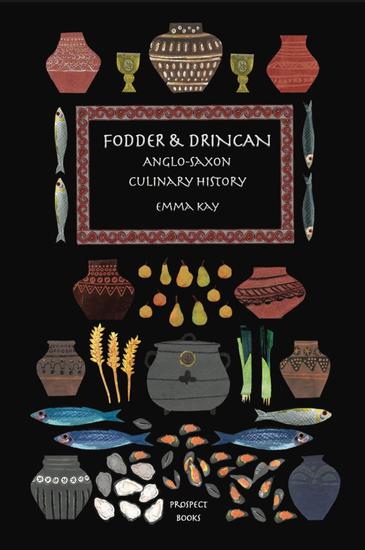
Fodder & Drincan - Anglo-Saxon Culinary History - cover

Fodder & Drincan - Anglo-Saxon Culinary History

Emma Kay

Editorial: Marion Boyars

  • 0
  • 0
  • 0

Sinopsis

The book is an entertaining historical account of Anglo-Saxon cooking, covering the centuries from 400 to 1066 CE.The author gives us evidence based information from historical artefacts and plants, showing what our early ancestors had at their disposal.
Disponible desde: 08/12/2022.
Longitud de impresión: 256 páginas.

Otros libros que te pueden interesar

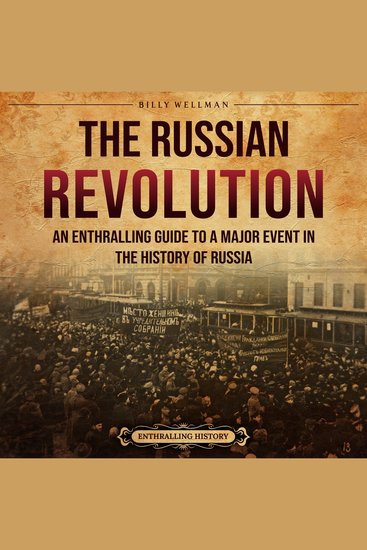
  • Russian Revolution The: An Enthralling Guide to a Major Event in the History of Russia - cover

    Russian Revolution The: An...

    Billy Wellman

    • 0
    • 0
    • 0
    Are you curious to learn what set Russia on its present-day course? 
    The Russian Revolution is a perfect example of how history can contract and become exceedingly dense and complex. Untangling the Russian Revolution (in fact, Russian revolutions) must start by considering events that happened centuries before February 1917. Only in this way can we understand the multitude of events compressed into the short months of the decisive year 1917. 
    The Russian Revolution, apart from the Chinese Revolution, is perhaps the biggest social experiment the world has ever known. Suddenly, millions of people found themselves living in a country led by fervent Marxists who had grand plans not only for their country but also for all humanity. 
    Finally, the Russian Revolution continues to shape global politics, with modern-day Russia built directly on the ruins of the great Communist revolution. 
    In this audiobook, you will learn about:The early days of the Russian Empire, the legendary Ruriks, and how Russians accepted Christianity.The radicalization of social movements, personified in the typical anarchist, Sergey Nechaev.Bloody precursors of the Russian Revolution, such as the assassination of Emperor Alexander II by anarchists.The inert and anachronistic Nicholas II Romanov who unwittingly contributed to his empire’s downfall.Fervent, feverous, and audacious Vladimir Lenin who led the revolution toward its radical turn in October 1917.The chaos of the Russian Civil War and the birth of war communism and the Red Terror.The aftermath of the Revolution: Lenin’s sudden illness and the political struggles of his successors.The rise of Stalin, who would lead the USSR into its most glorious and horrifying moments. 
    Scroll up and click the “add to cart” button to learn more about the Russian Revolution!
    Ver libro
  • Out from the Heart - Cultivating Love Compassion and Spiritual Growth - cover

    Out from the Heart - Cultivating...

    James Allen, Tim Zengerink

    • 0
    • 0
    • 0
    What if you discovered that genuine love and compassion could break down every barrier—unleashing greater joy and connection in every area of your life? 
    James Allen’s heartfelt work encourages readers to foster kindness, empathy, and moral clarity as the basis for true spiritual evolution. Adapted for modern readers, this text underscores the power of love to transform not only personal relationships but also the broader world, shining a light on humanity’s shared potential for goodness. 
    What You’ll Discover in This Modern Translation: 
    - The role of compassion and empathy in personal development 
    - Practical steps for nurturing a loving, open-hearted attitude 
    - How acts of kindness can bridge social and emotional divides 
    - Spiritual insights that root your love in a higher, universal truth 
    Imagine living each day guided by a deep sense of compassion—transforming your relationships, uplifting your community, and enriching your inner life. James Allen shows how opening your heart can lead to profound spiritual growth and fulfillment. 
    Step into a life guided by genuine love. Get your copy now and expand the horizons of your mind and spirit.
    Ver libro
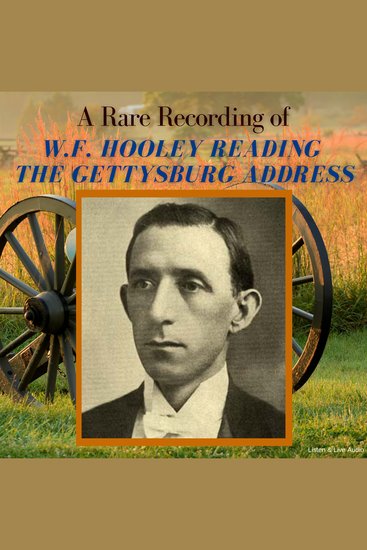
  • A Rare Recording of W F Hooley Reading Lincoln's Gettysburg Address - cover

    A Rare Recording of W F Hooley...

    W. F. Hooley

    • 0
    • 0
    • 0
    Abraham Lincoln's carefully crafted gettysburg address was originally meant to be secondary to other presentations that day, following on as it did from a two hour speech by the orator Edward Everett. Although Lincoln's speech was only just over two minutes long, it came to be regarded as one of the greatest speeches in American history. 
     
    "Four score and seven years ago our fathers brought forth on this continent, a new nation, conceived in Liberty, and dedicated to the proposition that all men are created equal. Now we are engaged in a great civil war, testing whether that nation, or any nation so conceived and so dedicated, can long endure. We are met on a great battle-field of that war. We have come to dedicate a portion of that field, as a final resting place for those who here gave their lives that that nation might live. It is altogether fitting and proper that we should do this. But, in a larger sense, we can not dedicate -- we can not consecrate -- we can not hallow -- this ground. The brave men, living and dead, who struggled here, have consecrated it, far above our poor power to add or detract. The world will little note, nor long remember what we say here, but it can never forget what they did here. It is for us the living, rather, to be dedicated here to the unfinished work which they who fought here have thus far so nobly advanced. It is rather for us to be here dedicated to the great task remaining before us -- that from these honored dead we take increased devotion to that cause for which they gave the last full measure of devotion -- that we here highly resolve that these dead shall not have died in vain -- that this nation, under God, shall have a new birth of freedom -- and that government of the people, by the people, for the people, shall not perish from the earth."
    Ver libro

  • The Subjection of Women - cover

    The Subjection of Women

    John Stuart Mill

    • 0
    • 0
    • 0
    "The Subjection of Women" is an essay written by John Stuart Mill in 1869. The essay is a critique of the social and legal status of women in Victorian England and argues for gender equality. Mill argues that the subjugation of women is not only morally wrong but also results in negative consequences for both men and women. 
    In the essay, Mill examines the various ways in which women are subjugated, including their lack of legal rights, their exclusion from education and professional opportunities, and their relegation to the domestic sphere. He argues that these societal restrictions prevent women from fulfilling their potential and living full, autonomous lives. 
    Mill also argues that the subjugation of women is not a natural or inevitable state of affairs but is instead a result of historical and cultural factors. He contends that by removing legal and social barriers to gender equality, society can create a more just and harmonious social order. 
    "The Subjection of Women" was a groundbreaking work in its time and helped to lay the groundwork for the feminist movement. Mill's arguments continue to be influential to this day, and the essay remains a key text in the history of feminist thought.
    Ver libro
  • Moors The: The History of the Muslims Who Lived in North Africa and Europe during the Middle Ages - cover

    Moors The: The History of the...

    Editors Charles River

    • 0
    • 0
    • 0
    The term Moor is a historical rather than an ethnic name. It is an invention of European Christians for the Islamic inhabitants of Maghreb (North Africa), Andalusia (Spain), Sicily and Malta, and was sometimes use to designate all Muslims. It is derived from Mauri, the Latin name for the Berbers who lived in the Roman province of Mauretania, which ranged across modern Algeria and Morocco. Saracen was another European term used to designate Muslims, though it usually referred to the Arabic peoples of the Middle East and derives from an ancient name for the Arabs, Sarakenoi. The Muslims of those regions no more refer to themselves by that term than those of North Africa call themselves Moors. Maghreb, or al-Maghreb, is a historical term used by Arabic Muslims for the territory of coastal North Africa from Alexandria to the Atlantic Coast. It means “The West” and is used in opposition to Mashrek, “The East,” used to refer to the lands of Islam in the Middle East and north-eastern Africa. The Berbers refer to the region in their own language as Tamazgha. In a limited, precise sense it can also refer to the Kingdom of Morocco, the proper name of which is al-Mamlakah al-Maghribiyyah, “Kingdom of the West.” 
    The history of the Spanish Peninsula is closely bound to that of the Moors. The term “Spain” was not in wide use until the region was united by the monarchs of Aragon and Castile, and the Moors called the lands they ruled in the Iberian Peninsula Al-Andalus, traditionally thought to be an Arabic transliteration of Vandal, the Germanic tribe which briefly ruled the region in the early fifth century. The English name Andalusia derives from the Spanish Andalucia, which is still used by Spain to name its southern region. Not surprisingly, three religions attempting to coexist during medieval times resulted in nearly incessant conflicts.
    Ver libro
  • Embracing Autonomy - Latin American–US Relations in the Twenty-First Century - cover

    Embracing Autonomy - Latin...

    Gregory Weeks

    • 0
    • 0
    • 0
    Gregory Weeks's Embracing Autonomy departs from other general treatments of Latin American-US relations not by putting US policy aside but by bringing in the Latin American and global contexts more closely and thus avoiding the incomplete picture provided by a narrow focus solely on the policies of the United States. 


    The core of autonomy for Latin America from the United States is seen in new, deeper, and more numerous relationships that do not include the United States. The book is not a study of rebellion against the United States, or even a critique of US policy. Instead, it is an examination of the major shifts that have taken place in the region in recent decades and how they have shaped Latin American-US relations. 


    Weeks's book provides a clearer understanding of where Latin America stands vis-à-vis the United States in the early twenty-first century. In doing so, we gain a better sense of the trajectory of Latin American-US relations and how they develop in turbulent times.
    Ver libro