Junte-se a nós em uma viagem ao mundo dos livros!
Adicionar este livro à prateleira
Grey
Deixe um novo comentário Default profile 50px
Grey
Assine para ler o livro completo ou leia as primeiras páginas de graça!
All characters reduced
Theresa Raquin - cover
LER

Theresa Raquin

Emile Zola

Editora: E-Kitap Projesi & Cheapest Books

  • 0
  • 0
  • 0

Sinopse

This volume, "Therese Raquin," was Zola's third book, but it was the one that first gave him notoriety, and made him somebody, as the saying goes.While still a clerk at Hachette's at eight pounds a month, engaged in checking and perusing advertisements and press notices, he had already in 1864 published the first series of "Les Contes a Ninon"a reprint of short stories contributed to various publications; and, in the following year, had brought out "La Confession de Claude." Both these books were issued by Lacroix, a famous go-ahead publisher and bookseller in those days, whose place of business stood at one of the corners of the Rue Vivienne and the Boulevard Montmartre, and who, as Lacroix, Verboeckhoven et Cie., ended in bankruptcy in the early seventies."La Confession de Claude" met with poor appreciation from the general public, although it attracted the attention of the Public Prosecutor, who sent down to Hachette's to make a few inquiries about the author, but went no further. When, however, M. Barbey d'Aurevilly, in a critical weekly paper called the "Nain Jaune," spitefully alluded to this rather daring novel as "Hachette's little book," one of the members of the firm sent for M. Zola, and addressed him thus:"Look here, M. Zola, you are earning eight pounds a month with us, which is ridiculous for a man of your talent. Why don't you go into literature altogether? It will bring you wealth and glory."Zola had no choice but to take this broad hint, and send in his resignation, which was at once accepted. The Hachettes did not require the services of writers of risky, or, for that matter, any other novels, as clerks; and, besides, as Zola has told us himself, in an interview with my old friend and employer,[*] the late M. Fernand Xau, Editor of the Paris "Journal," they thought "La Confession de Claude" a trifle stiff, and objected to their clerks writing books in time which they considered theirs, as they paid for it.* * *One Thursday, Camille, on returning from his office, brought with him a great fellow with square shoulders, whom he pushed in a familiar manner into the shop."Mother," he said to Madame Raquin, pointing to the newcomer, "do you recognise this gentleman?"The old mercer looked at the strapping blade, seeking among her recollections and finding nothing, while Therese placidly observed the scene."What!" resumed Camille, "you don't recognise Laurent, little Laurent, the son of daddy Laurent who owns those beautiful fields of corn out Jeufosse way. Don't you remember? I went to school with him; he came to fetch me of a morning on leaving the house of his uncle, who was our neighbour, and you used to give him slices of bread and jam."All at once Madame Raquin recollected little Laurent, whom she found very much grown. It was quite ten years since she had seen him. She now did her best to make him forget her lapse of memory in greeting him, by recalling a thousand little incidents of the past, and by adopting a wheedling manner towards him that was quite maternal. Laurent had seated himself. With a peaceful smile on his lips, he replied to the questions addressed to him in a clear voice, casting calm and easy glances around him."Just imagine," said Camille, "this joker has been employed at the Orleans-Railway-Station for eighteen months, and it was only to-night that we met and recognised one anotherthe administration is so vast, so important!"As the young man made this remark, he opened his eyes wider, and pinched his lips, proud to be a humble wheel in such a large machine. Shaking his head, he continued:"Oh! but he is in a good position. He has studied. He already earns 1,500 francs a year. His father sent him to college. He had read for the bar, and learnt painting. That is so, is it not, Laurent? You'll dine with us?""I am quite willing," boldly replied the other.He got rid of his hat and made himself comfortable in the shop..
Disponível desde: 10/02/2024.
Comprimento de impressão: 300 páginas.

Outros livros que poderiam interessá-lo

  • De Profundis (Unabridged) - cover

    De Profundis (Unabridged)

    Oscar Wilde

    • 0
    • 0
    • 0
    De Profundis is a 50,000 word letter written by Oscar Wilde during his imprisonment in Reading Gaol, to Lord Alfred Douglas, his lover. Wilde wrote the letter between January and March 1897; he was not allowed to send it, but took it with him upon release. In it he repudiates Lord Alfred for what Wilde finally sees as his arrogance and vanity; he had not forgotten Douglas's remark, when he was ill, "When you are not on your pedestal you are not interesting." He also felt redemption and fulfillment in his ordeal, realizing that his hardship had filled the soul with the fruit of experience, however bitter it tasted at the time.
    Ver livro
  • In the Wilds of Florida - cover

    In the Wilds of Florida

    W.H.G. Kingston

    • 0
    • 0
    • 0
    A turn-of-the-century book, In the Wilds of Florida is a tale of an Irish schoolboy who leaves school and his struggling family in Ireland to come to America. He experiences a Florida where fighting still erupts between Cherokee and Seminole Indians, where white people are under threat of Indian attack, and the landscape is mostly swamp or plains of dense brush.
    Ver livro
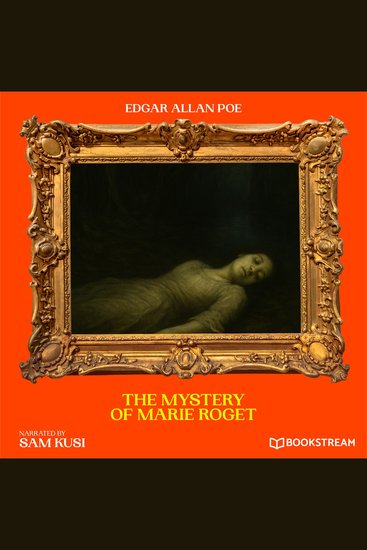
  • The Mystery of Marie Roget - cover

    The Mystery of Marie Roget

    Anônimo

    • 0
    • 0
    • 0
    "The Mystery of Marie Rogêt", often subtitled A Sequel to "The Murders in the Rue Morgue", is a short story by American writer Edgar Allan Poe written in 1842. This is the first murder mystery based on the details of a real crime. It first appeared in Snowden's Ladies' Companion in three installments, November and December 1842 and February 1843. Poe referred to it as one of his "tales of ratiocination".
    Poe's detective character C. Auguste Dupin and his assistant, the unnamed narrator, undertake the unsolved murder of Marie Rogêt in Paris. The body of Rogêt, a perfume shop employee, is found in the Seine, and the press takes a keen interest in the mystery. In the story, Dupin explains that "it is the object of our newspapers rather to create a sensation—to make a point—than to further the cause of truth",[2] and proceeds by exposing the contradictions in their theories. Even so, he uses the newspaper reports to get into the mind of the murderer.
    Ver livro
  • The Man Within - cover

    The Man Within

    Graham Greene

    • 0
    • 0
    • 0
    "Greene had wit and grace and character and story and a transcendent universal compassion that places him for all time in the ranks of world literature . . ." —John le Carré 


    Graham Greene's first published novel tells the story of Andrews, a young man who has betrayed his fellow smugglers and fears their vengeance. Fleeing from them, with no hope of pity or salvation, he takes refuge in the house of a young woman, also alone in the world. Elizabeth persuades him to give evidence against his accomplices in court, but neither she nor Andrews is aware that to both criminals and authority, treachery is as great a crime as smuggling. The first step in a brilliant career, The Man Within offers a foretaste of Green's recurring themes of religion, the individual's struggles against cynicism, and the indifferent forces of a hostile world.
    Ver livro
  • Old Bugs (Unabridged) - cover

    Old Bugs (Unabridged)

    H. P. Lovecraft

    • 0
    • 0
    • 0
    With the onset of Prohibition, the Sheehan Billiard Room in Chicago became a sordid haunt for hard drinkers. A certain Old Bugs, a mature man corroded by vices but capable of showing, at long intervals, the typical sensitivity of educated people works as a kitchen cleaner. When the young Alfred Trever, initiated by his friend Pete Schultz on the way of drinking, arrives at the Sheehan's tavern, Old Bugs will try to convince him not to make the same mistake as he did.
    Ver livro
  • War and Peace (Book Four: 1806) - cover

    War and Peace (Book Four: 1806)

    Leo Tolstoy

    • 0
    • 0
    • 0
    War and Peace is a literary work mixed with chapters on history and philosophy by the Russian author Leo Tolstoy. It was first published serially, then published in its entirety in 1869. It is regarded as one of Tolstoy's finest literary achievements and remains an internationally praised classic of world literature.
    Book 4: 1806: Early in the year 1806 Nicholas Rostóv returned home on leave. Denísov was going home to Vorónezh and Rostóv persuaded him to travel with him as far as Moscow and to stay with him there. Meeting a comrade at the last post station but one before Moscow, Denísov had drunk three bottles of wine with him and, despite the jolting ruts across the snow-covered road, did not once wake up on the way to Moscow, but lay at the bottom of the sleigh beside Rostóv, who grew more and more impatient the nearer they got to Moscow.
    Ver livro