Join us on a literary world trip!
Add this book to bookshelf
Grey
Write a new comment Default profile 50px
Grey
Subscribe to read the full book or read the first pages for free!
All characters reduced
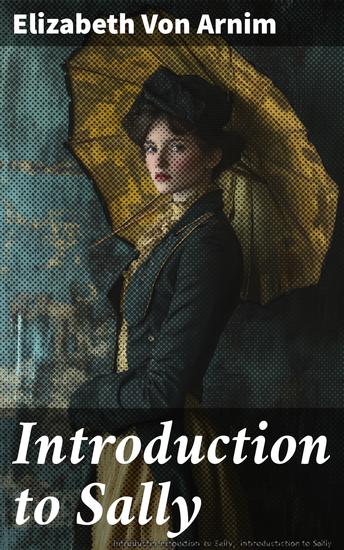
Introduction to Sally - cover

Introduction to Sally

Elizabeth von Arnim

Publisher: Good Press

  • 0
  • 0
  • 0

Summary

In "Introduction to Sally," Elizabeth Von Arnim masterfully weaves a narrative that explores the intricacies of female friendship and societal expectations in early 20th-century England. The novel is noted for its elegant prose and sharp wit, employing a blend of humor and pathos that creates a rich tapestry of characters navigating their inner lives and external pressures. Set against the backdrop of an increasingly modernized society, Von Arnim critiques social norms while celebrating the spirit of individuality, making the work a poignant reflection of its literary context. Elizabeth Von Arnim, a prominent figure in the Edwardian literary scene, was known for her keen insight into the lives and sentiments of women. Her own experiences as a German-British author and her social interactions within artistic circles greatly influenced her writing. "Introduction to Sally" was likely inspired by her own observations of character dynamics and the evolving roles of women, particularly amidst the juxtaposition of tradition and modernity. This novel is highly recommended for readers who appreciate rich, character-driven narratives imbued with social commentary. Von Arnim's incisive exploration of female identity and the quest for self-fulfillment offers a timeless perspective that resonates with contemporary audiences. Delve into this delightful work to uncover the profound complexities of friendship and the struggles inherent in self-discovery.
Available since: 03/02/2025.
Print length: 190 pages.

Other books that might interest you

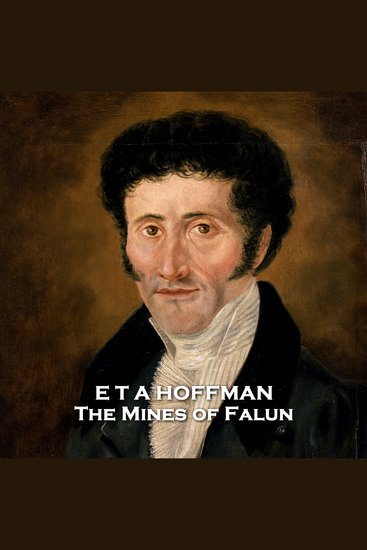
  • The Mines of Falun - From their pens to your ears genius in every story - cover

    The Mines of Falun - From their...

    E T A Hoffman

    • 0
    • 0
    • 0
    Ernst Theodor Wilhelm Hoffman was born on the 24th January 1776, the youngest of three children, in Königsberg, then in Prussia but now part of the Kaliningrad Russian enclave. 
    His parents separated when he was two and for many years life was to be provincial and, despite his talents for the creative arts and the classics, much was passing him by. 
    At 20 Hoffman obtained employment as a clerk and to the art that now surrounded him.  Two years later he was in Berlin attempting a career as a composer with an operetta called ‘Die Maske’.  His gift for drawing caricatures and sharing them often got him into trouble that was easier to avoid. 
    The years of Napoleon ravaging Europe were bad for Hoffman; he moved often and took on works as varied as theatre management and music critic.  In this his talents were now more evident.  His works on Beethoven where highly regarded by the master himself. 
    His literary breakthrough came in 1809, with ‘Ritter Gluck’, about a man who believes he has met the composer 20 years after his death.  However the various jobs and the wars continued and plagued any career advancement despite his constant travel for opportunities, often through dangerous territories. 
    In the wake of Napoleon’s defeat in 1814, Hoffmann returned to Berlin where his opera ‘Undine’ was performed by the Berlin Theatre.  Life was now more settled and many of his most famous works were written at his time. 
    From 1819, Hoffmann was struggling with both legal disputes and ill health.  Alcohol abuse and syphilis were physically weakening him and from 1822 paralysis set in.  His last works were dictated to his wife or to a secretary as all around him society descended into an anti-liberal agenda, stifling dissent with threats of legal action and even treason.  The ailing Hoffman was among them. 
    E T A Hoffmann died on the 25th June 1822 in Berlin of syphilis.  He was 46.
    Show book
  • The Night Wire - cover

    The Night Wire

    H. F. Arnold

    • 0
    • 0
    • 0
    Title: The Night Wire 
    Author: H. F. Arnold 
    Narrator: Jonathan Dunne 
    Original Publication: 1926 
    Public Domain: Yes 
    Series Placement: Number 47 in the Timeless Terrors series 
    Description: 
    The Night Wire by H. F. Arnold is one of the most haunting pieces of early 20th-century weird fiction — a story that fuses the hum of modern technology with a creeping, supernatural dread. 
    Inside a dim telegraph office in the dead of night, two wire operators receive a strange news report: a distant city consumed by fog and death. Yet as the dispatches continue, the events seem to unfold in real time — and ever closer to home. 
    With its claustrophobic atmosphere, its blend of realism and the uncanny, and its quiet descent into cosmic horror, The Night Wire stands as a forgotten classic of early radio-age terror — a perfect bridge between pulp mystery and Lovecraftian unease. 
    Narrated by Amazon-bestselling horror author Jonathan Dunne, this performance captures the dread of isolation, the crackle of the telegraph, and the mounting terror of a message that refuses to stop. While the text is in the public domain, this narration is an original performance and copyright © 2025 Jonathan Dunne. 
    Part of Timeless Terrors, a series devoted to resurrecting the masters of the macabre and uncanny, The Night Wireendures as a chilling reminder that sometimes the scariest voices come not from beyond the grave — but from the wire itself.
    Show book
  • Armadale Volume 1 - cover

    Armadale Volume 1

    Wilkie Collins

    • 0
    • 0
    • 0
    In Armadale Volume 1, Wilkie Collins introduces a tale of mystery and psychological suspense. Two strangers, Allan Armadale and Ozias Midwinter, meet under eerie circumstances, bound by a shared name and a dark prophecy. As their lives intertwine, secrets from the past resurface, threatening both men. The arrival of Lydia Gwilt, a cunning and alluring woman with her own hidden agenda, adds complexity to the unfolding drama. Set against the backdrop of English country estates, this volume explores themes of identity, fate, and moral ambiguity. Through intricate plotting and suspenseful revelations, Collins sets the stage for a gripping exploration of guilt, innocence, and the consequences of one’s actions.
    Show book
  • The Untilled Field - cover

    The Untilled Field

    George Moore

    • 0
    • 0
    • 0
    "The Untilled Field" by George Moore is a collection of short stories portraying the complexities of Irish rural life in the late 19th century. Moore masterfully explores themes of love, loss, and societal expectations in a landscape shaped by tradition and change. Through vivid characters and evocative settings, the narratives offer a poignant reflection on the clash between old and new, capturing the struggles and joys of individuals navigating a transforming Ireland. Moore's prose unveils the human condition with sensitivity, making this collection a timeless exploration of the universal challenges faced by those living in the untamed fields of cultural transition.
    Show book
  • The Hunter Gracchus - cover

    The Hunter Gracchus

    Franz Kafka

    • 0
    • 0
    • 0
    "The Hunter Gracchus" is a short story by Franz Kafka. The story presents a boat carrying the long-dead Hunter Gracchus as it arrives at a port. The mayor of Riva meets Gracchus, who gives him an account of his death while hunting, and explains that he is destined to wander aimlessly and eternally over the seas. An additional fragment presents an extended dialogue between Gracchus and an unnamed interviewer, presumably the same mayor.Written in the first half of 1917, the story was published posthumously in Beim Bau der Chinesischen Mauer (Berlin, 1931). The first English translation, by Willa and Edwin Muir, was published by Martin Secker in London in 1933.
    Show book
  • The Piazza Tales - cover

    The Piazza Tales

    Herman Melville

    • 0
    • 0
    • 0
    "The Piazza Tales" by Herman Melville is a collection of short stories exploring the complexities of human experience. From the eerie "Bartleby, the Scrivener" to the adventurous "Benito Cereno," the tales traverse a range of themes. They delve into the enigmatic Bartleby's passive resistance, the dark secrets aboard a slave ship in "Benito Cereno," and the haunting quest for the White Whale in "The Encantadas." Through Melville's evocative prose, the collection offers a profound exploration of human nature, morality, and the mysteries that shape our lives.
    Show book