¡Acompáñanos a viajar por el mundo de los libros!
Añadir este libro a la estantería
Grey
Escribe un nuevo comentario Default profile 50px
Grey
Suscríbete para leer el libro completo o lee las primeras páginas gratis.
All characters reduced
MARY BARTON - A Tale of Manchester Life With Author's Biography - cover

MARY BARTON - A Tale of Manchester Life With Author's Biography

Elizabeth Gaskell

Editorial: Good Press

  • 0
  • 0
  • 0

Sinopsis

In her poignant novel "Mary Barton," Elizabeth Gaskell intricately weaves a narrative that explores the harsh realities of 19th-century industrial life in Manchester. The book is notable for its vivid depiction of class struggles, familial bonds, and the quest for social justice amid the backdrop of the burgeoning Industrial Revolution. Gaskell employs a realistic literary style, illuminating the struggles of the working class through the lens of her titular character, Mary, whose personal sacrifices and moral dilemmas echo the broader societal issues of poverty, class disparity, and the human cost of industrialization. Elizabeth Gaskell, an accomplished author and social reformer, was deeply influenced by her own upbringing and surroundings in an industrial working-class community. Her experiences, along with a profound empathy for the plight of the poor, motivated her to write "Mary Barton" as a social commentary aimed at the burgeoning middle class, urging them to recognize and act upon the injustices faced by the working poor. This led to Gaskell becoming a key figure in the Victorian literature movement that sought to address social issues. This compelling narrative makes "Mary Barton" an essential read for those interested in social justice, industrial history, and the human condition. Gaskell's masterful storytelling and rich character development will resonate with readers who seek to understand the complexities of human experience amidst societal changes.
Disponible desde: 12/01/2024.
Longitud de impresión: 483 páginas.
Otros libros que te pueden interesar

  • The Encantadas - cover

    The Encantadas

    Herman Melville

    • 0
    • 0
    • 0
    "The Encantadas, or Enchanted Isles" is a novella by American author Herman Melville. First published in Putnam's Magazine in 1854, it consists of ten philosophical "Sketches" on the Encantadas, or Galápagos Islands. It was collected in The Piazza Tales in 1856. The Encantadas was a success with the critics, and contained some of Melville's "most memorable prose".
    An anonymous narrator unites the ten disparate "Sketches", each of which begin with a few lines of poetry, mostly taken from Edmund Spenser's The Faerie Queene. All of the stories are replete with symbolism reinforcing the cruelty of life on the Encantadas. "Sketch First" is a description of the islands; though they are the Enchanted Isles they are depicted as desolate and hellish. "Sketch Second" is a meditation on the narrator's encounter with ancient Galápagos tortoises, while "Sketch Third" concerns the narrator's trip up the enormous tower called the Rock Rodondo. "Sketch Fourth" details the narrator's musings from atop the tower, and his recollection of the islands' accidental discovery by Juan Fernández. "Sketch Fifth" describes the USS Essex' encounter with a phantom British ship near the area during the War of 1812.
    Ver libro
  • Candide - cover

    Candide

    Voltaire

    • 0
    • 0
    • 0
    "Candide, or Optimism" is a satirical novella written by the French philosopher Voltaire, first published in 1759. It follows the adventures of the young Candide, who is raised in a utopian world and taught that “all is for the best.” The narrative takes him through a series of misfortunes, exposing him to the harsh realities of the world, ultimately leading him to question his optimistic beliefs. Voltaire uses Candide’s journey to satirize religion, governments, the military, and the philosophy of optimism, particularly as espoused by Leibniz. "Candide" is considered one of the greatest achievements of Western literature
    Ver libro
  • Anathema - From their pens to your ears genius in every story - cover

    Anathema - From their pens to...

    Alexander Kuprin

    • 0
    • 0
    • 0
    Alexander Kuprin was born in Narovchat, Penza in Russia on 7th September 1870. 
    At 3 his Father died and he and mother moved to Moscow. By 10 he was enrolled at the Second Moscow Military High School and there his interest in literature began. The Alexander Military Academy followed and two years later he was a sub-lieutenant and posted to an Infantry Regiment for a further four years. 
    Despite his duties he was a now a keen writer and published his first short story at this time. His military duties also garnered him experiences for his breakthrough work ‘The Duel’.  Leaving the military he left for Kiev to work for local newspapers.  He continued to publish both stories and novels and by 1901 he was in St Petersburg becoming part of a group that included Chekhov, Ivan Bunin, Maxim Gorky and Leonid Andreyev.  
    In the years that followed further controversial works and acclaim followed.  His comments on the regime meant he was also put under secret police surveillance.   
    As World War I erupted, Kuprin opened a military hospital but was then given command of an infantry company in Finland. He was soon discharged on grounds of ill health.  
    The October Revolution saw him praise Lenin, but he warned that the Bolsheviks threatened Russian culture and might cause further widespread suffering to the peasants.  As Civil War raged he took his family to Helsinki and then on to Paris. 
    Exile saw his talents decline further and his succumbing to alcoholism. He became lonely and withdrawn. The family's poverty increased his malaise.   
    In May 1937, the Kuprin’s returned to Moscow.  He now saw his work published but wrote almost nothing new.  In 1938 his health rapidly deteriorated.  Already suffering from a kidney problems and sclerosis, he had now developed cancer of the oesophagus.  
    Alexander Kuprin died on 25th August 1938.
    Ver libro
  • All's Well That Ends Well - cover

    All's Well That Ends Well

    William Shakespeare

    • 0
    • 0
    • 0
    Step into the captivating world of William Shakespeare's timeless classic, 'All's Well That Ends Well,' like never before with our digital audiobook. Immerse yourself in the eloquent language, intricate characters, and the enduring themes of love, ambition, and redemption. Let the talented narrators breathe life into Shakespeare's words, transporting you to a world of wit, romance, and clever scheming. Whether you're a Shakespeare enthusiast or a newcomer to his works, this digital audiobook offers a convenient and engaging way to experience the magic of the Bard's storytelling. Dive into this compelling tale today and discover why, in the end, all truly is well.
    Ver libro
  • The Garden Party and Other Stories - cover

    The Garden Party and Other Stories

    Katherine Mansfield

    • 0
    • 0
    • 0
    Written during the final stages of her illness, "The Garden Party and Other Stories" is full of a sense of urgency and was Katherine Mansfield's last collection to be published during her lifetime. The fifteen stories featured, many of them set in her native New Zealand, vary in length and tone from the opening story, "At the Bay, " a vivid impressionistic evocation of family life, to the short, sharp sketch "Mrs. Brill, " in which a lonely woman's precarious sense of self is brutally destroyed when she overhears two young lovers mocking her. Sensitive revelations of human behaviour, these stories reveal Mansfield's supreme talent as an innovator who freed the story from its conventions and gave it a new strength and prestige.
    Ver libro
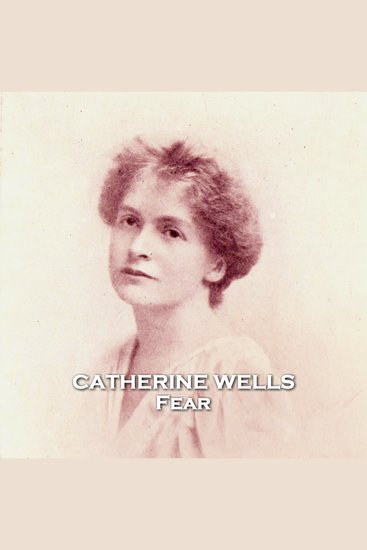
  • Fear - From their pens to your ears genius in every story - cover

    Fear - From their pens to your...

    Catherine Wells

    • 0
    • 0
    • 0
    Little information survives on Catherine’s life. 
    She was born Amy Catherine Robbins in 1872. 
    In about 1892 she was a student in a biology cramming class where the teacher was H G Wells.  Though married he was quickly attracted to his student and within a short time they were living together in Woking, Surrey.  He then divorced his first wife and married Catherine in October 1895 at St Pancras register office. 
    In the early years they were poor to the point that they could not afford to start a family.  When they did they had two children; Philip in 1901 and Frank two years later. 
    For much of her life she seemed to pursue other interests, being a mother, a gardener, running much of her husband’s business affairs and this seemed to leave little time for her own literary pursuits.  She published little during her lifetime apart from a few poems and some short stories.  Indeed her prodigiously talented husband even referred to her as ‘Jane’ and soon all around her did too, her writing life seemingly in another personality far, far away.   
    By the mid 20’s she was ill with cancer and succumbed to its advance in 1927. 
    Wells, although wayward and promiscuous during much of the marriage, now attempted to put his wife’s literary merits into book form and published ‘The Book of Catherine Wells’, a collection of short stories and poems.
    Ver libro