¡Acompáñanos a viajar por el mundo de los libros!
Añadir este libro a la estantería
Grey
Escribe un nuevo comentario Default profile 50px
Grey
Suscríbete para leer el libro completo o lee las primeras páginas gratis.
All characters reduced
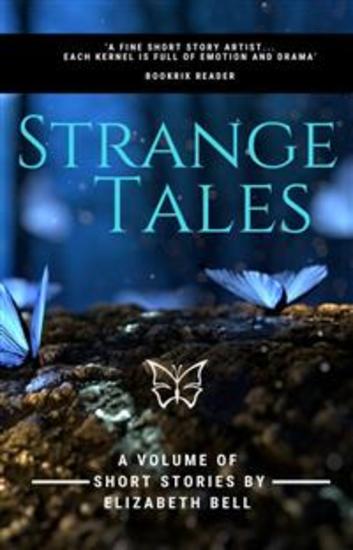
The short stories of EBell - cover

The short stories of EBell

Elizabeth Bell

Editorial: BookRix

  • 0
  • 0
  • 0

Sinopsis

Short stories brought to you by E. Bell. Stories of revenge, cursed coins, 
and thieving fairies to entertian and beguile you. Enjoy the mind of a woman who enjoys writing for everyone here you'll find some fiction and even some non fiction because life can be funny and those moments should be shared.
Disponible desde: 21/12/2023.
Longitud de impresión: 171 páginas.
Otros libros que te pueden interesar

  • The Tinker's Wedding - A Drama-Comedy in Two Acts - cover

    The Tinker's Wedding - A...

    J. M. Synge

    • 0
    • 0
    • 0
    Come join me in the hilarious romp that is The Tinker's Wedding by J.M. Synge, a story of two young tinkers trying to con a travelling holy man into marrying them, all while their mother is constantly trying to satiate her indomitable thirst for drink, thereby inadvertently causing more problems than the drink is worth. Blaming, miscommunication, and utter tomfoolery ensues, leading to the final culmination of each party getting ready to pounce on each other's necks and outrageously strangle each other Saturday-morning-cartoon style. Come witness both sincerity and hilarity being wrapped up in this tight but brilliantly crafted two act drama-comedy.
    Ver libro
  • SWANSEA AUTOMATIC (Second Edition) - cover

    SWANSEA AUTOMATIC (Second Edition)

    Rhys Trimble

    • 0
    • 0
    • 0
    "This book has shaped this piece of text [ITSELF] already—by neighbouring it (& in my mind) co-opted it, made it something other than an essay—part of SWANSEA culture—We obey these local rules slavishly—and fail to exploit them—[NOT SURE WHAT I'M ON ABOUT HERE]"Authorial violence: Swansea Automatic was published 10 years ago, around the last year of the snake to 0 acclaim except for by those who read it of course. I even did a little residency, which was more like squatting ina little shop on the High Street, Swansea but as time has passed, I came to consider this one of my few, if not only book that can boast the synthesis of my extreme late modernist tendencies and some attempt to fit into the aesthetic of popular fiction. nonetheless it doesn't pull too many punches, it's comedy, it's poetry, it's deconstructed pros,e even philosophy, textual analysis, cynghanedd, and more.Spinning Around the dirty first person narrative is the self-referential Vonegut and recycled psychogeographic of the Fiery Elephant of Johnson, Brooke-Rose, and Sinclair. An attempt to exercise the Demon of Swansea from my formative years. But actually set in North Wales just as much. Swansea is a dream city that could just as easily be London, Glasgow, Belfast, Lublin or Cairo...A second bite the cherry: a second edition is occurring, along with the audiobook and kindle edition and the album (movie!), hopefully generatinga hammer blow on the collective unconscious of our post-media universe. Swansea Automatic justifies itself to me because 2015 was also the very last gasp of the fin de siècle of the apocalyptic contemporary, where the post beats, post flaneur metanarratives where still just about alive. It's rare for me to look back, but I had an idea this one could be a cult book somehow. Help it become so and consume as such, cultishly. 
      
    RT
    Ver libro
  • The Poetry of George Meredith - Victorian master of poetry and prose that was nominated for the Nobel Prize seven times - cover

    The Poetry of George Meredith -...

    George Meredith

    • 0
    • 0
    • 0
    George Meredith, OM, was born in Portsmouth, England on February 12th, 1828. His mother died when he was five. As a fourteen year old teenager he was sent to a Moravian School in Neuwied, Germany, staying there for two years. After reading law he was articled as a solicitor, but quickly abandoned that career path for journalism and poetry. He collaborated with Edward Gryffydh Peacock, son of Thomas Love Peacock in publishing a privately circulated literary magazine, the Monthly Observer. At age twenty-one he married Mary Ellen Nicolls, Edward Peacock's beautiful widowed sister, on August 8th, 1849. Mary Ellen was 28. 
    The marriage produced one child; Arthur (1853–1890). Meredith collected his early writings, all previously published in periodicals, in an 1851 volume, Poems. In 1856 he posed as the model for The Death of Chatterton, a well-known picture by the English Pre-Raphaelite painter Henry Wallis, which romantised the teenage Chatterton’s demise. Although Meredith received some publicity for this his wife received rather more attention from Wallis because of it. Mary Ellen ran off with Wallis in 1858, shortly before giving birth to a child that all assumed to be Wallis. Tragically she died three years later. From that dreadful experience emerged a collection of sonnets entitled Modern Love in 1862 together with much of his first major novel; The Ordeal of Richard Feverel. 
    Meredith married Marie Vulliamy in 1864 and they settled in Surrey. Together they had two children; William (1865) and Mariette (1874). He had a keen understanding of comedy and his Essay on Comedy (1877) remains a reference work in the history of comic theory. In The Egoist, published in 1879, he applies some of his theories of comedy in one of his most thoughtful and enduring novels. During most of his career, he had difficulty crossing over from critical acclamation to popular success. It was only in 1885 that his first genuine commercial success appeared; Diana of the Crossways.  With an unreliable income stream he sought to bolster that with a job as a publisher's reader. 
    The company that gave him this lifeline was Chapman & Hall. His advice to the company was very well received and made him influential in the world of letters. In 1868 Meredith was introduced to Thomas Hardy. Hardy had submitted his first novel, The Poor Man and the Lady. Meredith felt the book was too bitter a satire on the rich and told Hardy to put it aside as it was likely it would be savaged by reviewers and destroy his nascent career. Meredith had received the same reaction with The Ordeal of Richard Feverel. Although it had brought him success it was judged so shocking that Mudie's circulating library cancelled an order of 300 copies. But these years, creatively, were very prolific and successful for Meredith. Novels and poems flowed from his pen including everything from The Adventures of Harry Richmond to many poetry volumes including The Lark Ascending (which later inspired the Vaughan Williams music). In 1886, tragedy struck when Marie Vulliamy, died of cancer. 
    Whilst his personal life was producing horrendous scars he was receiving many accolades. Oscar Wilde was a fan. In The Decay of Lying, he says of Meredith "Ah, Meredith! Who can define him? His style is chaos illumined by flashes of lightning". In 1891 Meredith was even the subject of homage when Sir Arthur Conan Doyle in his Sherlock Holmes short story The Boscombe Valley Mystery. Holmes turns to Watson during case discussions and says "And now let us talk about George Meredith, if you please, and we shall leave all minor matters until tomorrow." George Meredith, aged 81, died at his home in Box Hill, Surrey on May 18th, 1909. He is buried in the cemetery at Dorking, Surrey. 
     
    This volume comes to you from Portable Poetry, a specialized imprint from Deadtree Publishing.  Our range is large and growing and covers single poets, themes, and many compilations.
    Ver libro
  • More Songs the Radio Won’t Play - Poems - cover

    More Songs the Radio Won’t Play...

    Stan Rogal

    • 0
    • 0
    • 0
    Lyrical poetry inspired by popular songs, Rogal sweeps the reader through the journey of creation.
    		 
    In More Songs the Radio Won’t Play, Stan Rogal takes formerly “popular” tunes (from various genres) and transforms them. Self-referentiality; mashups of the erudite and profane; allusions to other arts and sciences; the insertion and bending of biographical and historical facts; problematic snippets of philosophy and literary theory, quotes, and bastardizations; deploying non- or a-political language to challenge notions of how a poem should work; sampling; and off-kilter humour work together to update Rogal’s playlist for a present-day audience.
    		 
    While his poems unavoidably serve to comment on the world today, Rogal resists a central message. The true emphasis of this collection is on the process of creation. It’s not the destination but the journey that is of significance. Not mere cover versions, not exactly parodies (though parodic), these poems are redactions, mutations, Frankenstein’s monsters … they resemble the original — somewhat — yet are also grossly different.
    Ver libro
  • Hail the Invisible Watchman - cover

    Hail the Invisible Watchman

    Alexandra Oliver

    • 0
    • 0
    • 0
    Hail, The Invisible Watchman is haunted poetry—Oliver’s formal schemes are as tidy as a picket-fence and as suggestive; behind the charm of rhyme is a vibrant, dark exploration of domestic and social alienation.
    		 
    The poems in Hail, the Invisible Watchman are as tidy as a picket-fence—and as suggestive. Behind the charms of iambs lurks a dark exploration of domestic and social alienation. Metered rhyme sets the tone like a chilling piano score as insidiousness creeps into the neighbourhood. A spectral narrator surveils social gatherings in the town of Sherbet Lake; community members chime in, each revealing their various troubles and hypocrisies; an eerie reimagining of an Ethel Wilson novel follows a young woman into a taboo friendship with an enigmatic divorcée. In taut poetic structures across three succinct sections, Alexandra Oliver’s conflation of the mundane and the phantasmagoric produces a scintillating portrait of the suburban uncanny.
    Ver libro
  • The Clearing - Poems - cover

    The Clearing - Poems

    Allison Adair

    • 0
    • 0
    • 0
    Winner of the 2020 Max Ritvo Poetry Prize, The Clearing navigates the ever-shifting poles of violence and vulnerability with rich imagination and a singular incisiveness, “asserting feminist viewpoints and mortal terror in lush musical lines” (New York Times).


    The women in Allison Adair’s debut collection—luminous and electric from the first line to the last—live in places that have been excavated for gold and precious ores. They understand the nature of being hollowed out, of being “the planet’s stone / core as it tries to carve out one secret place and fails.” And so, as these poems take us from the midst of the Civil War to our current era, they chart fairy tales that are at once unsettling and painfully familiar, never forgetting that cruelty compels us to search for tenderness. “What if this time,” they ask, “instead of crumbs the girl drops / teeth, her own, what else does she have.”


    Adair sees the dirt beneath our nails, both alone and as a country, and pries it gently loose until we remember something of who we are, “from before . . . from a similar injury or kiss.” There is a dark tension in this work, and its product is wholly “an alchemical feat, turning horror into beauty” (Boston Globe).
    Ver libro