Junte-se a nós em uma viagem ao mundo dos livros!
Adicionar este livro à prateleira
Grey
Deixe um novo comentário Default profile 50px
Grey
Assine para ler o livro completo ou leia as primeiras páginas de graça!
All characters reduced
William Sharp (Fiona Macleod) - A Memoir Compiled by His Wife Elizabeth A Sharp - cover
LER

William Sharp (Fiona Macleod) - A Memoir Compiled by His Wife Elizabeth A Sharp

Elizabeth A. Sharp

Editora: Good Press

  • 0
  • 0
  • 0

Sinopse

In "William Sharp (Fiona Macleod)," Elizabeth A. Sharp delves into the dual identities of one of Scotland's most enigmatic literary figures. Sharp's exploration of the life and works of William Sharp, who wrote under the pseudonym Fiona Macleod, is both an illuminating biography and a critical examination of literary identity in the late 19th century. The narrative is richly detailed, employing a blend of historical analysis and literary critique that captures the complexities of Sharp's dual existence as a man and as a female voice in literature. Sharp's writing is imbued with scholarly rigor, yet accessible, blending narrative elegance with meticulous research that situates William Sharp within the broader context of the Celtic Revival and the era's shifting gender dynamics in literature. Elizabeth A. Sharp, an accomplished literary scholar, draws on her extensive knowledge of Celtic studies and gender theory to provide a nuanced perspective on her subject. Her research underscores the significance of Sharp's work in the conversation surrounding authorship and gender, informed by her own background in examining the intersections of literature and identity. Sharp'Äôs dedication to uncovering the complexities behind literary personas positions her as an essential voice in modern literary scholarship. This book is a must-read for anyone interested in the intricate interplay of identity, gender, and literature. Scholars, students, and general readers alike will find Sharp's work enlightening; it not only captures the essence of William Sharp but also provokes thought regarding the broader implications of literary personas. Elizabeth A. Sharp invites readers to reconsider familiar narratives and look deeper into the rich tapestry of literary history.
Disponível desde: 12/10/2023.
Comprimento de impressão: 357 páginas.


Outros livros que poderiam interessá-lo

  • Engaging the Earl - cover

    Engaging the Earl

    Mindy Burbidge Strunk

    • 0
    • 0
    • 0
    He had no intentions of marrying, especially not the girl next door.Miss Sarah Brown is the insignificant daughter of an insignificant knight. With a small dowry and an unremarkable appearance, she has little hope of marrying better than a vicar or a solicitor. When her father announces that she is to have a London Season, she allows herself to hope for something more. Surely in the ballrooms of London, there is a gentleman of wealth who will make her a proper match. She need only to discover how to draw the gentleman’s attention to her. But that is not so easily done until her best friend comes up with a plan. Sarah simply needs to learn how to flirt. While it seems ridiculous, if it results in the desired match, it seems like a risk worth taking.Reginald Thornbeck, the Earl of Stoke-on-Trent, has no plans of marrying. At least not anytime soon. He enjoys his life as a bachelor far too much. But as his sister’s guardian, he is responsible for presenting her at court and giving her a Season. Thankfully her best friend, Sarah, will be in London at the same time—allowing Reginald more time in the card room, and less time in the ballroom. But when Reginald learns of his sister’s idiotic plans to help Sarah woo a gentleman, he has no choice but to intervene.As Reginald spends time instructing Sarah, he realizes that bachelorhood might not be as desirable as he previously thought. Now he must try to convince Sarah that she can set her sights higher than a vicar or a solicitor. But the task proves more difficult than he imagined.
    Ver livro
  • Leibniz’s Monads - Because Particles with Feelings Totally Make Sense - cover

    Leibniz’s Monads - Because...

    Sophia Blackwell

    • 0
    • 0
    • 0
    Ever wondered what reality is made of? If you're thinking atoms, molecules, or maybe regret and caffeine, think again. According to Gottfried Wilhelm Leibniz—17th-century genius, calculus co-inventor, and metaphysical madlad—the universe is made of tiny, windowless soul-particles called monads. They don’t touch, don’t talk, and yet still manage to reflect the entire cosmos like cosmic disco balls of divine insight. 
    In Leibniz’s Monads: Because Particles with Feelings Totally Make Sense, Sophia Blackwell (author of Kant You Not) returns with another brutally honest, laugh-out-loud, actually-informative tour through one of philosophy’s weirdest, most ambitious systems. From the problem of evil to quantum physics, ecology to ethics, this book unpacks Leibniz’s windowless wonders and shows how his soul-marbles still haunt modern science, spirituality, and your existential crisis at 2am. 
    Perfect for students, armchair philosophers, or anyone who wants to understand metaphysics without crying in German. 
    Inside, you’ll learn: 
    What monads are (and why they’re basically metaphysical Tamagotchis) 
    Why your soul is pre-synced with the universe like a divine group project 
    How this is somehow the best possible world (yes, even with all of… this) 
    What quantum physics, computer science, and modern consciousness studies owe to a guy who never left Leipzig 
    And why Leibniz remains philosophy’s most lovable, logic-obsessed optimist 
    If you like philosophy that doesn’t take itself too seriously—but still takes ideas seriously—this book is for you. 
    Warning: May cause sudden belief in soul-particles. Or at least very polite existential confusion.
    Ver livro
  • A Teacher's Guide to Learning Student Names - Why You Should Why It’s Hard How You Can - cover

    A Teacher's Guide to Learning...

    Michelle D. Miller

    • 0
    • 0
    • 0
    If teachers want an inclusive, engaging classroom, they must learn their students' names. Sound advice, but rarely does it come with practical guidance—which is precisely what this book offers. Eschewing the random tips and mnemonic tricks that invariably fall short, Michelle D. Miller offers teachers a clear explanation of what is really going on when we learn a name, and a science-based approach for using this knowledge to pedagogical advantage. 


    Drawing on a background in the psychology of language and memory, Miller gives a lively overview of the surprising science of learning proper names, along with an account of why the practice is at once so difficult and yet so critical to effective teaching. She then sets out practical techniques for learning names. In her discussion of certain factors that can make learning names especially challenging, Miller pays particular attention to neurodivergence and the effects of aging on this form of memory. A Teacher's Guide to Learning Student Names lays out strategies for putting these techniques into practice, suggests technological aids and other useful resources, and explains how to make name learning a core aspect of one's teaching practice. 


    This concise guide provides teachers of all disciplines and levels an invaluable tool for creating a welcoming and productive learning environment.
    Ver livro
  • Radiolab: Journey Through The Human Body - cover

    Radiolab: Journey Through The...

    Radiolab

    • 0
    • 0
    • 0
    Radiolab invites you to join us on a scientific journey through the body. Our bodies are so complex that many processes can go unnoticed. In this audiobook, not only do we notice, but we explore how our anatomy has shaped the human experience. These five chapters explore your guts, private parts, womb, butt, and brain. We’ll hear stories from scientists, anthropologists, professors, doctors, mothers, fathers, and storytellers. We answer questions like what organ is a baby's best friend and the mother's worst nightmare, what is the evolutionary reason for our butts, and how does your brain know that you, are you?
    Ver livro
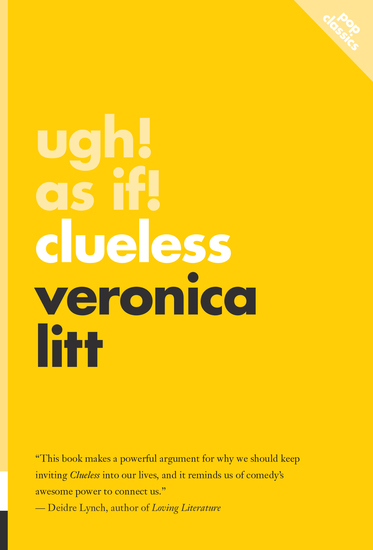
  • Ugh! As If! - Clueless - cover

    Ugh! As If! - Clueless

    Veronica Litt

    • 0
    • 0
    • 0
    A sweet and sly exploration of the Jane Austen–inspired teen movie and its evergreen imperative to be kind, do better, and find the activist within
    		 
    We are totally butt-crazy in love with Clueless. Since the movie’s premiere in 1995, pop culture has mined Amy Heckerling’s high school comedy for inspiration, from Iggy Azalea and Charli XCX’s “Fancy” music video to Cher’s iconic yellow plaid suit appearing at every Halloween party.
    		 
    In Ugh As If!, Veronica Litt argues that this seemingly fluffy teen romp is the quintessential thinking woman’s movie, one in which the audience is asked to seriously consider the beauty and power of naïveté. Cher Horowitz’s gradual pivot from oblivious it girl to burgeoning activist is a powerful reminder that even the most unlikely people can change for the better and contribute to their communities. In this bright, shiny film, pursuing a more just society isn’t just possible — it’s enjoyable. This fun, feminine, feel-good movie is a counter-narrative to nihilism, a refusal to give into cynicism, hopelessness, and passivity. Almost without viewers noticing, Clueless teaches Cher, and us, how to become better. Like the film it examines, Ugh As If! nudges even the most jaded viewer into feeling hopeful about the future.
    		 
    About the Pop Classics Series
    		 
    Short books that pack a big punch, Pop Classics offer intelligent, fun, and accessible arguments about why a particular pop phenomenon matters.
    Ver livro
  • The Suppression of Truth in the United States and the World - And What We Can do About It - cover

    The Suppression of Truth in the...

    Martin K. Ettington

    • 0
    • 0
    • 0
    In today’s world we live in a culture of truth suppression. This is true in representative democracies like the United States as well as full totalitarian dictatorships like Communist China. 
    This book covers many areas of major lies like Global Warming, perverted doctrines taught in schools, Politics, News Suppression, Communist China, limitations in Spirituality, deficit spending, and problems with globalism. 
    There are many different types of truth suppression and as much as we would like to think that we live in an advanced culture and world, this effort by different entities to suppress truth affects our lives negatively in many ways. 
    The most direct effect is that we live in fear of the future of our world which is a big lie. 
    This suppression also keeps us from fully realizing our spiritual natures and that we do have the ability to accomplish amazing things when we live with full honesty in our lives. 
    I believe that individuals are closest to a state of happiness when they live their lives in truth. (See my book “A New Paradigm of Truth and Happiness” for more information.) 
    There are actions we can take to correct this situation but they are mass actions which need many persons involved to have a real effect. A list of these actions are given later in this book.
    Ver livro