¡Acompáñanos a viajar por el mundo de los libros!
Añadir este libro a la estantería
Grey
Escribe un nuevo comentario Default profile 50px
Grey
Suscríbete para leer el libro completo o lee las primeras páginas gratis.
All characters reduced
Digital Noise Impact - cover

Digital Noise Impact

Elian Wildgrove

Traductor A AI

Editorial: Publifye

  • 0
  • 0
  • 0

Sinopsis

In today's digital age, Digital Noise Impact explores the psychological consequences of constant online information. It examines how relentless digital content affects our attention spans, memory, and mental well-being. The book argues that the constant bombardment of digital noise impairs cognitive function, challenging the assumption that more information inherently leads to better understanding.

 
One intriguing fact is how digital noise contributes to mental fatigue, impacting productivity and overall well-being. The book emphasizes the need to understand these cognitive costs associated with our digital lives, providing insights applicable across various fields like education and public health.

 
The book unfolds in three parts: defining digital noise and its effects, examining specific aspects of digital consumption like social media and multitasking, and exploring strategies for mitigating negative effects. It considers the impact of personalized content algorithms on cognitive overload.

 
What makes this book unique is its holistic approach, examining the interplay between attention, memory, and mental fatigue across different digital platforms. It avoids focusing on a single aspect, offering a comprehensive view supported by research, meta-analyses, and case studies.

 
Written for a broad audience, Digital Noise Impact presents information in an accessible yet authoritative style. It offers practical strategies for reclaiming cognitive control and addresses ongoing debates about how technology alters cognitive abilities. By understanding the book's insights, readers can adopt mindful technology use and develop healthier digital habits to improve focus and mental well-being.
Disponible desde: 05/05/2025.
Longitud de impresión: 75 páginas.
Otros libros que te pueden interesar

  • Poor Richard's Almanack (Deluxe Hardbound Edition) - cover

    Poor Richard's Almanack (Deluxe...

    Benjamin Franklin

    • 0
    • 0
    • 0
    Benjamin Franklin's Poor Richard's Almanack, first published in 1732 under the pseudonym Richard Saunders, is a seminal work in American literature that blends practical wisdom with sharp wit. Originally serving as an annual publication, the almanac offered readers a mix of weather forecasts, household tips, puzzles, and, most notably, a collection of aphorisms and proverbs that emphasized virtues like thrift, industry, and prudence. Many of these sayings, such as "Early to bed and early to rise, makes a man healthy, wealthy, and wise," have become ingrained in American vernacular. Beyond its practical content, the almanac provided entertainment through its humor and satire, often featuring fictional narratives and characters. Franklin's creation not only reflected the values of colonial America but also played a role in shaping the nation's cultural identity. The enduring popularity of Poor Richard's Almanack underscores its significance as both a historical document and a source of timeless advice.
    Ver libro
  • Histories of Racial Capitalism - cover

    Histories of Racial Capitalism

    Justin Leroy, Destin Jenkins

    • 0
    • 0
    • 0
    The relationship between race and capitalism is one of the most enduring and controversial historical debates. The concept of racial capitalism offers a way out of this impasse. Racial capitalism is not simply a permutation, phase, or stage in the larger history of capitalism—since the beginning of the Atlantic slave trade and the colonization of the Americas, capitalism, in both material and ideological senses, has been racial, deriving social and economic value from racial classification and stratification. Although Cedric J. Robinson popularized the term, racial capitalism has remained undertheorized for nearly four decades. 


    Histories of Racial Capitalism brings together for the first time distinguished and rising scholars to consider the utility of the concept across historical settings. These scholars offer dynamic accounts of the relationship between social relations of exploitation and the racial terms through which they were organized, justified, and contested. Throughout, the contributors consider and challenge how some claims about the history and nature of capitalism are universalized while others remain marginalized. By theorizing and testing the concept of racial capitalism in different historical circumstances, this book shows its analytical and political power for today's scholars and activists.
    Ver libro
  • The Siege of Fort William Henry - A Year on the Northeastern Frontier - cover

    The Siege of Fort William Henry...

    Ben Hughes

    • 0
    • 0
    • 0
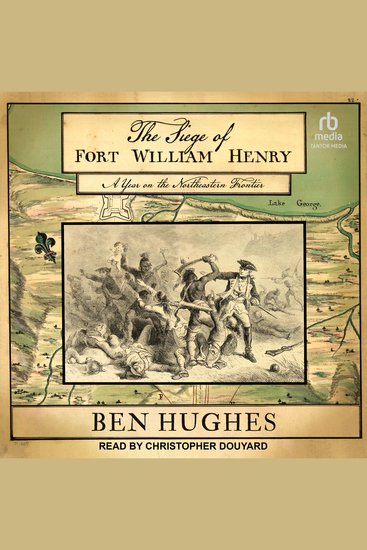
    The opening years of the French and Indian War were disastrous for the British. Hindered by quarrelsome provincial councils, incompetent generals, and the redcoats' inability to adapt to wilderness warfare, Britain was losing the war. Learning that most of Britain's military resources were allocated to Louisbourg, the French launched a campaign along the weakened frontier. French Commander Louis-Joseph de Montcalm and his American Indian allies laid siege to Fort William Henry; Monro could not hold out and was forced to surrender. As part of the terms, the British regiment, colonial militia, and their camp followers would be allowed safe passage to nearby Fort Edward. The French watched in horror, however, as their Indian allies attacked the British column after it left the fort, an episode that sparked outrage and changed the tactics of the war. 


    Seen through the eyes of participants such as Louis Antoine de Bougainville, a scholarly young aide-de-camp, Jabez Fitch, an amiable Connecticut sergeant, and Kisensik, a proud Nipissing chief whose father once met Louis XIV in the marbled halls of Versailles, The Siege of Fort William Henry uses contemporary newspaper reports, official documents, private letters, and published memoirs to bring the narrative to life.
    Ver libro
  • Fighting in Flanders Fields The: The History of the Major Battles across the Region during World War I - cover

    Fighting in Flanders Fields The:...

    Charles River Editors

    • 0
    • 0
    • 0
    After an initial period of relatively rapid maneuver during which the German forces pushing through Belgium and the French and British forces attempting to stymie them made an endless series of abortive flanking movements that extended the lines to the sea, a stalemate naturally tended to develop. The infamous trench lines soon snaked across the French and Belgian countryside, creating an essentially futile static slaughterhouse whose sinister memory remains to this day. 
    	Until the war of maneuver returned in 1918 and led to a decisive outcome for the war, the nexus of this horror lay in the rainy, sodden levels and low ridges of Flanders, near the medieval town of Ypres. In this tiny fragment of Europe, half a million men died over the course of three major battles and the times of attrition between, perishing in a squelching pit of mud, blood-tinged water, and rotting human flesh. In fact, with the exception of a few hours on Christmas Day 1914, the shelling, sniping, raids, and bloodshed in Flanders never ceased from the moment of first contact between the British Expeditionary Force (BEF) and the Imperial German army.  
    	The Ypres salient bulged a few miles forward into Belgium, representing the only part of that nation the Germans had not occupied. Held by a mix of British, French, Canadian, Belgian, and colonial troops, this thorn in the Germans’ side had held off massive but clumsily handled attacks by barely-trained German volunteers and conscripts in late 1914 at the First Battle of Ypres. Each side had attempted to launch a major offensive through Ypres at the same time, leading to a blood-soaked encounter battle that, after weeks of futile butchery amid the small farms, hedgerows, canals, and tracts of woodland, devolved into a grim stalemate. Lines of trenches faced each other and sniping, artillery bombardment, and small actions led to an ongoing stream of casualties.
    Ver libro
  • Libya and the West - What Everyone Needs to Know - cover

    Libya and the West - What...

    Peter Hahn

    • 0
    • 0
    • 0
    Libya and the West: What Everyone Needs to Know® is a welcome update to the literature on Western diplomatic relations with Libya. It specifically analyzes the complicated relationships that Italy, Britain, the United States, and France developed with Libya beginning in the 1910s. On the basis of a wide range of primary and secondary sources, it offers insights into the political and socio-economic conditions within Libya that concerned Western leaders and shaped their policies. Among the crucial episodes that this book embraces are fascist Italy's military conquest and colonization of Libya; the expulsion of Axis armies from Libya and other north African states during World War II; the enthronement of King Idris in 1951; the discovery of oil in Libya in 1959. It explains the seizure of power by Muammar Qaddafi in 1969; the low-intensity military conflict between the United States and Libya in the 1980s; the Western response to Libyan acts of terrorism, including the murder of a British police officer in London in 1984 and the downing of Pan Am flight 103 in 1988; the enduring turmoil sparked by the Arab Spring in 2011; the decision by NATO powers to intervene militarily in the Libyan civil war to ensure the downfall of the Qaddafi regime; and the murder of U.S. Ambassador Christopher Stevens at Benghazi in 2012.
    Ver libro
  • America’s Greatest Engineering Projects: The Construction History of the Transcontinental Railroad the Panama Canal and the Hoover Dam - cover

    America’s Greatest Engineering...

    Editors Charles River

    • 0
    • 0
    • 0
    The Transcontinental Railroad, laid across the United States during the 1860s, remains the very epitome of contradiction. On the one hand, it was a triumph of engineering skills over thousands of miles of rough terrain, but on the other hand, it drained the natural resources in those places nearly dry. It “civilized” the American West by making it easier for women and children to travel there, but it dispossessed Native American civilizations that had lived there for generations. It made the careers of many men and destroyed the lives from many others. It was bold and careless, ingenious and cruel, gentle and violent, and it enriched some and bankrupted others. In short, it was the best and worst of 19th century America in action. 
    Traveling around the tip of South America was fraught with danger, and European explorers and settlers had proposed building a canal in Panama or Nicaragua several centuries before the Panama Canal was actually built. Taking about 10 years to build, workers had to excavate millions of cubic yards of earth and fight off hordes of insects to make Roosevelt’s vision a reality. Roosevelt also had to tie up the U.S. Navy in a revolt in Colombia to ensure Panama could become independent and thus ensure America had control of the canal. 
    During the 1930s, at the height of the Great Depression, thousands of workers began work on the Hoover Dam, built in the Black Canyon, which had been cut by the powerful Colorado River. The Colorado River was responsible for the Grand Canyon, and by the 20th century, the idea of damming the river and creating an artificial lake was being explored for all of its potential, including hydroelectric power and irrigation. By the time the project was proposed in the 1920s, the contractors vowing to build it were facing the challenge of building the largest dam the world had ever known. As if that wasn’t enough, the landscape was completely unforgiving.
    Ver libro