Junte-se a nós em uma viagem ao mundo dos livros!
Adicionar este livro à prateleira
Grey
Deixe um novo comentário Default profile 50px
Grey
Assine para ler o livro completo ou leia as primeiras páginas de graça!
All characters reduced
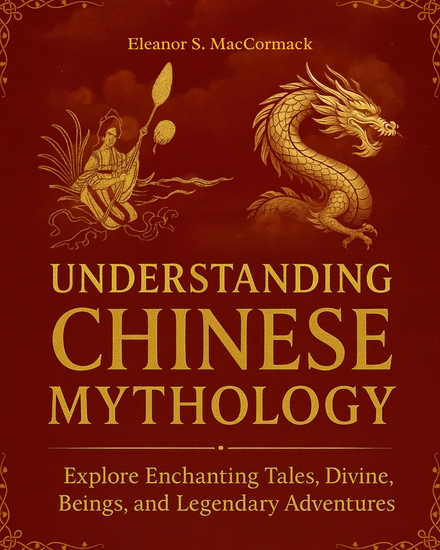
Understanding Chinese Mythology - Explore Enchanting Tales Divine Beings and Legendary Adventures - cover
LER

Understanding Chinese Mythology - Explore Enchanting Tales Divine Beings and Legendary Adventures

Eleanor S. MacCormack

Editora: SeaHorse Pub

  • 0
  • 0
  • 0

Sinopse

Embark on an extraordinary journey through the rich and mystical world of Chinese mythology with "Understanding Chinese Mythology: Explore Enchanting Tales, Divine Beings, and Legendary Adventures." This captivating guide invites you to uncover the ancient stories that have shaped Chinese culture, philosophy, and spirituality for thousands of years. From celestial gods and goddesses to heroic mortals and mythical creatures, this book brings to life the vibrant conections of legends that continue to inspire wonder.
 
Stroll into timeless tales of creation, love, betrayal, and triumph—stories that reveal the profound connection between humanity and the cosmos. Meet legendary figures like the Jade Emperor, Nuwa, and Sun Wukong, whose adventures reflect universal themes of courage, wisdom, and resilience. Discover how these myths influenced art, literature, festivals, and even modern-day beliefs. Whether you're fascinated by dragons soaring across the skies, intrigued by the balance of yin and yang, or eager to explore the symbolism behind the zodiac, this book offers a treasure trove of knowledge.
 
Written in an engaging, accessible style, it’s perfect for beginners yet deep enough to captivate seasoned enthusiasts.
 
Unveil the secrets of China’s storied past, connect with its timeless wisdom, and let these enchanting tales ignite your imagination. Add this essential guide to your collection today—it’s more than just a book; it’s a portal to a magical realm waiting to be explored!
 
 
Disponível desde: 25/07/2025.
Comprimento de impressão: 366 páginas.

Outros livros que poderiam interessá-lo

  • Monument Eternal - cover

    Monument Eternal

    Alice Coltrane, Ashley Kahn

    • 0
    • 0
    • 0
    The long-awaited reissue of Alice Coltrane’s original spiritual teachings and reflections, which provide powerful insight into her transcendent music, cherished by millions across the globe.  
    ALICE COLTRANE (1937–2007) was a composer, master of various musical instruments, improviser, spiritual leader, and wife of John Coltrane. Throughout her adult life, she worked within and combined a broad range of musical genres, including gospel, R&B, bebop, free jazz, Indian devotional song, and Western art music. She recorded more than twenty full-length albums for Impulse and Warner Bros. Her music speaks to her experiences as a child playing for church congregations in Detroit; the transcendent and mind-bending avant-garde improvisations she performed with her husband John Coltrane; and her religious pilgrimages to India.  
    When Monument Eternal was originally published in 1977, Alice Coltrane was living in Southern California and had recently become a swami, building and nurturing an alternative spiritual community. In these pages, she says that the book is “based upon the soul’s realizations in Absolute Consciousness and its spiritual relationships with the Supreme One.” Monument Eternal offers deep insight into Coltrane’s tremendous musical output and shines a light on her transformation from Alice McLeod, Detroit church organist and bebopper, to sage thought leader Swami Turiyasangitananda. It also reflects the extraordinary fluidity of American religious customs in the mid- and late-twentieth century.  
    Akashic’s long-awaited reissue of Monument Eternal includes a new foreword by Ashley Kahn.
    Ver livro
  • The Gospel of Wealth Present Day Edition - cover

    The Gospel of Wealth Present Day...

    Andrew Carnegie

    • 0
    • 0
    • 0
    Andrew Carnegie comes down from heaven into the dreams of a billionaire to discuss and highlight the importance of acquiring safety, unity, and brotherhood while living in line and accord with nature. 
    Within this fictional work, you will observe a full presentation and complete breakdown of the safety above all philosophy being presented by Andrew Carnegie himself.
    Ver livro
  • Fighting Dirty - How a Small Community Took on Big Trash - cover

    Fighting Dirty - How a Small...

    Poh-Gek Forkert

    • 0
    • 0
    • 0
    Fighting Dirty tells the story of how one small group of farmers, small-town residents, and Indigenous people fought the world’s largest waste disposal company to stop them from expanding a local dumpsite into a massive landfill. As one of the experts brought in to assess the impact the toxic waste would have on the community, Poh-Gek Forkert was part of the adventures and misadventures of their decades-long fight.
    Ver livro
  • Vexillology - Flags of the World: Their History and Meaning - cover

    Vexillology - Flags of the...

    Mike Crawford

    • 0
    • 0
    • 0
    The history of flags is as old as civilization itself, beginning with the use of symbols to identify and distinguish groups, tribes, and nations. These symbols, initially simple and functional, later evolved into the complex designs we recognize today as flags. In their early forms, flags were not necessarily the fabric banners we use now but were often symbols or standards that represented a group or entity. These early markers were used to communicate identity, power, and territorial boundaries. 
    The earliest known use of flags dates back to ancient civilizations such as the Egyptians, Greeks, and Chinese. For example, the ancient Egyptians used flags made of fabric or leather as symbols of authority, carried into battle or displayed in royal courts. These early flags often consisted of simple shapes and symbols, such as the Egyptian ankh or the scarab, representing the gods and the ruling elite. 
    Similarly, ancient Greek and Roman civilizations used banners in both military and civic contexts. In Roman times, military standards called "signa" were carried by soldiers during battles. These standards were often adorned with the images of gods, and the legions were known for their proud display of these banners, which were considered sacred. These military standards were instrumental in maintaining order and morale within the ranks and also served as a form of propaganda, displaying the power and might of the Roman Empire.
    Ver livro
  • A Classic Interview with Music Icon Miles Davis - cover

    A Classic Interview with Music...

    Miles Davis

    • 0
    • 0
    • 0
    Miles Dewey Davis III (May 26, 1926 - September 28, 1991) was an American jazz trumpeter, bandleader, and composer. Born into an upper-middle-class family in Alton, Illinois, and raised in East St. Louis, Davis is among the most influential and acclaimed figures in the history of jazz and 20th-century music. Davis adopted a variety of musical directions in a roughly five-decade career that kept him at the forefront of many major stylistic developments in jazz. The following audio recordings are from a 1953 radio interview in East St. Louis and a 1984 television interview in Norway.
    Ver livro
  • The Roman Senate - Politics and Power in Ancient Rome - cover

    The Roman Senate - Politics and...

    Rogan Fish

    • 0
    • 0
    • 0
    The Roman Senate, one of the most enduring institutions in ancient history, traces its origins to the very foundation of Rome. Emerging during the early monarchy period, the Senate originally functioned as an advisory body to the king. According to Roman tradition, the Senate was established by Romulus, the legendary founder of Rome, who appointed one hundred of the most distinguished men, known as "patres," to serve as the initial senators. These men and their descendants formed the aristocratic class, later known as the patricians. The formation of the Senate marked the beginning of a political structure that would shape Roman governance for centuries. 
    The early Senate's primary role was to offer counsel to the king on matters of state. While its authority was limited under the monarchy, the Senate's influence grew as it represented the city’s elite and carried the weight of collective wisdom. Senators held their positions for life, symbolizing stability and continuity within the Roman state. The Senate's name itself, derived from the Latin word "senex" (meaning old man), emphasized the value placed on experience and elder leadership. During this period, the Senate did not possess legislative or executive power but acted as a stabilizing force, guiding the monarch through complex political and military decisions. 
    The transition from monarchy to republic in the late 6th century BCE marked a significant turning point for the Senate’s role. After the fall of the last Roman king, Tarquin the Proud, the Senate became more central to governance. The expulsion of the monarchy led to the establishment of the Roman Republic, where power was distributed more broadly among elected magistrates. The Senate, now composed mainly of patricians, gained considerable influence as a body that advised the newly formed consuls.
    Ver livro