¡Acompáñanos a viajar por el mundo de los libros!
Añadir este libro a la estantería
Grey
Escribe un nuevo comentario Default profile 50px
Grey
Suscríbete para leer el libro completo o lee las primeras páginas gratis.
All characters reduced
Little Journeys to the Homes of the Great (Vol 1-14) - Exploring the Lives of Eminent Men and Women: Biographical Sketches and Portraits - cover

Little Journeys to the Homes of the Great (Vol 1-14) - Exploring the Lives of Eminent Men and Women: Biographical Sketches and Portraits

Elbert Hubbard

Editorial: e-artnow

  • 0
  • 0
  • 0

Sinopsis

Embark on a literary journey through the lives of extraordinary individuals with Elbert Hubbard's fourteen-volume masterpiece, "Little Journeys to the Homes of the Great." Delve into the intimate details of the homes and lives of eminent men and women who have shaped history. This collection presents biographical sketches spanning a diverse array of fields, including literature, art, politics, philosophy, and more. These Little Journeys offer a captivating glimpse into the private worlds of those who have left an indelible mark on human history.
Table of Contents:
Volume 1: Little Journeys to the Homes of Good Men and Great 
Volume 2: Little Journeys to the Homes of Famous Women 
Volume 3: Little Journeys to the Homes of American Statesmen 
Volume 4: Little Journeys to the Homes of Eminent Painters
Volume 5: Little Journeys to the Homes of English Authors
Volume 6: Little Journeys to the Homes of Eminent Artists
Volume 7: Little Journeys to the Homes of Eminent Orators
Volume 8: Little Journeys to the Homes of Great Philosophers
Volume 9: Little Journeys to the Homes of Great Reformers
Volume 10: Little Journeys to the Homes of Great Teachers
Volume 11: Little Journeys to the Homes of Great Businessmen
Volume 12: Little Journeys to the Homes of Great Scientists
Volume 13: Little Journeys to the Homes of Great Lovers
Volume 14: Little Journeys to the Homes of Great Musicians
Disponible desde: 27/04/2024.
Longitud de impresión: 2779 páginas.

Otros libros que te pueden interesar

  • This Wheel's on Fire - Levon Helm and the Story of the Band - cover

    This Wheel's on Fire - Levon...

    Levon Helm, Stephen Davies

    • 0
    • 0
    • 0
    The singer and drummer of the Band details, in this book, the history of one of the most influential groups of the 1960s. While their music evoked a Southern mythology with their beautifully crafted, image-rich songs, only their Arkansan drummer, Levon Helm, was the genuine article. This updated edition of his life story includes a new epilogue that covers the last dozen years of his life. From the cotton fields to Woodstock and from seeing Sonny Boy Williamson and Elvis Presley to playing for President Clinton, This Wheel's on Fire replays the tumultuous life of Levon Helm in his own unforgettable folksy drawl.
    Ver libro
  • Assassinated Presidents The: The Lives and Deaths of Abraham Lincoln James Garfield William McKinley and John F Kennedy - cover

    Assassinated Presidents The: The...

    Editors Charles River

    • 0
    • 0
    • 0
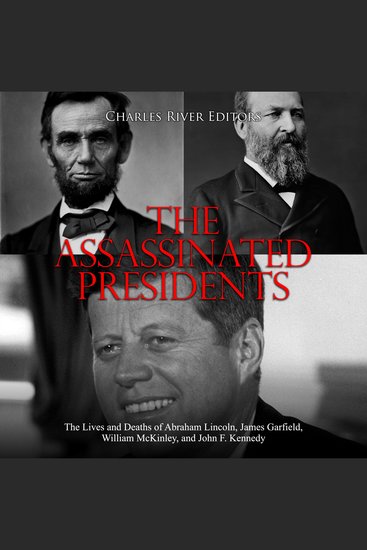
    Until April 14, 1865, John Wilkes Booth was one of the most famous actors of his time, and President Abraham Lincoln had even watched him perform. But his most significant performance at a theater did not take place on the stage. That night, Booth became one of history’s most infamous assassins when he assassinated President Lincoln at Ford's Theatre in Washington, D.C. 
    	In 1880, Garfield ran as a Republican for president, and one of his supporters was a man named Charles Guiteau, who wrote and circulated a speech called “Garfield vs. Hancock” that aimed to rally support for the Republican candidate. Though few knew it, Guiteau’s family had already deemed him insane and attempted to keep him committed in an asylum, only to have him manage an escape from confinement. Garfield went on to narrowly edge Winfield Scott Hancock in the election, and Guiteau, harboring delusions of grandeur, believed he had helped tip the scales in Garfield’s favor.  
    President James Garfield had been assassinated just 20 years earlier, but McKinley didn’t worry about presidential security or his own safety, and that was the case in Buffalo. McKinley’s insistence on greeting the public and shaking hands allowed Czolgosz to walk up to him on September 6, 1901 at a public reception in the Temple of Music on the expo grounds and shoot him point blank, with one bullet grazing the president and another lodging in his abdomen.  
    In many ways, John Fitzgerald Kennedy and his young family were the perfect embodiment of the ‘60s. The decade began with a sense of idealism, personified by the attractive Kennedy, his beautiful and fashionable wife Jackie, and his young children. Months into his presidency, Kennedy exhorted the country to reach for the stars, calling upon the nation to send a man to the Moon and back by the end of the decade. But the idealism and optimism of the decade was quickly shattered, starting with Kennedy’s assassination in 1963. 
    Ver libro
  • Kiki Man Ray - Art Love and Rivalry in 1920s Paris - cover

    Kiki Man Ray - Art Love and...

    Mark Braude

    • 0
    • 0
    • 0
    In freewheeling 1920s Paris, Kiki de Montparnasse captivated as a nightclub performer, sold out gallery showings of her paintings, starred in Surrealist films, and shared drinks and ideas with the likes of Jean Cocteau and Marcel Duchamp. Her best-selling memoir—featuring an introduction by Ernest Hemingway—made front-page news in France and was immediately banned in America. All before she turned thirty. 


    Kiki was once the symbol of bohemian Paris. But if she is remembered today, it is only for posing for several now-celebrated male artists, including Amedeo Modigliani and Alexander Calder, and especially photographer Man Ray. 


    Kiki and Man Ray met in 1921 during a chance encounter at a café. What followed was an explosive decade-long connection, both professional and romantic, during which the couple grew and experimented as artists, competed for fame, and created many of the shocking images that cemented Man Ray's reputation as one of the great artists of the modern era. 


    Charting their volatile relationship, award-winning historian Mark Braude illuminates for the first time Kiki's seminal influence not only on Man Ray's art, but on the culture of 1920s Paris and beyond.
    Ver libro
  • Flesh & Blood - Reflections on Infertility Family and Creating a Bountiful Life: A Memoir - cover

    Flesh & Blood - Reflections on...

    Anónimo

    • 0
    • 0
    • 0
    Honest, warm, and witty, this memoir reads like a chat with a dear friend sharing her insight and taking us along as she heals. Complete with family stories over cocktails and a praying mantis named Claude. “I drive and say to myself, if I am dying, if this is how I die, then this is how I die.” When N. West Moss finds herself bleeding uncontrollably in the middle of a writing class, she manages to drive herself to the nearest hospital. Doctors are baffled, but eventually a diagnosis—uterine hemangioma—is rendered and a hysterectomy is scheduled. In prose both lyrical and unsparing, Moss takes us along through illness, relapse, and recovery. And as her thoughts turn to her previous struggles with infertility, she reflects on kin and kinship and on what it means to leave a legacy. Moss’s wise, droll voice and limitless curiosity lift this narrative beyond any narrow focus. Among her interests: yellow fever, good cocktails, the history of New Orleans, and, always, the natural world, including the praying mantis in her sunroom whom she names Claude. And we learn about the inspiring women in Moss’s family—her mother, her grandmother, and her great-grandmother—as she sorts out her feelings that this line will end with her. But Moss discovers that there are ways besides having children to make a mark, and that grief is not a stopping place but a companion that travels along with us through everything, even happiness. A remarkably honest memoir about heartache and healing, Flesh & Blood opens up a conversation with the millions of women who live with infertility and loss.
    Ver libro
  • Mystical Hermetic & Christian Dialogues: Beyond the Nag Hammadi Canon - Egyptian Wisdom the Divine Mind and the Ascent of the Soul - A Modern Translation - Adapted for the Contemporary Reader - cover

    Mystical Hermetic & Christian...

    Various Church Fathers

    • 0
    • 0
    • 0
    What if the foundations of mainstream Christianity were forged in fierce intellectual battles—where Gnostic teachings threatened to reshape the faith’s core? 
    This anthology spotlights Irenaeus’s Against Heresies, Tertullian’s Adversus Valentinianos and Adversus Marcionem, and Hippolytus’s Refutation of All Heresies. Adapted for a modern audience, these writings illuminate how early bishops and theologians safeguarded orthodoxy by systematically dismantling Gnostic beliefs on cosmic archons, alternate creation myths, and selective scripture editing. 
    Included Texts:Irenaeus’s Against Heresies (Selections)Tertullian’s Adversus Valentinianos & Adversus Marcionem (Excerpts)Hippolytus’s Refutation of All Heresies (Highlights)Epistle of the Apostles (where relevant) 
    What You’ll Discover Inside:Core Theological Showdowns – Debates over Christ’s humanity/divinity, the Old Testament’s place, and salvation’s nature.Detailed Accounts of “Heresies” – Insight into Valentinian, Marcionite, and other Gnostic movements.Development of Orthodoxy – The arguments that shaped key creedal affirmations.The Role of Scripture & Tradition – Why certain texts were championed or cast aside. 
    Witness the razor-sharp rhetoric that molded the Christian faith you know today. Explore these refutations and glean the fervor of early doctrinal battles.
    Ver libro
  • Bobok - From their pens to your ears genius in every story - cover

    Bobok - From their pens to your...

    Fyodor Dostoyevsky

    • 0
    • 0
    • 0
    Fyodor Mikhailovich Dostoyevsky was born in Moscow on 11th November, 1821 to distinguished multi-ethnic parents from a Lithuanian background.  
    His childhood years were at the family home in hospital grounds which also contained an orphanage, an insane asylum and a cemetery for criminals.  The young Fyodor often disobeyed his father by talking to the ill in the hospital gardens.   
    His health was compromised at age 9 when he experienced his first epileptic fit. By the time he was a teenager both parents had died and he was now enrolled in a military academy where he graduated and eventually became a Lieutenant in 1842.  He left military service the next year. 
    In 1846 he published his first novel ‘Poor Cow’ to great literary acclaim.  His next was unable to emulate that success but his short stories helped provide an income.  Life as an author was definitely difficult. As he began his next work he was arrested and incarcerated for treason and participation in the political and literary Petrashevsky Circle. Although the case was weak and unjustified he was sentenced to 4 years of hard labour followed by 5 years of military service in a Siberian regiment.  
    Despite the undoubted hardships and setbacks in his life, and whether they helped or hindered his writing, his talents produced many exceptional works of literature including ‘Crime and Punishment’, ‘The Idiot’ and ‘The Brothers Karamazov’.   
    Dostoevsky’s ability to get under the skin of his characters and show the inner workings of their mind was hugely influential and ahead of its time.  Interwoven with this was the influence of the broader social, spiritual and political forces at work in a person's psyche.   
    Fyodor Dostoevsky struggled financially and remained in poor health for much of his adult life.  He died from a lung haemorrhage on 9th February, 1881.
    Ver libro