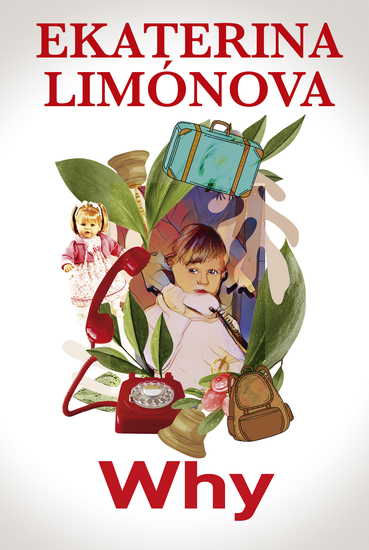
Ekaterina Limonova, who pursued higher education and achieved professional success without even suspecting that her hearing ability was well below average, embarks on "Why," a journey through her life experiences, from her difficult childhood in the Soviet Union in the 1980s to her current life in Great Britain, where she was finally diagnosed with hearing loss, as well as one of her children.
With her training and experience as a specialized speech therapist and therapeutic educator for hearing deficits, and what she has learned from her experiences, the author offers a unique and practical perspective on how to understand and help children with hearing deficits and other special educational needs.
"Why" is an exciting and moving work that allows us to see the world from a different perspective, better understand the feelings of people with hearing deficits, and realize that no obstacle is insurmountable when there is motivation to achieve one's goals.
Uncork a whole new take on the fascinating story of wine, captivatingly told by everyone’s favourite wine expert Oz Clarke.
This fully updated edition takes us through the riveting twists and turns of the history of winemaking all the way to the very latest trials and innovations of the present day…
Join Oz Clarke on a journey through the ages as he explores the places, the people and the bottles that have shaped the captivating history of wine.
Starting from the probable birth of a wine culture in ancient Georgia, Oz travels from 6000 BC through the fact and fiction of Persia, Egypt, Greece and Rome, and then along the winding trail right up to the latest innovations in winemaking today.
Packed with sparkling wit and charismatic storytelling, Oz shares more than a hundred fascinating tales and woven into these are probably a hundred more. From revered medieval monks to revolutionary discoveries, Oz paints a wonderfully vivid picture of the ever-evolving story of wine.
The book is a non-fiction masterpiece, taking readers on a road trip through the world of beverages. It's a top pick for those interested in cooking, antiques, and collectibles, especially those related to alcoholic drinks.
For fans of Hugh Johnson (Hugh Johnson on Wine), Madeline Puckette (Wine Folly), Henry Jeffreys (The Cocktail Dictionary), Jamie Goode (The Goode Guide to Wine), and Stephen Skelton (Vine Varieties, Clones and Rootstocks for UK Vineyards 2nd Ed.).
HarperCollins 2023
‘It won’t happen to me. That’s what I thought when I got on the plane to Venezuela. But it did – I got caught.’
Caught smuggling half a million euros’ worth of cocaine, Paul Keany was sexually assaulted by Venezuelan anti-drugs officers before being sentenced to eight years in the notorious Los Teques prison outside Caracas. There he was plunged into a nightmarish world of coke-fuelled killings, gun battles, stabbings, extortion and forced hunger strikes until finally, just over two years into his sentence, he gained early parole and embarked on a daring escape from South America . . .
Aided by his extensive prison diaries, Keany reveals the true horror of life inside Los Teques: a shocking underworld behind bars where inmates pay protection money to stay alive, prostitutes do the rounds and vast amounts of cocaine are smuggled in for cell-block bosses to sell on to prisoners for huge profits. The Cocaine Diaries is a remarkable story, told by Keany with honesty, courage and even humour, despite knowing that every day behind bars might have been his last.
The Pilgrim's Regress is a book of allegorical fiction by C. S. Lewis. This 1933 novel was Lewis's first published work of prose fiction, and his third piece of work to be published and first after he converted to Christianity. It charts the progress of a fictional character named John through a philosophical landscape in search of the Island of his desire. Lewis described the novel to his publisher as "a kind of Bunyan up to date," in reference to John Bunyan's 1678 novel The Pilgrim's Progress, recast with the politics, ideologies, philosophy, and aesthetic principles of the early 20th century. As such, the character struggles with the modern phoniness, hypocrisy, and intellectual vacancy of the Christian church, Communism, Fascism, and various philosophical and artistic movements.
Breaking the Inherited Cycle of Trauma
In his unflinchingly honest memoir, Mitchell Raff candidly recounts his journey to overcome generational trauma and break free from decades of addiction. With raw vulnerability, he lays bare his destructive coping mechanisms and the far-reaching consequences they wrought on his life and on those around him.
Beaten mercilessly as a child by his Holocaust-survivor mother, Mitchell was later kidnapped from Los Angeles to Israel before finding refuge with loving relatives back in America. In his adult life, the echoes of trauma forced Mitchell into patterns of substance abuse, sexual vices, and toxic relationships. But at a certain point, Mitchell explains, you need to own your decisions, for better or worse. After years of painful self-examination and work, Mitchell settled into a healthy relationship and found the strength to endure blows that once would have destroyed him.
Mitchell’s unfiltered account of his trials, failures, and ultimate breakthrough to become the man he always wanted to be is living proof that cycles of generational trauma can be broken, that even the deepest wounds can soften, and that though the road is difficult, it is within reach to not only survive but thrive.
The bookshelves of World literature are incredible collections that have gathered together centuries of very talented authors. From their countries and continents their fame spread and whilst among their number many are now forgotten or neglected their talents endure. Among them is S Mukerji.
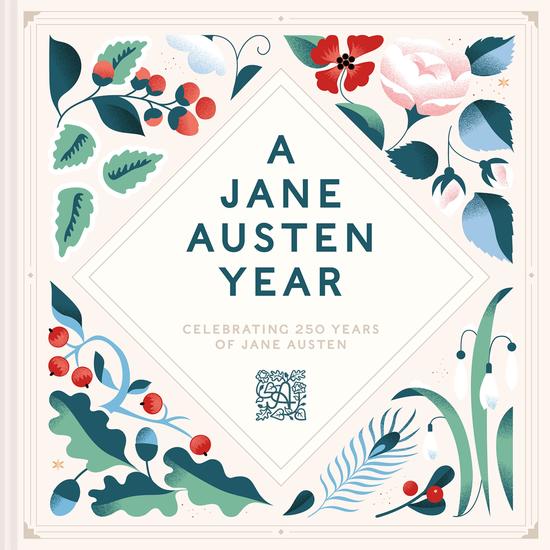
This beautifully illustrated book charts the life, works and legacy of one of the world's most beloved authors, offering a seasonal guide to Jane Austen's life through the objects that surrounded her, the personal letters and manuscripts that she created, and the events that shaped her life and understanding.
It is created by Jane Austen's House - the enchanting Hampshire cottage where her genius flourished, now a museum that attracts tens of thousands of visitors every year - and reveals highlights from the museum's collection.
Arranged over the course of a calendar year, from snowy scenes in January to festive recipes in December, specially commissioned photography of Austen's home and possessions are brought together with extracts from her books, reproductions of her letters, and stories of her life throughout the seasons. Highlights include affectionate letters to her sister Cassandra, the story of the publication of the first edition of Pride and Prejudice, and the 'topaze crosses' that inspired Mansfield Park.
Read this book for a unique and intimate insight into Jane Austen's world. Dip into it as you will, or visit each month, and enjoy a full year of Austen – her life, works and letters, people and objects she knew, and of course her idyllic, inspiring home.