Junte-se a nós em uma viagem ao mundo dos livros!
Adicionar este livro à prateleira
Grey
Deixe um novo comentário Default profile 50px
Grey
Assine para ler o livro completo ou leia as primeiras páginas de graça!
All characters reduced
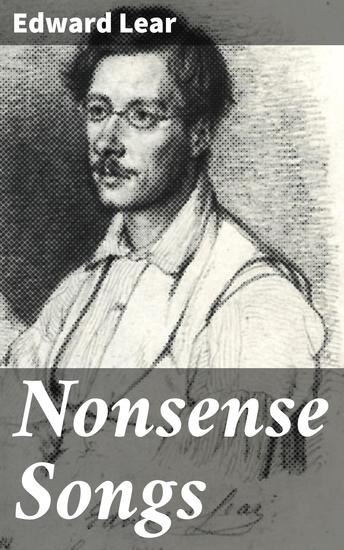
Nonsense Songs - Embrace the Unexpected: A Whimsical Collection of Nonsense Poetry and Humorous Songs - cover
LER

Nonsense Songs - Embrace the Unexpected: A Whimsical Collection of Nonsense Poetry and Humorous Songs

Edward Lear

Editora: Good Press

  • 0
  • 0
  • 0

Sinopse

In 'Nonsense Songs,' Edward Lear presents a whimsical collection of verses that defy convention, embracing absurdity and playful imagination. Written in a lyrical style that interweaves rhyme with rhythm, these songs showcase Lear's mastery of linguistic invention, characterized by his use of nonsensical creatures and fantastical scenarios. This work stands within the Victorian literary context that celebrated children's literature and the burgeoning genre of nonsense, reflecting Lear's unique ability to engage both children and adults through laughter and satire. Edward Lear, a pivotal figure in the development of comic verse, was greatly influenced by his own eccentric upbringing and lifelong fascination with language and illustration. As a painter and draftsman, Lear's visual artistry complemented his literary pursuits, enabling him to create imaginative worlds filled with nonsensical characters like the famous Jumblies and the Owl and the Pussycat. His experiences as a children's tutor further fueled his desire to create works that inspire joy and curiosity in young minds. Readers will find 'Nonsense Songs' an irresistible invitation to explore a realm of imagination where the ordinary becomes extraordinary. This collection not only entertains but also encourages creativity and the appreciation of language's playful aspects, making it an essential read for both children and adults who cherish the delight of absurdity.
Disponível desde: 15/08/2023.
Comprimento de impressão: 103 páginas.

Outros livros que poderiam interessá-lo

  • Begin With A Question - cover

    Begin With A Question

    Marjorie Maddox

    • 0
    • 0
    • 0
    Begin with a Question explores how the life of faith is a continuous voyage, launched anew each bright day of the spirit or dark night of the soul. This is a book of contemplation and motion, a journey— often in stops and starts— toward the Divine, a pilgrimage paved with prayer, praise, pause, penitence, and (of course) questions. Urgent and universal, joyful or joyless, tinged with doubt or rinsed with hope, here are honest queries that probe, lift, and lead to discovery. Begin with a Question keeps us moving, seeking, reaching, lifting us out of ourselves to something beyond. Using a variety of fixed forms and free verse, the poet examines our relationship to the one who asks, " Who do you say that I am?" A book for seekers, doubters, and believers alike, these poems bring us face to face with anguish, anger, awe, and adoration. They give us permission not to demand answers, but to follow the questions that lead to the Alpha and Omega, to the I AM that keeps us spiraling along this twisting path toward God.
    
    
    Begin with a Question is published under Paraclete Press's Iron Pen imprint. In the book of Job, a suffering man pours out his anguish to his Maker. From the depths of his pain, he reveals a trust in God's goodness that is stronger than his despair, giving humanity some of the most beautiful and poetic verses of all time. Paraclete's Iron Pen imprint is inspired by this spirit of unvarnished honesty and tenacious hope.
    Ver livro
  • Frontlines and Lifelines - Collected Poems from an Army Doctor in Crisis and War - cover

    Frontlines and Lifelines -...

    Timothy Hodgetts

    • 0
    • 0
    • 0
    This work captures personal experience of the Army's Surgeon General as a military doctor in crisis and war, spanning 30 years from Northern Ireland; through Kosovo to the Iraq and Afghanistan campaigns; culminating in the COVID-19 pandemic and the Russo-Ukraine war.
    Poetry provides the ability to say what is otherwise difficult or unpalatable. Some of the poems are critical and challenging. Some are humorous, as dark humour is a well-recognised resilience tool of the soldier. All are observational—and all are grounded in the realities of crisis and conflict.
    It is likely you have read war poetry from the perspectives of the combat soldier: but this book is the alternative perspective of those who manage the consequences of war. The work exposes that saving lives in conflict, picking up the human pieces, takes a toll on the carers. Writing these poems has been a means for the author to sustain mental resilience and to cope with serial morally injurious events.
    Ver livro
  • Perfecting the New England American Accent - Essential Techniques For Authenticity - cover

    Perfecting the New England...

    Stephanie Lam

    • 0
    • 0
    • 0
    Embark on a journey to master the distinct New England American accent with our specialized audio course, tailored for actors seeking authenticity in their performances. This course offers an in-depth exploration of the unique phonetic characteristics, intonation patterns, and other nuances that define this iconic American dialect.The course includes practical exercises, focusing on vowel shifts and the distinctive rhythm and melody of the New England speech pattern. The course includes authentic speech examples from multiple sources and time periods, allowing you to hear and practice the accent in realistic scenarios.Our course is designed for ease of use.  Whether you're preparing for a specific role or expanding your acting repertoire, this course offers the tools and guidance to authentically embody the New England American accent. Join us and transform your accent skills with confidence and precision.
    Ver livro
  • Dark Beds - cover

    Dark Beds

    Diana Whitney

    • 0
    • 0
    • 0
    Diana Whitney’s seductive second collection juxtaposes the conflicted emotions of motherhood and domesticity with the intoxicating promises of transgression. Fantasies fulfilled or imagined play out against the haunted backdrop of Vermont’s woods and fields, a landscape both harsh and magical, conjuring longing and grief, dissolution and repair. Here we see how time is reflected in our bodies, our children, our choices, and the natural world. Dark Beds is an anthem for the “sandwich generation”—tired adults caught between the demands of growing children and aging parents, yearning to reclaim desire and a sense of self. Sensual, elegant, and deeply resonant, these poems lay bare the dark beds of a marriage, a garden, a human life: the intimate places where truths are buried, exposed, and sown again in hope of renewal.
    Ver livro
  • Phil and Jan - cover

    Phil and Jan

    Lee Brady

    • 0
    • 0
    • 0
    A long-married couple are returning home from a summer visit to their daughter in California. The vacation makes the wife question what happened to their adventurous younger selves.
    Ver livro
  • Testament to Beauty - A former Poet Laureate demonstrates his poetic talents in this tender and beautiful verse - cover

    Testament to Beauty - A former...

    Robert Seymour Bridges

    • 0
    • 0
    • 0
    Robert Seymour Bridges, OM was born on 23rd October 1844 at Walmer in Kent where he spent his early childhood in a house overlooking the anchoring ground of the British fleet.  
    His father died aged only 47 in 1853. A year later his mother remarried and the family relocated to Rochdale, where his stepfather was the vicar.  
    In 1854 Bridges was sent to Eton College and attended until 1863.  After Eton he went to Corpus Christi College at Oxford. There he became good friends with Gerard Manley Hopkins and would later compile an edition of his poems that is now considered a major contribution to English literature. 
    He graduated from Oxford, in 1867, with a second-class degree in literae humaniores.  Initially he planned to join the Church of England and travelled to the Middle East to broaden his religious horizons.  However, he soon decided that life as a physician would be a better path and, after 8 months studying German (that being the language of many scientific papers at the time) he began his study of medicine at St. Bartholomew's Hospital in 1869.  His long-term ambition was that by the age of forty he could retire from medicine to devote himself to writing. 
    Unfortunately Bridges failed his final medical examinations in 1873 and, as unable to immediately retake the papers, spent six months in Italy learning Italian as well as immersing himself in its art. In July 1874 he went to Dublin to continue his medical studies. Re-examined in December he passed and became a house physician at St Bartholomew's Hospital. It was whilst here that he engaged in a series of highly critical remarks about the Victorian medical establishment. One such was his claim that whilst working as a young doctor he saw a staggering 30,940 patients in one year. 
    A bout of severe pneumonia and lung disease forced his retirement from the medical profession in 1882 and so, slightly ahead of schedule, he began his literary career in earnest.  He already been writing for several years and had published his first poetry collection in 1873.  
    After his illness and a trip to Italy, Bridges moved, with his mother, to Yattendon in Berkshire.  It was during this time, from 1882 to 1904, that Bridges wrote most of his best-known lyrics as well as eight plays and two masques, all in verse.  
    It was also here, in 1884, that he married Monica Waterhouse. They would go on to have three children and spend the rest of their lives in rural seclusion, in an idyllic marriage, first at Yattendon, then at Boars Hill, Oxford. 
    Bridges made an important contribution to hymnody with the publication in 1899 of his Yattendon Hymnal. This collection of hymns became a bridge between the Victorian hymnody of the late 19th century and the modern hymnody of the early 20th century. He was also a chorister at Yattendon church for 18 years. 
    In 1902 Monica and his daughter Margaret became seriously ill with tuberculosis, and a move from Yattendon to a healthier climate was in order. After several temporary homes they moved abroad to spend a year in Switzerland before returning to settle again in England at Chilswell House, which Bridges had designed, and built on Boar's Hill overlooking Oxford University.   
    His greatest achievement though was still some years ahead of him.  The office of Poet Laureate was held by Alfred Austin but with his death it was offered first to Rudyard Kipling, who refused it, and then to Bridges. He was appointed Poet Laureate in 1913 by George V, the only medical graduate to have ever held the office. Bridges, at this time, was neither highly regarded nor well known but a safe pair of hands in a World rapidly being overshadowed by the storms about to erupt over Europe and the First World War. 
    The events of this War, including the wounding of his son, Edward, had a sobering effect on Bridges' poetry. His work became fiercely patriotic. In 1915 edited a volume of prose and poetry, The Spirit of Man, intended to appeal to readers living in war time
    Ver livro