Junte-se a nós em uma viagem ao mundo dos livros!
Adicionar este livro à prateleira
Grey
Deixe um novo comentário Default profile 50px
Grey
Assine para ler o livro completo ou leia as primeiras páginas de graça!
All characters reduced
THE HISTORY OF THE DECLINE AND FALL OF THE ROMAN EMPIRE (All 6 Volumes) - cover
LER

THE HISTORY OF THE DECLINE AND FALL OF THE ROMAN EMPIRE (All 6 Volumes)

Edward Gibbon

Editora: DigiCat

  • 0
  • 0
  • 0

Sinopse

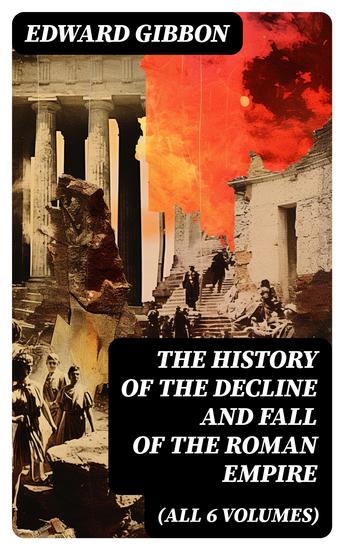
Edward Gibbon's monumental work, "The History of the Decline and Fall of the Roman Empire," spans six volumes and meticulously chronicles the complex socio-political dynamics that led to the disintegration of one of history's greatest empires. Gibbon employs an eloquent and sophisticated literary style, interweaving narrative history with incisive analysis while incorporating vast historical sources. Set against the backdrop of 18th-century historiographical developments, the work embodies the Enlightenment ideals of reason and inquiry, as Gibbon critically examines the interplay of moral and societal decay amidst rising barbarian influences and the transformative impacts of early Christianity. Gibbon, a British historian and Member of Parliament, drew upon his classical education and extensive travels throughout Europe to provide both depth and nuance to his historical narratives. The book reflects his fascination with the causes of empire, as well as his personal belief in reason and skepticism towards dogmatic religion. Gibbon's experiences and intellectual pursuits, including his controversial views on Christianity's role in the empire's demise, are palpable throughout this ambitious investigation. Readers looking for a profound understanding of the mechanisms behind the rise and fall of civilizations will find in Gibbon's work an indispensable resource. His blend of engaging prose and rigorous scholarship makes this history not only informative but also a compelling read, appealing to both historians and general readers alike. "The History of the Decline and Fall of the Roman Empire" is a cornerstone of Western historical literature that remains relevant and provocative today.
Disponível desde: 07/12/2023.
Comprimento de impressão: 848 páginas.

Outros livros que poderiam interessá-lo

  • The Cats of Ireland - An Irish Gift for Cat Lovers with Legends Tales and Trivia Galore - cover

    The Cats of Ireland - An Irish...

    Seamus Mullarkey

    • 0
    • 0
    • 0
    DO YOU ABSOLUTELY LOVE CATS?? 
    Did you know they played a huge role in Irish history? Like to know more...? 
    This funny, informative book has tons of the kinds of fun stories and fascinating trivia that cat lovers can't get enough of... 
    It tells you EVERYTHING you might possibly like to know about how cats shaped Irish history and culture... 
    DID YOU KNOW? 
    --There’s a luxury Irish hotel that gives plain old kitties the 5-Star treatment? 
    --That Irish pop star Enya hides from the world in a castle by the sea--that’s packed full of felines? 
    --That in medieval times any Irish cat was worth a whopping three times as much as a cow? 
    This one-of-a-kind book has TONS of fun cat stories, unusual trivia and quirky feline facts that are sure to entertain and educate you. 
    NOW YOU CAN DISCOVER... 
    --How you can say goodbye to the rat race and move to Ireland with your cat 
    --How catnip farming could be the future for Irish agriculture. 
    --The very best Irish cat names for your brand-new kitten. 
    AND.. much, much more! 
    This unique book features Irish cat stories, historical Irish trivia and fun feline facts from Ireland that are sure to entertain and intrigue you. 
    Stock up on The Cats of Ireland for:BirthdaysChristmasThank-you giftsAnd of course--for St. Patrick’s Day...
    Ver livro
  • Nerva-Antonine Dynasty The: The History and Legacy of the Emperors Who Ruled the Roman Empire at Its Peak - cover

    Nerva-Antonine Dynasty The: The...

    Editors Charles River

    • 0
    • 0
    • 0
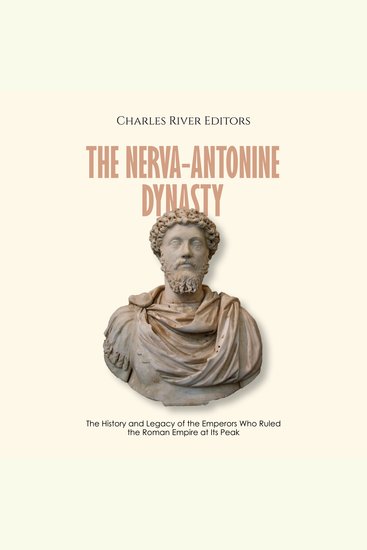
    “The Five Good Emperors,” a reference to the five emperors who ruled the Roman Empire between 96 and 180 CE (Nerva, Trajan, Hadrian, Antoninus Pius, and Marcus Aurelius), was a term first coined by Machiavelli and later adopted and popularized by historian Edward Gibbon, who said that under these men, the Roman Empire “was governed by absolute power under the guidance of wisdom and virtue.”  
    	This period of 84 years is generally regarded as the high point of the Roman Empire, at least after Augustus, but what is uncertain and a matter of ongoing debate is whether the five emperors were personally responsible for the situation and the accompanying prosperity enjoyed throughout the empire at the time or if they were simply the beneficiaries of the Pax Romana, inaugurated by Augustus in the early part of the 1st century CE. In other words, historians have wondered whether anyone in power during those years would have enjoyed the same rewards.  
    	The description of these rulers as “good” is also a matter of interpretation, with some scholars suggesting they were only “good” in comparison to the preceding emperor (Domitian) and the emperor who followed Marcus Aurelius (Commodus). Both of them were horrible rulers in every aspect, making their near contemporaries look all the better.  
    	Regardless, it is clear that the era of the Five Good Emperors was one of unparalleled success and wealth, and the reasons Rome reached its zenith at this time are worthy of scrutiny. Perhaps most noteworthy is that none of these five emperors were blood relatives - while the final two are often referred to as the Antonines, they were not, in fact, related except by adoption, a practice that may in itself provide at least part of the answer to the question as to why this particular period was so magnificent.
    Ver livro
  • Dubious Inmates - MM Gay - cover

    Dubious Inmates - MM Gay

    Rainbow Press

    • 0
    • 0
    • 0
    Doing time can be hard and long. 
      
    Billy should never have lost his temper, but now he’s serving some serious time for manslaughter. He’s bunking with a big hulk of a man who goes by King. And he soon learns why. 
      
    King rules the cell block, and King gets what he wants. What he wants is Billy’s tightness. 
      
    Will Billy give it up and receive Kings protection from the gang who want to claim him for themselves?
    Ver livro
  • Egyptian Mythology for Beginners - 5 Short Stories of Ancient Gods and Underworld Legends - cover

    Egyptian Mythology for Beginners...

    Johnny Nelson

    • 0
    • 0
    • 0
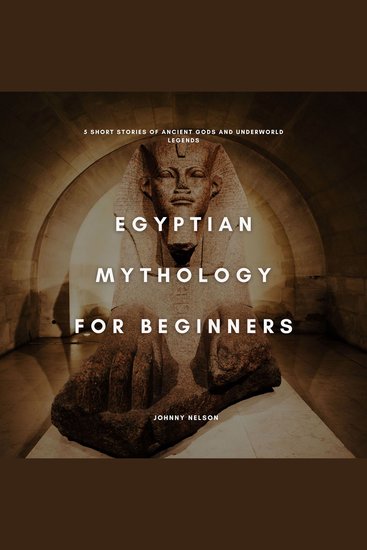
    Uncover the mysteries of ancient Egypt in Egyptian Mythology for Beginners: 5 Short Stories of Ancient Gods and Underworld Legends—a captivating, beginner-friendly journey into the sacred myths that shaped one of history’s most fascinating civilizations. Drawing directly from authentic sources like the Pyramid Texts, Book of the Dead, and temple inscriptions, this audiobook faithfully retells the core legends of Egypt's gods, goddesses, and the mystical realm beyond death. 
    Designed for listeners of all ages and backgrounds, this expertly written and narrated collection brings to life the divine drama of gods like Ra, Osiris, Isis, Horus, Set, Anubis, and Thoth. In just over an hour, listeners are transported to a world where the sun god Ra sails through the underworld to battle chaos each night, where Isis searches across the sands to reassemble her murdered husband Osiris, and where the heart of every soul is weighed against the feather of Ma’at in a timeless quest for eternal peace. 
    Whether you're a curious beginner, a student of ancient history, a lover of myth, or a parent introducing young listeners to legendary lore, these five powerful stories are the perfect gateway into Egyptian mythology. The language is accessible yet richly atmospheric, making complex mythological themes easy to follow while preserving the deep symbolism and spiritual meaning behind each tale. 
    Ideal for commutes, classrooms, family listening, or personal enrichment, Egyptian Mythology for Beginners offers an unforgettable introduction to gods who ruled more than temples—they ruled time, nature, death, and destiny itself. These stories weren’t imagined for fiction—they were believed, worshipped, and lived. 
    Let the Nile guide you through the myths that built pyramids and inspired millennia. This is not fantasy. This is ancient truth.
    Ver livro
  • Holy Roman Empire’s Conflicts with the Vatican The: The History of the Medieval Wars that Fractured Germany and Italy - cover

    Holy Roman Empire’s Conflicts...

    Charles River Editors

    • 0
    • 0
    • 0
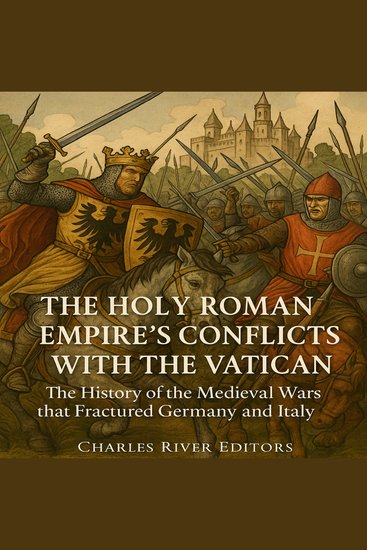
    It has been famously pointed out that the Holy Roman Empire was neither holy, nor Roman, but it was also not an empire in the sense people expect when hearing the term. In theory, the emperor was the highest prince in Christendom, and his dominion extended the length and breadth of Western Europe. The empire had been created by the papacy in 801 when Pope Leo the Third famously crowned the supposedly unwitting Charlemagne in Saint Peter’s Basilica, intending to recreate the Western Roman Empire. In truth, the imperial power did not extend beyond central Europe, which by the beginning of the 16th century included Germany, northern Italy, and the Netherlands. Even in these lands, however, the emperor struggled to command obedience. His dominion over northern Italy was theoretical only, the cities of the Netherlands were deeply conscious of their ancient rights and privileges, and Germany had long ceased to be compliant. The latter had become a collection of principalities, dukedoms and bishoprics which vied with each other and pursued their own agendas. They were, however, united in only one sense: denying the emperor power and resisting attempts to centralize the government.  
    	At the same time, the secular sovereigns frequently butted heads with religious authorities back in Rome, and arguably none of the conflicts were as crucial as the War of the Keys and the Investiture Controversy. The tensions between the Holy Roman Empire and Church over the power to invest bishops with authority led to decades of civil war in Germany on the way to establishing the relationship between Church and state, elevating the status of the papacy and weakening the Holy Roman Empire. What is crucial in understanding the conflicts is to not view them with the benefit of hindsight. Most importantly, no nation as people recognize it today yet existed, as England, France, Germany, and Italy were largely geographical expressions, not national identities.
    Ver livro
  • The Mysteries and Their Emissaries - cover

    The Mysteries and Their Emissaries

    Manly Palmer Hall

    • 0
    • 0
    • 0
    Did that divine knowledge which constituted the supreme possession of the pagan priestcrafts survive the destruction of their temples? Is it yet accessible to mankind, or does it lie buried beneath the rubbish of ages, entombed within the very sanctuaries that were once illuminated by its splendor? "In Egypt," writes Origen, "the philosophers have a sublime and secret knowledge respecting the nature of God. What did Julian imply when he spoke of the secret initiations into the sacred Mysteries of the Seven-Rayed God who lifted souls to salvation through His own nature? Who were the blessed theurgists who understood them profundities concerning which Julian dared not speak? If this inner doctrine were always concealed from the masses, for whom a simpler code had been devised, is it not highly probable that the exponents of every aspect of modern civilization--philosophic, ethical, religious, and scientific-are ignorant of the true meaning of the very theories and tenets on which their beliefs are founded? Do the arts and sciences that the race has inherited from older nations conceal beneath their fair exterior a mystery so great that only the most illumined intellect can grasp its import? Such is undoubtedly the case.
    Ver livro