Junte-se a nós em uma viagem ao mundo dos livros!
Adicionar este livro à prateleira
Grey
Deixe um novo comentário Default profile 50px
Grey
Assine para ler o livro completo ou leia as primeiras páginas de graça!
All characters reduced
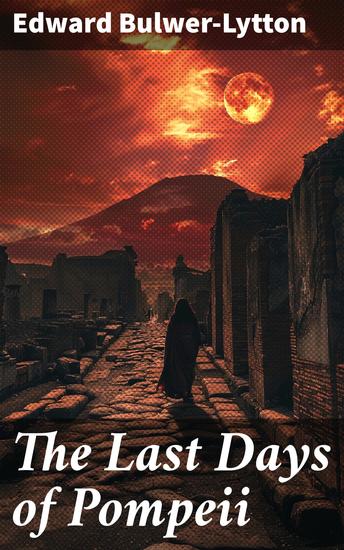
The Last Days of Pompeii - Love Betrayal and the Wrath of Vesuvius: A Tale of Ancient Pompeii - cover
LER

The Last Days of Pompeii - Love Betrayal and the Wrath of Vesuvius: A Tale of Ancient Pompeii

Edward Bulwer-Lytton

Editora: Good Press

  • 0
  • 0
  • 0

Sinopse

In "The Last Days of Pompeii," Edward Bulwer-Lytton weaves a rich tapestry of historical fiction set against the backdrop of the catastrophic eruption of Mount Vesuvius in 79 A.D. The novel is marked by its vivid descriptions and dramatic character arcs, showcasing Bulwer-Lytton's ability to merge elements of Romanticism with a keen sense of moral purpose. The narrative intricately explores themes of love, ambition, and the fleeting nature of life, reflecting the societal preoccupations of the Victorian era while engaging with classical history. Through a dynamic interplay of fictional and historical characters, Bulwer-Lytton evokes the grandeur and tragedy of ancient Rome, all while accentuating the timeless struggle between good and evil. Edward Bulwer-Lytton, a prominent Victorian novelist and playwright, was deeply influenced by his fascination with history and mythology, both of which permeate his works. His background as a member of Parliament and his interest in the supernatural and the exotic further fueled his creative endeavors. "The Last Days of Pompeii" exemplifies his ambition to illuminate the moral dilemmas faced by individuals against a backdrop of inevitable disaster, reflecting the anxieties and aspirations of his contemporary society. This novel is highly recommended for readers who appreciate a masterful blend of historical detail, rich characterization, and profound moral inquiry. As a seminal work in the canon of Victorian literature, it offers profound insights into the human spirit, inviting reflection on the transient nature of life and the enduring impact of cultural legacy.
Disponível desde: 15/12/2023.
Comprimento de impressão: 437 páginas.

Outros livros que poderiam interessá-lo

  • The Europeans - cover

    The Europeans

    Henry James

    • 0
    • 0
    • 0
    "The Europeans" by Henry James is an enchanting novel that revolves around the arrival of two European siblings, Eugenia and Felix, to their American relatives' home. The cultured and mysterious newcomers create a stir among their pragmatic and reserved American kin. As the two worlds collide, romantic entanglements, cultural clashes, and social complexities unfold. Eugenia, a charming baroness, captivates the locals, including the earnest and polite Robert Acton, who falls for her continental allure. Meanwhile, Felix, a talented artist, courts the free-spirited Gertrude Wentworth, creating tension within the family.
    Ver livro
  • A Portrait of the Artist - cover

    A Portrait of the Artist

    Stephen Dedalus

    • 0
    • 0
    • 0
    A Portrait of the Artist as a Young Man tells the story of Stephen Dedalus, a boy growing up in Ireland at the end of the nineteenth century, as he gradually decides to cast off all his social, familial, and religious constraints to live a life devoted to the art of writing. As a young boy, Stephen's Catholic faith and Irish nationality heavily influence him. He attends a strict religious boarding school called Clongowes Wood College. At first, Stephen is lonely and homesick at school, but as time passes he finds his place among the other boys. He enjoys his visits home, even though family tensions run high after the death of the Irish political leader Charles Stewart Parnell. This sensitive subject becomes the topic of a furious, politically charged argument over the family's Christmas dinner. This is James Joyce's first novel, the semi-autobiographical story of a young Irish boy who struggles with family, country, and religion to become an artist and a man.Stephen Dedalus is James Joyce's literary alter ego, appearing as the protagonist and antihero of his first, semi-autobiographic novel of artistic existence A Portrait of the Artist as a Young Man and an important character in Joyce's 1922 novel Ulysses.
    Ver livro
  • The Brothers Karamazov Part 3 - cover

    The Brothers Karamazov Part 3

    Fyodor Dostoevsky

    • 0
    • 0
    • 0
    In Part 3, the narrative hurtles toward crisis as Dmitri becomes the prime suspect in their father’s murder. Ivan confronts his inner turmoil, questioning his beliefs and culpability, while his hallucinatory encounter with the devil reveals his fractured psyche. Alyosha struggles to maintain hope and faith amidst the family’s unraveling, offering comfort to those affected by the tragedy. Themes of justice, morality, and free will dominate as Dostoevsky delves deeper into the philosophical and emotional conflicts driving the characters. This section masterfully blends suspense, introspection, and spiritual inquiry, setting the stage for resolution.
    Ver livro
  • A Legend of Old Egypt - From their pens to your ears genius in every story - cover

    A Legend of Old Egypt - From...

    Boleslaw Prus

    • 0
    • 0
    • 0
    Aleksander Głowacki who wrote under the nom de plume Boleslaw Prus was born on 20th August 1847 at Hrubieszów in the Kingdom of Poland, at that time, controlled by the Russian Empire. 
    At three his mother died and then at nine his father.  Female relatives helped raise him but at 15 he joined the Polish uprising against the might of Imperial Russia.  Wounded on the battlefield, arrested and imprisoned, he was later released into the care of a relative and resumed secondary school and then Warsaw University but poverty forced him to leave after two years.  At some point he developed agoraphobia which often caused problems. 
    In 1869, he enrolled in the Forestry Department at Puławy but was soon sacked and so he began a system of self-education that led to work as a newspaper columnist on a wide-ranging series of topics that eventually became the ‘Weekly Chronicles’ and spanned 40 years. 
    With his finances now stabilized he married and then adopted his late brother-in-law’s son.  
    It seems he had doubts as to the scale of his talents and early on adopted the name ‘Boleslaw Prus’ for both his journalistic and literary offerings. 
    His work as a short-story writer met with much acclaim. He wrote several dozen of them, originally published in newspapers and ranging in length from micro-story to novella. His keen observation of everyday life and sense of humor are evident in them.  
    During his career he also wrote novels. After ‘Pharoah’, in 1895, he embarked on a four-month journey taking in Berlin, Dresden, Nuremberg, Rapperswil in Switzerland, where he stayed for two months, and his final destination, Paris.  Here his agoraphobia was so bad he couldn’t cross the Seine.  
    However, his writing continued and in 1911 his novel ‘Changes’, though uncompleted, began to be serialised.  It was never finished. 
    Boleslaw Prus died on 19th May 1912, at his Warsaw apartment.  He was 64.  A National Hero, thousands attended both his funeral service and interment.
    Ver livro
  • The Great God Pan - cover

    The Great God Pan

    Arthur Machen

    • 0
    • 0
    • 0
    "one of the best horror stories ever written. Maybe the best in the English language." - Stephen KingA tense and creepy horror story, The Great God Pan revolves around the mysterious "Mrs Vaughan" and the tide of death she leaves in her wake. Can she be stopped? What connection does she have to a certain illegal experiment performed some twenty years earlier? Or horrendous goings on at a sleepy welsh rural village? Inspired  by his experiences at the ruins of a pagan temple in Wales. "The Great God Pan" received positive approval from Oscar Wilde, Lovecraft and others, and is considered a Horror Masterpiece.Narrated by Michael Ward.
    Ver livro
  • Virginibus Puerisque II (Unabridged) - cover

    Virginibus Puerisque II...

    Robert Louis Stevenson

    • 0
    • 0
    • 0
    Robert Louis Balfour Stevenson was a Scottish novelist, poet, and travel writer, and a leading representative of English literature. He was greatly admired by many authors, including Jorge Luis Borges, Ernest Hemingway, Rudyard Kipling and Vladimir Nabokov.
    VIRGINIBUS PUERISQUE II: Hope, they say, deserts us at no period of our existence. From first to last, and in the face of smarting disillusions, we continue to expect good fortune, better health, and better conduct; and that so confidently, that we judge it needless to deserve them.
    Ver livro