¡Acompáñanos a viajar por el mundo de los libros!
Añadir este libro a la estantería
Grey
Escribe un nuevo comentario Default profile 50px
Grey
Suscríbete para leer el libro completo o lee las primeras páginas gratis.
All characters reduced
The Collected Works - Novels Plays Poems & Essays - cover

The Collected Works - Novels Plays Poems & Essays

Edward Bulwer-Lytton

Editorial: Musaicum Books

  • 0
  • 0
  • 0

Sinopsis

Edward Bulwer-Lytton's 'The Collected Works' is a comprehensive collection of the author's literary masterpieces, showcasing his versatility in writing genres such as historical fiction, romance, and supernatural tales. Known for his ornate prose and detailed descriptions, Bulwer-Lytton's works reflect the Romantic and Victorian literary trends of his time, appealing to readers with a taste for elaborate storytelling and rich character development. From the iconic opening line 'It was a dark and stormy night' to the intricate plots woven throughout his novels, this collection offers a captivating glimpse into the world of one of the 19th century's most prolific writers. Edward Bulwer-Lytton, a distinguished English novelist, playwright, and politician, drew inspiration for his works from his own experiences in the aristocracy and extensive travels across Europe. His keen observations of society and human behavior are evident in his nuanced characters and intricate plots, making his literary contributions both entertaining and thought-provoking. 'The Collected Works' serves as a testament to Bulwer-Lytton's enduring influence on English literature and his ability to capture the imagination of readers of all ages. I highly recommend 'The Collected Works' to readers who appreciate rich, atmospheric storytelling and complex characters that linger in the mind long after the final page is turned. Whether you are a fan of historical fiction or supernatural mysteries, Bulwer-Lytton's oeuvre offers something for every literary enthusiast seeking a captivating read.
Disponible desde: 04/01/2022.
Longitud de impresión: 15011 páginas.
Otros libros que te pueden interesar

  • Talking to Strangers: What We Need to Understand About Strangers - A Group Discussion - cover

    Talking to Strangers: What We...

    Vines Graener

    • 0
    • 0
    • 0
    For most of history, people lived in small, tight-knit communities where interactions were with familiar faces. But with the Age of Exploration, strangers became a regular part of life. Misunderstandings, amplified by language barriers and cultural differences, were common, and these issues still persist today, even among people who speak the same language. It's easy to make assumptions about how others see the world, and it’s difficult to avoid the biases we carry. 
    Some misunderstandings arise because of lies, and lies can be incredibly difficult to detect. Some deceivers are skilled at hiding their dishonesty, while others may lie poorly, yet still manage to gain people’s trust. It’s not that people are naïve; rather, humans are wired to trust others by default. This tendency, coupled with the belief that we’re good at reading character, often leads us astray. 
    The consequences of misjudging others can be severe—ranging from financial loss and wrongful imprisonment to life-threatening situations. It’s essential to be mindful of the gaps in our understanding and work to see things from others’ perspectives.
    Ver libro
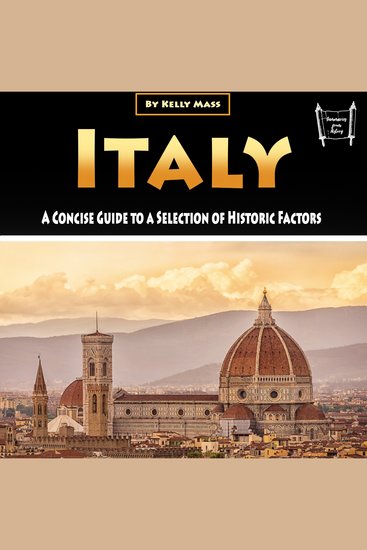
  • Italy - A Concise Guide to a Selection of Historic Factors - cover

    Italy - A Concise Guide to a...

    Kelly Mass

    • 0
    • 0
    • 0
    This valuable deal contains multiple titles in one book. The topics are the following: 
    Florence: Florence was a major center of middle ages European trade and banking, and also one of the most affluent cities in the world at the time. A lot of academics believe it was the beginning of the Renaissance, and it has been called "the Athens of the Middle Ages." Renaissance painters and sculptures alike have their legacy in this city. 
    Naples: Naples, established by Greeks in the first millennium BC, is just one of the world's oldest constantly occupied cities. Naples has a long history, all the way dating back to Roman times, the outbreak of the Vesuvius, and much more. Let’s learn more about this fascinating city’s history. 
    St. Catherine of Siena: Catherine of Siena (who lived from March 25, in 1347 to April 29th, in the year 1380), a Dominican laywoman, was a mystic, activist, and writer who impacted Italian literature and the Catholic Church significantly. She was canonized in 1461 and is a Medical professional of the Church. She was born and raised in Siena and, regardless of her parents' desires, desired dedicate her life to God from an early age. 
    The Vatican: What comes to mind when you say the words “Vatican City?” The Pope? Big cathedrals or underground catacombs with the corpses of buried saints from the past? Crowds of people with candles? Or a choir of young men in a certain attire? The Vatican is a landlocked, independent city state and enclave in Rome, Italy. 
    Venetian Empire: When we think of Venice, we think of masks, canals, murals and frescoes, and little “gondoliers” with picturesque boats. Venice, indeed, has an impressive artistic history. But did you know that Venice was also, for a while, a considerably sized empire? The creation of the Venetian republic is said to have accompanied the starting of the church of St. James at the exact same time.
    Ver libro
  • Alcibiades I - A Young Politician’s Search for Self-Knowledge – Plato’s Dialogue on Ambition and the Soul - cover

    Alcibiades I - A Young...

    Plato, Tim Zengerink

    • 0
    • 0
    • 0
    What if true leadership begins with the courage to look inward? 
    In Alcibiades I, Plato stages a riveting dialogue between Socrates and the young, glory-seeking Alcibiades. As the young man prepares to enter politics and shape the fate of Athens, Socrates urges him to reflect on a deeper question: How can you lead others if you have not come to know yourself? 
    This modernized audiobook version brings clarity and intensity to one of Plato’s most inspiring philosophical encounters—where ambition meets wisdom and the path to greatness is revealed to lie within. 
    What you’ll discover inside: 
    •	A powerful dialogue on self-awareness as the foundation of leadership and justice 
    •	Alcibiades’ internal struggle between ego and ethics, fame and virtue 
    •	Socratic reasoning at its sharpest, uncovering truth through self-examination 
    •	A clear, accessible translation ideal for personal development and political thought 
    Whether you’re on a journey of growth or exploring the foundations of wise rule, Alcibiades I offers timeless insight for mastering the self before mastering the world.
    Ver libro
  • Eternal Meditation Principles - Brahm Vidyas Part 1 - cover

    Eternal Meditation Principles -...

    KAUSHAL KISHORE

    • 0
    • 0
    • 0
    You are welcome to discover the timeless wisdom of meditation with "Eternal Meditation Principles: Brahm Vidyas," a groundbreaking series that unveils the profound secrets hidden within ancient texts. This series invites practitioners to explore the deeper dimensions of self-awareness and enlightenment in a world where meditation is often viewed through a narrow lens of psychological and physical benefits. 
    Departing from conventional approaches, this book offers a fresh perspective by delving into ancient Indian philosophies, specifically Patanjali Yoga sutra and Brahma Vidya, to unlock the true potential of meditation. Kishore's exploration of Brahm Vidyas unveils thirty-two pearls of wisdom from the Upanishads, tailored to guide individuals toward a life filled with righteousness and bliss. 
    The first part of the series delves into the essence of meditation as elucidated in the Brihadaranyaka and Chhandogya Upanishads. Through captivating storytelling and insightful commentary, the author unravels eleven Brahm Vidyas, or eternal principles of meditation from these Upanishads, guiding readers on a trans-formative journey toward spiritual enlightenment, the knowledge and awareness of the unity of super consciousness and existence. 
    Ver libro
  • War on the Waves - The Naval Battles That Defined World War II's Maritime Struggle - cover

    War on the Waves - The Naval...

    Sage Winters

    • 0
    • 0
    • 0
    The naval power wielded by the world’s great nations during World War II shaped not only the outcome of the conflict but also the geopolitical landscape for decades to come. Control of the seas became a decisive factor in determining the success or failure of military strategies and the fate of nations. This maritime struggle, fought on vast oceans and distant shores, was as much a war of technology, tactics, and intelligence as it was of sheer naval might. 
      
    The importance of naval dominance cannot be overstated. For the Allies, particularly the United States and Great Britain, securing control of the seas was vital for maintaining supply lines, especially in the Atlantic, where the threat of German U-boats could sever critical routes for war materials and reinforcements. In the Pacific, the Japanese Empire’s early victories left much of Southeast Asia and the Pacific Ocean under its control, presenting a formidable challenge. The battle for these waters would evolve into a series of iconic naval engagements that would shape the course of the war. 
      
    From the early days of the conflict, when the British Royal Navy faced off against the mighty Kriegsmarine of Nazi Germany, to the far-reaching campaigns of the Pacific theater, naval warfare introduced new technologies and strategies. The use of aircraft carriers, submarines, radar, and sonar reshaped traditional naval combat and rendered earlier tactics obsolete. The role of intelligence, particularly the breaking of the Enigma code, became a pivotal advantage, enabling the Allies to counter the Axis powers’ naval threats.
    Ver libro
  • A Rare Recording of Will Rogers - cover

    A Rare Recording of Will Rogers

    Will Rogers

    • 0
    • 0
    • 0
    The following recordings include Will Rogers a comedic keynote speech to a collection of bankers in 1924 and his first political speech made in support of a New York candidate for Congress. William Penn Adair Rogers (November 4, 1879 - August 15, 1935) was an American stage and film actor, vaudeville performer, humorist, and newspaper columnist from Oklahoma. Born in Cherokee Nation territory, Rogers was known as "Oklahoma's Favorite Son." Rogers traveled the world, made 71 films (50 silent films and 21 "talkies"), and wrote more than 4,000 nationally syndicated newspaper columns. By the mid-1930s Rogers was hugely popular in the United States as its leading political commentator and the highest paid Hollywood film star. He died in 1935 with aviator Wiley Post when their small airplane crashed in northern Alaska.
    Ver libro