¡Acompáñanos a viajar por el mundo de los libros!
Añadir este libro a la estantería
Grey
Escribe un nuevo comentario Default profile 50px
Grey
Suscríbete para leer el libro completo o lee las primeras páginas gratis.
All characters reduced
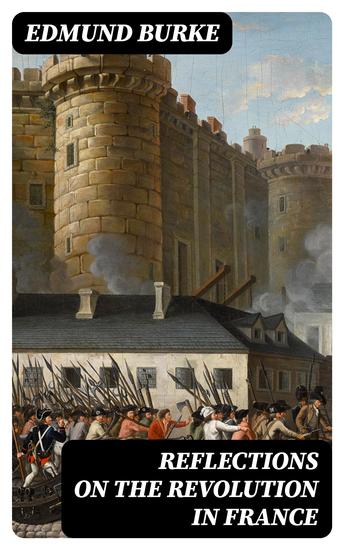
Reflections on the Revolution in France - cover

Reflections on the Revolution in France

Edmund Burke

Editorial: DigiCat

  • 0
  • 0
  • 0

Sinopsis

In "Reflections on the Revolution in France," Edmund Burke articulates a profound critique of the 1789 French Revolution, positioning it against the backdrop of Enlightenment thought and its implications for social order. With eloquent prose that combines philosophical examination and political commentary, Burke warns against the dangers of radical change and the upheaval of traditional structures. His work serves not only as a contemporary response to revolutionary fervor but also as a foundational text in political conservatism, emphasizing the importance of gradual reform and the wisdom embedded in established institutions. Edmund Burke, an Irish statesman and philosopher known for his advocacy of civil rights, developed his ideas against the turbulence of his time, witnessing both the American Revolution and the onset of the French Revolution. His experiences and insights into the social contract and governance greatly influenced his views on the necessity of tradition and moral philosophy in maintaining societal stability—a core theme in this work. "Reflections on the Revolution in France" is essential reading for anyone seeking to understand the complexities of revolution and the perennial tension between change and continuity in society. Burke's arguments resonate through modern discourse on governance and citizenship, offering valuable lessons on the necessity of preserving historical wisdom amidst the clamor for progress.
Disponible desde: 29/05/2022.
Longitud de impresión: 253 páginas.

Otros libros que te pueden interesar

  • Pandemonium - Power Politics and Ireland's Pandemic - cover

    Pandemonium - Power Politics and...

    Jack Horgan-Jones, Hugh O'Connell

    • 0
    • 0
    • 0
    The Inside Story of Ireland's Pandemic: Every Decision, Every Player, Every Text, Every Leak
    Ireland's lockdowns were among the harshest and longest in Europe. As the state was battered by waves of disease time and again, unparalleled pressures and untold tensions emerged as the country went to war with Covid, and policymakers and politicians did battle with each other.
    How were the key decisions made? Who held all the power?
    Boasting unrivalled access to the key decision-makers and drawing on hundreds of hours of interviews and thousands of pages of documents, including confidential and unpublished material, Pandemonium reveals the moves, the power-plays and the – at times jaw-dropping – tactics of a government with the health of a nation in its hands.
    'If a movie is ever made of how Ireland responded to the Covid-19 pandemic, Pandemonium may well provide the script … You will feel as if you were in the room when key conversations happened and decisions were made.' Professor Luke O'Neill
    'Illuminates the corners of institutions usually able to operate in the dark' Fintan O'Toole
    'A page-turner … an exceptional insight' Matt Cooper
    'Unflinching and unrelenting' Dearbhail McDonald
    Ver libro
  • How Polarization Begets Polarization - Ideological Extremism in the US Congress - cover

    How Polarization Begets...

    Thomas L. Brunell, Bernard...

    • 0
    • 0
    • 0
    Extreme polarization in American politics is perhaps the most confounding political phenomenon of our time. This book binds together polarization in Congress and polarization in the electorate within an ever-expanding feedback loop. This loop is powered by the discipline exerted by the respective political parties on their Congressional members and district candidates and endorsed by the voters in each Congressional district who must choose between the alternatives offered. Tight national party discipline produces party delegations in Congress that are widely separated from one another but each ideologically narrowly distributed. 


    As district constituencies become more polarized and are egged on by activists, parties are further motivated to appeal to their respective bases rather than to voters in the ideological center. America has indeed acquired parties with clear platforms—once thought to be a desirable goal—but these parties are now feuding camps. What resolution might there be? Just as the progressive movement slowly replaced the Gilded Age, might a new reform effort replace the current squabble? Or could an asymmetry develop in the partisan constraints that would lead to ascendancy of the center, or might a new and over-riding issue generate a cross-cutting dimension, opening the door to a new politics? Only the future will tell.
    Ver libro
  • 2024 - The Election that Surprised India - cover

    2024 - The Election that...

    Rajdeep Sardesai

    • 0
    • 0
    • 0
    * Why did pollsters and pundits get the 2024 election forecasts so badly wrong?  
    * Why was the mainstream media narrative so one-sided?  
    * Why did the 'char sau paar' drumbeat for the Modi-led BJP not work on the ground?  
    * How did a Rahul Gandhi-led Congress stage a comeback?  
    * What changed so dramatically in the last five years?  
    * How does Team Modi-Shah operate?  
    * Was it really a free and fair election?  
    * What role did the enforcement agencies play?  
    * How did the battle for the states turn?  
    * Who really won and lost the 2024 election?  
    2024: The Election That Surprised India brings to life the inside story of a dramatic period in Indian politics and society. Every twist and turn is revealed in an exciting narrative on the tumultuous events of our times. Unsparing and uncompromising, this is an unputdownable account of power politics, the main characters and their role in influencing the headlines of our times. After the bestselling books on the 2014 and 2019 elections, Rajdeep Sardesai now takes a deep dive into India's most bruising and polarized political battle and the many stories that shaped an extraordinary election verdict.
    Ver libro
  • A Relational Agenda - How putting relationships first can reform European society - cover

    A Relational Agenda - How...

    Guy Brandon, Michel Schlüter,...

    • 0
    • 0
    • 0
    What framework can guide Christian engagement with major economic, social and political issues in public life in 21st century Europe?
    What other schools of thought exist apart from Catholic Social Teaching and Christian Democracy?
    
    Sallux has collaborated with the Jubilee Centre in Cambridge over several years to apply a new framework, agenda and strategy for Christian social reform, called Relational Thinking. It starts with the Christian belief that human beings are created by a relational God to form relational societies – the contemporary application of the ancient adage to 'love our neighbour as ourselves'.
    
    This book is a compilation of fi ve reports, two of which discuss the overall concept of Relational Thinking, while the others demonstrate how it can be applied to three contemporary issues: the need for monetary reform, the challenges of artifi cial intelligence and the ethics of remuneration. You can fi nd other examples of issues being analysed from a relational perspective, from business to city transformation.
    
    Deeply biblical, Relational Thinking builds bridges through the language of relationships to connect Christians with people of other faiths or none, and o er a fresh approach to Europe's greatest public policy challenges today.
    Ver libro
  • Policing Gun Violence - Strategic Reforms for Controlling Our Most Pressing Crime Problem - cover

    Policing Gun Violence -...

    Anthony A. Braga, Philip J. Cook

    • 0
    • 0
    • 0
    In many US cities, gun violence is the most urgent crime problem. High rates of deadly violence make a city less livable, dragging down quality of life, economic development, and property values. 


    How can police departments find the right balance between over- and under-policing of high-violence areas? What are the best practices for police to preempt and deter gun violence, while engendering support and cooperation from the public? 


    Drawing on fifty years of research and practical experience, Policing Gun Violence argues that it is possible for the police to create greater public safety while respecting the rights of individuals and communities. While gun violence can be attributed to various systemic causes, Anthony A. Braga and Philip J. Cook make the case that violence is itself a root cause of social disparity and future violence. Effective law enforcement is a vital component of a just society. They review and synthesize the evidence in several key areas: enforcement of gun laws, policing hot spots, controlling high-risk groups through focused deterrence, enhancing investigations to increase the arrest and conviction rate, preventing officer-involved shootings, and disrupting underground gun markets. Policing Gun Violence serves as a guide to how the police can better utilize their considerable resources to make cities safer.
    Ver libro
  • Vladimir Lenin collection - The State And Revolution The Three Sources And Three Component Parts Of Marxism - cover

    Vladimir Lenin collection - The...

    Vladimir Lenin

    • 0
    • 0
    • 0
    The Three Sources and Three Component Parts of Marxism, by Lenin, is a concise article that examines the historical roots, essence, and content of Marxist teaching. Lenin wrote it on the 30th anniversary of the death of Karl Marx. 
    Soviet propaganda makers lifted a key quote from the article to use as a slogan for posters, inscriptions on monuments, or other propaganda purposes. The phrase was: "The might of Marx's teaching is in its truth."
    The book, The State and Revolution: The Marxist Theory of the State and the Tasks of the Proletariat in the Revolution, was written while preparing for the socialist revolution. At this time the role of the state was of prime importance to the Bolsheviks. Lenin used the text to justify the need for a dictatorship of the proletariat. He also provided definitions for imperialism, socialism, and communism.
    Ver libro