




REPRODUCIR EJEMPLO

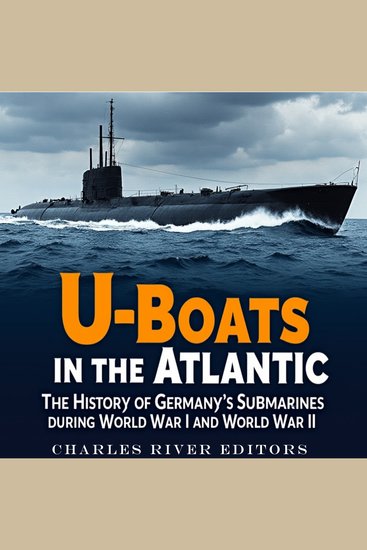
U-Boats in the Atlantic: The History of Germany’s Submarines during World War I and World War II
Editors Charles River
Narrador Dean Gallagher
Editorial: Charles River Editors
Sinopsis
World War I witnessed the First Battle of the Atlantic, when the Kaiserreich unleashed its U-boats against England. During the war, the German submarines sent much of the British merchant marine to the bottom. Indeed, German reliance on U-boats in both World War I and World War II stemmed largely from their nation's geography. The Germans eventually recognized the superiority of the Royal Navy and its capacity to blockade Germany's short coastline in the event of war. While the British could easily interdict surface ships, submarines slipped from their Kiel or Hamburg anchorages unseen, able to prey upon England's merchant shipping.
The sleek hunter-killers lurking beneath the waves, using periscopes to close in unnoticed on their prey, added a new, nerve-wracking element to naval warfare. The mere threat of submarine attack immediately altered naval tactics and strategies employed by both the Western Allies and the Central Powers, shifting them towards a more cautious approach, especially at the war’s start when the submarine threat remained untested.
One critical innovation in World War II's Atlantic U-boat operations consisted of wolf-pack tactics, in which Admiral Karl Dönitz put great faith: “The greater the number of U-boats that could be brought simultaneously into the attack, the more favourable would become the opportunities offered to each individual attacker. […] it was obvious that, on strategic and general tactical grounds, attacks on convoys must be carried out by a number of U-boats acting in unison.” (Dönitz, 1990, 4).
However, even the wolf-pack proved insufficient to defeat the Atlantic convoys and stop Allied commerce – the precise opposite of the Pacific theater, where America's excellent submarine forces annihilated much of Japan's merchant marine and inflicted severe damage on the Imperial Japanese Navy.
Duración: alrededor de 3 horas (03:10:40)
Fecha de publicación: 20/10/2024; Unabridged; Copyright Year: — Copyright Statment: —




