¡Acompáñanos a viajar por el mundo de los libros!
Añadir este libro a la estantería
Grey
Escribe un nuevo comentario Default profile 50px
Grey
Suscríbete para leer el libro completo o lee las primeras páginas gratis.
All characters reduced
The Life and Legacy of Nero - cover

The Life and Legacy of Nero

Editors Charles River

Editorial: Charles River Editors

  • 0
  • 0
  • 0

Sinopsis

"What an artist dies with me!” – Attributed to Nero just before his suicide
 
A lot of ink has been spilled covering the lives of history’s most influential figures, but how much of the forest is lost for the trees? In Charles River Editors’ Legends of the Ancient World series, readers can get caught up to speed on the lives of antiquity’s most important men and women in the time it takes to finish a commute, while learning interesting facts long forgotten or never known.
 
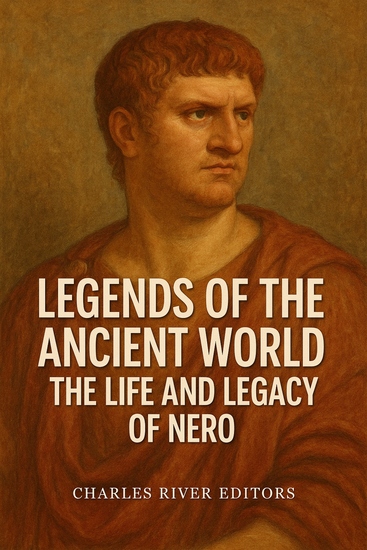
Throughout the annals of history, there have been few figures as reviled as Lucius Domitius Ahenobarbus, better known as Nero Claudius Caesar Drusus Germanicus, or more simply, Nero. Even today, he remains one of the Roman Empire’s most famous – or notorious – figures, a villain whose impact on popular culture is so vast that his name crops up consistently to this day in literature, film, TV and mediums as unlikely as video games and anime.
 
Nero ranks among the very worst of the Caesars, alongside the likes of mad Caligula, slothful Commodus, and paranoid Domitian, a figure so hated that, in many ancient Christian traditions, he is literally, without hyperbole, considered the Antichrist; according to a notable Biblical scholar, the coming of the Beast and the number 666 in the Book of Revelation are references to Nero. He was the man who, famously, “fiddled while Rome burned”, an inveterate lecher, a murderous tyrant who showed little compunction in murdering his mother and who liked to use Christian martyrs as a source of illumination at night – by burning them alive. His economic policies, according to many historians, virtually bankrupted Rome.
 
Even his appearance, apparently, was ill-favoured. His busts show him to be fleshy-faced, with a weak chin that he attempted to disguise with a distinctly unprepossessing beard, and according to Suetionius he was also spotty, stinking, pot-bellied and thin-legged – not a pretty picture.
 
The best known accounts of Nero come from biographers like Tacitus, Cassius Dio, Suetionius and Josephus, but there are also indications that, to some extent, reports of Nero’s cruelty were exaggerated. Nero was popular with the common people and much of the army, and during his reign the Empire enjoyed a period of remarkable peace and stability. Many historians, including some of his ancient biographers – such as Josephus – suggest that there existed a strong bias against Nero. Part of this is because his successors wished to discredit him, and justify the insurrections which eventually drove him, hounded from the throne, to a lonely suicide. Much of the bias against Nero can also be attributed to the fact that he was a renowned persecutor of Christians, and since many of the historians who wrote about Nero in the years after his death were Christians themselves, it made sense for them to have a jaundiced view of their erstwhile nemesis. Because of this, some historians have suggested that Nero’s demeanour and reputation might not be as black as the original sources might be inclined to suggest.
 
Legends of the Ancient World: The Life and Legacy of Nero looks at the life of one of Rome’s most notorious emperors and attempts to separate fact from fiction to analyze his reign and legacy. Along with pictures of important people, places, and events, you will learn about Nero like you never have before, in no time at all.
Disponible desde: 22/05/2025.
Longitud de impresión: 30 páginas.


Otros libros que te pueden interesar

  • Ugly - Giving Us Back our Beauty Standards - cover

    Ugly - Giving Us Back our Beauty...

    Anita Bhagwandas

    • 0
    • 0
    • 0
    We've all had those moments. The ones where you look in the mirror and nothing feels ok. For Anita Bhagwandas, this started when she was a child and it created an enduring internal torment about her looks. 


    We're all told that this is just part of growing up, but it stays with us, evolving as we age. The internet tells us we should love ourselves, whilst bombarding us with images of airbrushed perfection, upholding centuries-old beauty standards which we can't always see. Our beauty rituals are so often based around things we think we need to fix, grow, and develop—sometimes tipping into dangerous obsession. 


    So, what seismic shift does it take to break free from this mentality? In Ugly, Anita uncovers where these beauty standards started, unpicks why they've been perpetuated, and unmasks the structures that continue to support them. From the ever-growing cosmetic surgery industry, to the hidden pitfalls of "pretty privilege," it is time to finally break free from those limiting beauty standards, because feeling ugly should have nothing to do with how we look, and everything to do with who wants us to feel lacking.
    Ver libro
  • Healing The Anxious Child - Guiding Parents And Children Through Anxiety With Compassion And Confidence - cover

    Healing The Anxious Child -...

    Brian Gibson

    • 0
    • 0
    • 0
    "Healing The Anxious Child: Guiding Parents And Children Through Anxiety With Compassion And Confidence" is a compassionate and empowering guide for families navigating childhood anxiety.  
    In this essential book, you will find a roadmap for parents and caregivers to understand and support anxious children effectively. It provides practical strategies and heartfelt insights to help families foster resilience and well-being. 
    Through this book, you will:Understand Childhood Anxiety: Gain insights into the different types of childhood anxiety, including signs, triggers, and how anxiety manifests in children of different ages.Build a Supportive Environment: Learn how to create a nurturing and safe environment that promotes emotional regulation and reduces anxiety triggers.Develop Coping Strategies: Discover evidence-based techniques to teach children how to manage anxiety, including mindfulness exercises, cognitive-behavioral strategies, and relaxation techniques.Communicate with Compassion: Explore effective communication strategies to connect with your anxious child and foster open dialogue about their feelings and experiences.Navigate Challenges: Address common challenges such as school avoidance, social anxiety, and separation anxiety with practical advice tailored to each situation. 
    If you're ready to embark on a transformative path towards healing, this book is your trusted companion.
    Ver libro
  • Medieval History - Facts and Insights about Vikings Anglo-Saxons Crusaders and the Plague (3 in 1) - cover

    Medieval History - Facts and...

    Kelly Mass

    • 0
    • 0
    • 0
    This combo of 3 in 1 books consists of the following topics: 
    Anglo-Saxons: In the Early Middle Ages, the Anglo-Saxons were a cultural group that resided in England. They traced their roots back to the arrival of incomers to Britain in the fifth century, who originated from the North Sea coastlands of continental Europe. The ethnogenesis of the Anglo-Saxons, on the other hand, happened in Britain, and the identity wasn't just imported. The contact between getting in groups of people from some Germanic tribe, both amongst themselves and with native British populations, led to the facility of an Anglo-Saxon identity. A lot of the native tribes ultimately incorporated and embraced Anglo-Saxon society and language. 
    Viking History: We all have a typical image of Vikings, from the horns on their helmets to the beards and the clothes they wear. Their ships have a certain charm, and their reputation is that they were brutal, raw, and believed in multiple gods. The Vikings traveled during the Mediterranean, North Africa, the Middle East, and The U.S.A. And Canada. That period is acknowledged as the Viking Age in parts of the countries where they robbed and settled, and the name "Viking" is also used to describe the population of the Scandinavian homelands as a whole. The early middle ages history of Scandinavia, the British Isles, France, Estonia, and Kievan Rus' was exceptionally impacted by the Vikings. 
    Inquisition: Perhaps you have heard of the horrible stories of the Spanish, Portuguese, or French inquisition, the Catholic body of persecutors who would arrest the supposed “heathens” and accuse them of witchcraft, heresies, blasphemy, adultery, and a whole list of other sins or crimes. Torture, interrogations, executions, burnings, and other inhumane methods were used to then force, coerce, or kill the victims of this Catholic organization within the church at the time.
    Ver libro
  • This is Europe - The Way We Live Now - cover

    This is Europe - The Way We Live...

    Ben Judah

    • 0
    • 0
    • 0
    A Times, Financial Times and Telegraph Book of the Year 2023'Illuminates some of the great trends of our time' - Gideon Rachman, Financial Times'Vivid, urgent and unsettling' - Tom Holland, author of Dominion_____What does it now mean to call yourself European? Who makes up this population of some 750 million, sprawled from Ireland to Ukraine, from Sweden to Turkey? Who has always called it home, and who has newly arrived from elsewhere? Who are the people who drive our long-distance lorries, steward our criss-crossing planes, lovingly craft our legacy wines, fish our depleted waters, and risk life itself in search of safety and a new start?In a series of vivid but always empathetic portraits of other people’s lives, journalist Ben Judah invites us to meet them. Drawn from hours of painstaking interviews, these vital stories reveal a vibrant continent which has been transformed by diversity, migration, the internet, climate change, Covid, war and the quest for freedom.Laid dramatically bare, it may not always be a Europe we recognize – but this is Europe._____'An astonishing achievement' - Evening Standard'Brilliantly told . . . highly readable' - The Times
    Ver libro
  • Megalithic Temples of Malta The: The History and Legacy of Europe’s Oldest Standing Structures - cover

    Megalithic Temples of Malta The:...

    Editors Charles River

    • 0
    • 0
    • 0
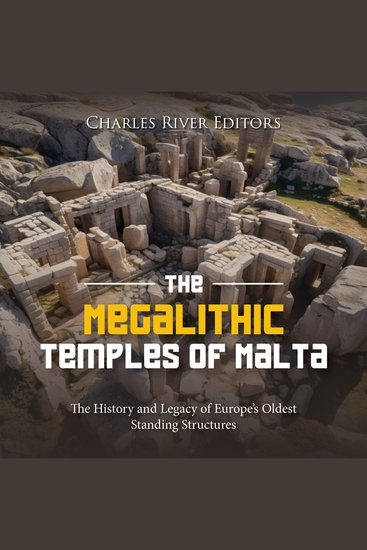
    Malta’s history goes back further than many know, which can be attested to by the numerous Neolithic and Bronze Age era megaliths that dot the island of Malta proper as well as the island of Gozo to the north. Naturally, when European archaeologists began unearthing the megaliths of Malta in the 19th century, they did not know what to think, which led to a plethora of theories, many of them quite fantastic. At least 23 of these temples were uncovered, but because the people who built them lacked the knowledge of writing, speculation over who built them and why remained well into the 20th century (Rountree 2003, 26). Some people theorized that the Malta megaliths were built by a race of giants, while others believed that it was the center of a “Mother Earth” cult that later spread through Neolithic Europe.  
    Early archaeologists were also perplexed about the physical origins of the Maltese megalith builders. Because Malta is such an isolated location, the builders had to have migrated there from elsewhere, but debates raged over the location. Equally confusing was when the megaliths were built. Although most legitimate historians believed from an early time that they were Neolithic structures, some argued that they were built much later and influenced by the Minoans and/or the Mycenaeans.  
    Even as some answers have arrived, scholars still debate the purpose of the megaliths. Although there is a near consensus that they served as religious temples, the deities that were worshiped as well as the rituals carried out in the structures remain a mystery and sources of further debate. As such, the ancient monuments remain enigmatic and serve as sources of pride for the modern Maltese people and awe-inspiring to all those who visit them.
    Ver libro
  • Modern American History: A Captivating Guide to the Modern History of the United States of America - cover

    Modern American History: A...

    Captivating History

    • 0
    • 0
    • 0
    American history has many twists and turns. Are you ready to take the journey? 
    Starting during the renowned 1920s, we’re going to look at what life in the United States was like back then and even find some remarkable mirror images that are a reflection of what life is like during this day and age. We’ll look at the importance of alcohol and at how much one decade could be the driving force for the next. We’ll take a look at how small inventions made a big difference in America and the idea of whether a nation should use its power to look after itself or make a mark internationally. 
    Discover some of America’s most popular presidents and those who were quite despised. See what made a leader influential in the past, and reflect on whether that has changed nowadays. 
    If you’re interested in discovering how government policy changes or wars affected people, social groups, and the world in more ways than one, this is the book for you. We will even cover events that are more recent, delving into the reasons why airport security has changed and why, even to this day, many Americans worry about communism. 
    Here are a few topics that the book covers:What was life like after WWI and WWII?How did war change individuals and the world around them?How did a worldwide recession start, and who truly got the blame for starting it?Why were there so many protests in the 1960s, and did it change anything?How many times was WWIII prevented from happening?Have relations between America and Russia improved at all? 
    Scroll up and click the “add to cart” button to learn more about modern America!
    Ver libro