Junte-se a nós em uma viagem ao mundo dos livros!
Adicionar este livro à prateleira
Grey
Deixe um novo comentário Default profile 50px
Grey
Assine para ler o livro completo ou leia as primeiras páginas de graça!
All characters reduced
The Life and Legacy of Baby Face Nelson - cover
LER

The Life and Legacy of Baby Face Nelson

Editors Charles River

Editora: Charles River Editors

  • 0
  • 0
  • 0

Sinopse

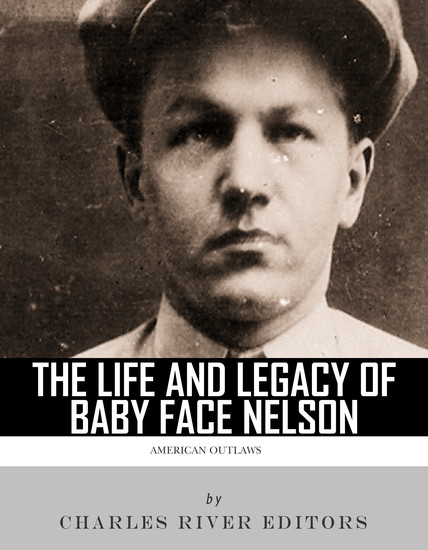
“He had a baby face. He was good looking, hardly more than a boy, had dark hair and was wearing a gray topcoat and a brown felt hat, turned down brim." –The wife of Chicago Mayor Big Bill Thompson describing the man who attacked her and stole her jewelry in October 1930.
 
America has always preferred heroes who weren’t clean cut, an informal ode to the rugged individualism and pioneering spirit that defined the nation in previous centuries. The early 19th century saw the glorification of frontier folk heroes like Davy Crockett and Daniel Boone. After the Civil War, the outlaws of the West were more popular than the marshals, with Jesse James and Billy the Kid finding their way into dime novels. And at the height of the Great Depression in the 1930s, there were the “public enemies”, common criminals and cold blooded murderers elevated to the level of folk heroes by a public frustrated with their own inability to make a living honestly.
 
The man who became Public Enemy Number One after the deaths of John Dillinger and Pretty Boy Floyd was Lester Joseph Gillis, whose alias “George Nelson” eventually gave way to the nickname “Baby Face Nelson”. Despite the almost playfully innocent nickname, and the fact that he was not as notorious as two of his partners in crime, Dillinger and Floyd, Baby Face Nelson was the worst of them all.
 
In an era where the outlaws were glorified as Robin Hood types, Baby Face was a merciless outlier who pulled triggers almost as fast as he lost his temper. By the time fate caught up with Baby Face Nelson in November 1934 at the “Battle of Barrington”, a shootout that left his body riddled with nearly 20 bullet holes, he was believed to have been responsible for the deaths of more FBI agents than anybody else in American history. It was a distinction he would have appreciated; during one bank robbery, Baby Face Nelson gleefully screamed “I got one!” after shooting police officer Hale Keith several times.
 
Due to his association with Dillinger and his own crime spree, Baby Face Nelson became a fixture of pop culture and was the main character in a few Hollywood films two decades after his death. Though he is not remembered as colorfully as Dillinger or Bonnie and Clyde, he is often remembered paradoxically as being a devoted family man who even had his wife and children on the run with him.
 
American Outlaws: The Life and Legacy of Baby Face Nelson looks at the life and crime of the famous outlaw, but it also humanizes him and examines his lasting legacy. Along with pictures of Baby Face Nelson and important people, places, and events in his life, you will learn about the infamous public enemy like you never have before, in no time at all.
Disponível desde: 29/06/2025.
Comprimento de impressão: 30 páginas.

Outros livros que poderiam interessá-lo

  • Which Way Is Up? - Finding Heart in the Hardest of Times - cover

    Which Way Is Up? - Finding Heart...

    Susan Gillis Chapman

    • 0
    • 0
    • 0
    A heartfelt guide for meeting difficult times with mindfulness, compassion, and courage—from a psychotherapist and Buddhist practitioner who learned from her own crisis. 


    Using personal examples from her own recent bardo crisis—undergoing cancer treatment during the pandemic—and offering contemplative prompts for inner-reflection and a meditation practice in each chapter, psychotherapist and Buddhist practitioner Susan Chapman demystifies the three main types of fear people experience (frozen, awake, and core), and how to meet each with love. This heartfelt guide from someone who's been there and done the work will help us get through life's challenges and restore our equilibrium, while also inviting a valuable opportunity for personal growth. 


    Which Way Is Up? draws from traditional Buddhist teachings on the bardo, a Tibetan word most often associated with the period between death and rebirth. Chapman likens the bardo to abrupt episodes in our lives when things seem to turn upside down and we can't find our footing. In such times of not-knowing, our fearful mind tends to panic trying to make sense out of our experience. Instead, Chapman meets the listener in their groundlessness to show how these turning points can force us to let go of our assumptions about the future and allow something new to be reborn.
    Ver livro
  • William Powell and Myrna Loy: The Lives and Careers of One of Classical Hollywood’s Most Iconic Duos - cover

    William Powell and Myrna Loy:...

    Editors Charles River

    • 0
    • 0
    • 0
    It is something of a cliché to say that an actor’s life was like a movie he or she might have starred in, but in the case of Myrna Loy, the cliché is true. It is easy to picture her as a little girl, riding the range with her rancher father, sitting around the table and participating charmingly in family discussions of current events. It is not hard to imagine the camera panning to her first and then second visits to Hollywood, her backlot tour, and starry-eyed decision to become an actress. There would have to be some drama, which the story of her father’s untimely death would provide, along with some sort of deathbed promise made to him to care for the rest of the family. Her mother would be brave but resolute as she moved her young family to California. The lighting on set would brighten and the tempo of the background would pick up as she walked down the Los Angeles streets. Then, her big break would come. The camera would show her first comical meeting with William Powell and then a spinning scene of ticket after ticket being sold to their new picture, The Thin Man.  
    While older silent film stars like Charlie Chaplin and Buster Keaton reached the peak of Hollywood, some actors born near the beginning of the 20th century were ready to capitalize. Though actors like Humphrey Bogart and Cary Grant remain household names, and actresses like Greta Garbo are still widely remembered, few had careers that enjoyed the success of William Powell. In a career spanning several decades, Powell would receive three Oscar nominations for Best Actor for critically acclaimed movies, so it is somewhat ironic that he is mostly remembered today for his association with the more famous Myrna Loy. One thing that helped Powell’s career along in the old days when Hollywood would only cast white actors in major roles, no matter what the nationality of the character was supposed to be, were his dark good looks.
    Ver livro
  • Spiritual Wayfinders - The Audio Documentary True Stories of Awakening and Transformation - cover

    Spiritual Wayfinders - The Audio...

    Mike Kavanagh

    • 0
    • 0
    • 0
    From best-selling author Mike Kavanagh comes a powerful audio documentary about spiritual awakening, personal transformation, and finding purpose. 
    In Spiritual Wayfinders: The Audio Documentary, Mike Kavanagh tells his story of healing and spiritual transformation after a spontaneous awakening ushered in an unexpected phase of darkness and profound personal struggle. 
    Along the way, he is joined by six people who share their own remarkable stories of spiritual transformation — stories that include near death experiences, psychedelic-assisted psychotherapy, overcoming life-threatening illness, deep meditative practices, and more. 
    Each of these people shaped Kavanagh’s destiny in unique ways, and their stories contain powerful wisdom and guidance for anyone on the path of discovering and living their purpose, and awakening to true inner freedom, well-being, and wholeness. 
    Spiritual Wayfinders is narrated by Mike Kavanagh and includes unscripted true stories from Bill Dolan, Angela DeCraene, Jerry Colonna, Jason Steffen, Tammi Janel, and Jesse Davis. 
    ©2024 Michael Kavanagh (P)2024 Back to the Breath LLC
    Ver livro
  • My March Through Hell - A Young Girl's Terrifying Journey to Survival - cover

    My March Through Hell - A Young...

    Halina Kleiner, Edwin Stepp

    • 0
    • 0
    • 0
    A young girl is suddenly all alone and on the run from the Nazis in her hometown in Poland. Having survived an aktion that was intended to completely rid Czestochowa of all the Jews, she and her father try to make their way back to their home during the late hours of the night. 


    Confronted by a policeman, Halina Goldberg unexplainably runs away from her father and begins her long journey of survival. When tired of fleeing, she volunteers to go into a work camp. That decision buys her some time because the Germans need labor for the war effort. Halina works in three different camps from the Fall of 1943 to January 1945. At first, the camps are bearable, even though the prisoners are worked hard and fed very little. But as the Germans begin to lose the war, the conditions turn deathly. The Jews become overrun with disease and their captors grow crueler and crueler. 


    As it becomes clear that the war is lost, the SS empty the camps and set over 2,000 women on a four-month long march that would cover over 800 kilometers during one of Europe's coldest winters on record. Halina was one of the only 300 who survived the Volary Death March and finally felt the need to record her hellish story of survival.
    Ver livro
  • KNOW ABOUT "GALILEO GALILEI" - The Father of Modern Science & The Father of Observational Astronomy - cover

    KNOW ABOUT "GALILEO GALILEI" -...

    Saurabh Singh Chauhan

    • 0
    • 0
    • 0
    This is small copy off introduction of the book: Galileo Galilei (1564-1642) was an Italian astronomer, physicist, and engineer, sometimes described as a polymath. From a young age, Galileo showed a great aptitude for mathematics and science. He went on to study at the University of Pisa, where he made his first important scientific discovery: the laws of motion of a pendulum. 
    After leaving Pisa, Galileo taught mathematics at the University of Padua for nearly twenty years. During this time, he conducted a wide range of scientific experiments, including studies of inclined planes, falling bodies, and the motion of projectiles. He also invented the telescope, which he used to make groundbreaking observations of the heavens. 
    In 1610, Galileo published a book called The Starry Messenger, in which he described his telescopic observations of the Moon, Jupiter, and Venus. His discoveries included the four largest moons of Jupiter, which are now known as the Galilean moons. Galileo's work helped to overthrow the prevailing geocentric model of the universe, which placed the Earth at the center, and to establish the heliocentric model, which places the Sun at the center. 
    Galileo's support for the heliocentric model brought him into conflict with the Catholic Church, which at the time held great power and influence. In 1633, Galileo was put on trial by the Inquisition and forced to recant his views. However, he continued to work on his scientific theories in secret, and in 1638 he published his most important work, Two New Sciences.
    Ver livro
  • Les Knight - Australia's Dambuster - cover

    Les Knight - Australia's Dambuster

    Marcus Fielding

    • 0
    • 0
    • 0
    This audiobook is narrated by an AI Voice.   
    Les Knight, a young man from Camberwell, Victoria was like many who joined to serve his country during the Second World War. But unlike many others his skill as a Lancaster pilot enabled him to successfully breach the Eder Dam in the now infamous Dambusters Raid. At the age of 22, Les was awarded the Distinguished Service Order and became a national hero. 
    But his war service continued, and four months after the Dambusters Raid, his aircraft was badly damaged. On this occasion, Les’s skill and bravery were again on display as he held the stricken plane steady to allow his seven crewmates to bail out. 
    Then, as he searched for a place to ditch the aircraft, he steered clear of a Dutch village to avoid any civilian injuries. The plane hit the ground hard, cartwheeled, and Les was killed. 
    Five of the seven crew members were able to evade being captured by the Germans and, with the help of underground movements, were returned to England. The other two were captured and detained in POW camps until the war’s end. All seven returned home to continue their lives, marry and have children. Their lives are Les’ legacy. 
    This is the remarkable story of one brave Australian who answered his country’s calling and who demonstrated courage far beyond expectation. His gravestone carries the inscription ‘Let us be Worthy’. The village of Den Ham has never forgotten the bravery of this young Australian pilot. His grave has always been immaculately kept.
    Ver livro