Junte-se a nós em uma viagem ao mundo dos livros!
Adicionar este livro à prateleira
Grey
Deixe um novo comentário Default profile 50px
Grey
Assine para ler o livro completo ou leia as primeiras páginas de graça!
All characters reduced
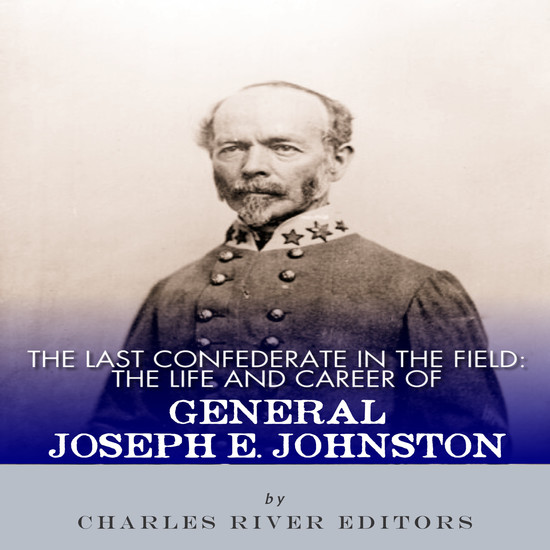
The Last Confederate in the Field - The Life and Career of General Joseph E Johnston - cover
LER

The Last Confederate in the Field - The Life and Career of General Joseph E Johnston

Editors Charles River

Editora: Charles River Editors

  • 0
  • 0
  • 0

Sinopse

During the Civil War, one of the tales that was often told among Confederate soldiers was that Joseph E. Johnston was a crack shot who was a better bird hunter than just about everyone else in the South. However, as the story went, Johnston would never take the shot when asked to, complaining that something was wrong with the situation that prevented him from being able to shoot the bird when it was time.


The story is almost certainly apocryphal, but it was aptly used to demonstrate the Confederates’ frustration with a man who everyone regarded as a capable general. Johnston began the Civil War as one of the South’s senior commanders, leading the ironically named Army of the Potomac to victory in the Battle of First Bull Run over Irvin McDowell’s Union Army. But Johnston would become known more for losing by not winning. Johnston was never badly beaten in battle, but he had a habit of strategically withdrawing until he had nowhere left to retreat. When Johnston had retreated in the face of McClellan’s army before Richmond in 1862, he finally launched a complex attack that not only failed but left him severely wounded, forcing him to turn over command of the Army of Northern Virginia to Robert E. Lee.


Johnston and Confederate President Jefferson Davis had a volatile relationship throughout the war, but Johnston was too valuable to leave out of service and at the beginning of 1864 he was given command of the Army of Tennessee. When Johnston gradually retreated in the face of Sherman’s massive army (which outnumbered his 2-1) before Atlanta in 1864, Davis removed Johnston from command of the Army of Tennessee and gave it to John Bell Hood.


Johnston has never received the plaudits of many of the South’s other generals; in fact, there are only a couple of monuments commemorating his service in the South. Yet Johnston was a competent general who fought in some of the most important campaigns of the Civil War, and it’s often forgotten that it was his surrender to Sherman weeks after Appomattox that truly ended the Civil War. Johnston did so over Davis’s command to keep fighting, incurring his wrath once more. Having dealt with each other, Sherman and Johnston became friends after the war, and when the elderly Johnston served as a pallbearer at Sherman’s funeral, he contracted an illness that eventually killed him.


Given his prominent and controversial role in the Civil War, Johnston naturally took to writing memoirs, Narrative of Military Operations During the Civil War, which gives an extremely detailed account of the war, a defense of his actions, and criticism of Jefferson Davis and John Bell Hood. One of the most interesting parts of Johnston’s memoirs come at the end, with his letters, telegrams, and even an anecdote about the origins of the Confederate Battle Flag.
Disponível desde: 20/06/2025.
Comprimento de impressão: 63 páginas.

Outros livros que poderiam interessá-lo

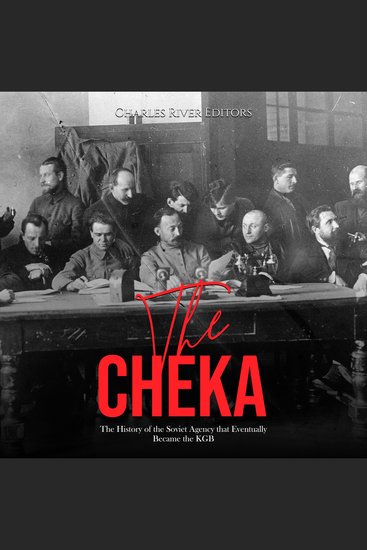
  • Cheka The: The History of the Soviet Agency that Eventually Became the KGB - cover

    Cheka The: The History of the...

    Editors Charles River

    • 0
    • 0
    • 0
    The KGB is one of the most famous abbreviations of the 20th century, and it has become synonymous with the shadowy and often violent actions of the Soviet Union’s secret police and internal security agencies. In fact, it is often used to refer to the Soviet state security agencies throughout its history, from the inception of the inception of the Cheka (Extraordinary Commission) in 1917 to the official elimination of the KGB in 1992. Whether it’s associated with the Russian Civil War’s excesses, Stalin’s purges, and even Vladimir Putin, the KGB has long been viewed as the West’s biggest bogeyman during the second half of the 20th century. 
    	However, the KGB did not appear out of thin air. Naturally, the earliest Soviet leaders utilized intelligence agencies that collected information both abroad and within the Soviet Union, targeting foreign opponents and domestic opponents alike. Lenin did not imagine the scale of the opposition he would have to face after the revolution, and he quickly came to the conclusion that "a special system of organized violence" must be created to implement the dictatorship of the proletariat. 
    	Thus, from nearly the beginning of the Bolshevik takeover of Russia, Lenin and his successors established and relied on a particularly ruthless agency: the All-Russian Extraordinary Commission for Combating Counter-Revolution and Sabotage, later abbreviated to the Extraordinary Commission. Known colloquially as the Cheka (Extraordinary Commission), it soon became as feared by non-socialists as the Tsar’s secret police had ever been. The main means approved by the Council of People's Commissars on December 20, 1917, which the Cheka had to use to fight the counter-revolution, were "seizure of property, resettlement, deprivation of cards, publication of lists of enemies of the people, etc."
    Ver livro
  • Confessions of a Young Man - cover

    Confessions of a Young Man

    George Moore

    • 0
    • 0
    • 0
    Confessions of a Young Man by George Moore is a semi-autobiographical novel that delves into the bohemian life of a restless artist in 19th-century Paris. The protagonist, an Irishman navigating the vibrant and decadent world of art, literature, and romance, grapples with his ambitions, desires, and moral dilemmas. Through encounters with influential figures like Émile Zola and Stéphane Mallarmé, he immerses himself in the avant-garde literary scene while indulging in hedonistic pursuits. The narrative oscillates between introspection and satire, critiquing societal conventions and the pursuit of artistic greatness. Moore’s evocative prose captures the tension between idealism and cynicism, as the young man confronts the consequences of his choices. A candid exploration of youth, creativity, and self-discovery, Confessions of a Young Man reflects the struggles of an artist striving to find meaning amid chaos and temptation.
    Ver livro
  • Time Traveler - A Scientist’s Personal Mission to Make Time Travel a Reality - cover

    Time Traveler - A Scientist’s...

    Dr. Ronald L. Mallett, Bruce...

    • 0
    • 0
    • 0
    This is the dramatic and inspirational first-person story of theoretical physicist, Dr. Ronald Mallett, who recently discovered the basic equations for a working time machine that he believes can be used as a transport vehicle to the past. Combining elements of Rocket Boys and Elegant Universe, Time Traveler follows Mallett's discovery of Einstein's work on space-time, his study of Godel's work on a solution of Einstein's equation that might allow for time travel, and his own research in theoretical physics spanning thirty years that culminated in his recent discovery of the effects of circulating laser light and its application to time travel. The foundation for Mallett's historic time-travel work is Einstein's theory of general relativity, a sound platform for any physicist. Through his years of reading and studying Einstein, Mallett became a buff well before he had any notion of the importance of the grand old relativist's theories to his own career. One interesting subtext to the story is Mallett's identification with, and keen interest in, Einstein. Mallett provides easy-to-understand explanations of the famous physicist's seminal work.
    Ver livro
  • My Secret Life Vol 1 Chapter 14 - cover

    My Secret Life Vol 1 Chapter 14

    Dominic Crawford Collins

    • 0
    • 0
    • 0
    My Secret Life, the anonymously written erotic memoirs of a Victorian English gentleman who refers to himself simply as 'Walter' is one of the most idiosyncratic and prurient books ever written. In this vast autobiographical confessional the author recounts, in meticulous detail, his sexual exploits throughout the course of a life devoted entirely to the pursuit of carnal knowledge. Through this compelling exploration of the author's sexual and moral behaviour we are left with a uniquely entertaining insight into life behind the closed doors of Victorian society. My Secret Life is funny, sorrowful, suspenseful, compulsively readable, obscene, titillating, exciting and erotic...we are privy to the thoughts, emotions and memories of one of the most unusual, unsung and colourful characters of the Victorian era.
    
    Now, for the first time, the complete unabridged version of this unique and important text is being narrated and scored by film composer Dominic Crawford Collins as an 'audiofilm' (an audiobook in which the emotional landscape is explored through the music score). Each chapter of My Secret Life will be released at monthly intervals over the next ten to fifteen years culminating in a lifetime's work for the composer and what is likely to become the longest audio book ever to be produced.
    Ver livro
  • The Autobiography of Davy Crockett - A Narrative of the Life of an American Folk Hero - cover

    The Autobiography of Davy...

    David Crockett

    • 0
    • 1
    • 0
    "In the following pages I have endeavoured to give the reader a plain, honest, homespun account of my state in life, and some few of the difficulties which have attended me along its journey, down to this time. I am perfectly aware, that I have related many small and, as I fear, uninteresting circumstances; but if so, my apology is, that it was rendered necessary by a desire to link the different periods of my life together, as they have passed, from my childhood onward, and thereby to enable the reader to select such parts of it as he may relish most, if, indeed, there is any thing in it which may suit his palate."
    Ver livro
  • St Monica and the Power of Persistent Prayer - cover

    St Monica and the Power of...

    Mike Aquilina, Mark W. Sullivan

    • 0
    • 0
    • 0
    Many of us give up on prayer when we don't get the answer we want WHEN we want it. 


    For nearly two decades, Saint Monica prayed for her wayward son. Years and years of prayers, seemingly unanswered. Countless tears shed with no relief. Yet she would not give up. 


    That very act of persistent prayer blessed the entire Church, for we have all benefitted from the conversion of her son, Augustine, who became one of the most revered saints of all time. 


    Parents of any age or at any stage can cultivate the same virtues in prayer that Saint Monica discovered during her long wait for God's answer for her child. This devotion includes eighteen contemporary reflections, meditations taken from the writings of Saint Augustine, and prayers adapted from the liturgy and other ancient sources. 


    Don't give up. Persistence in prayer can change everything—for you, your children, and maybe even the world.
    Ver livro