¡Acompáñanos a viajar por el mundo de los libros!
Añadir este libro a la estantería
Grey
Escribe un nuevo comentario Default profile 50px
Grey
Suscríbete para leer el libro completo o lee las primeras páginas gratis.
All characters reduced
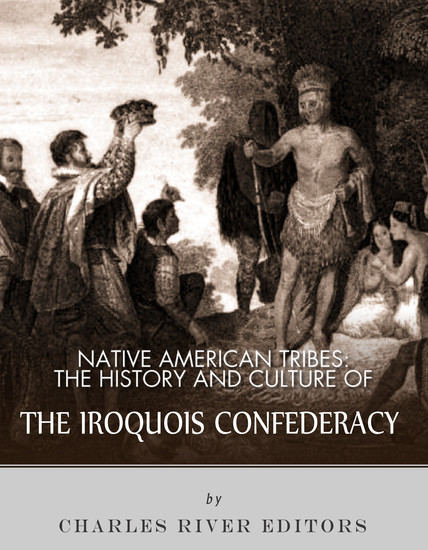
The History and Culture of the Iroquois Confederacy - cover

The History and Culture of the Iroquois Confederacy

Editors Charles River

Editorial: Charles River Editors

  • 0
  • 0
  • 0

Sinopsis

From the “Trail of Tears” to Wounded Knee and Little Bighorn, the narrative of American history is incomplete without the inclusion of the Native Americans that lived on the continent before European settlers arrived in the 16th and 17th centuries. Since the first contact between natives and settlers, tribes like the Sioux, Cherokee, and Navajo have both fascinated and perplexed outsiders with their history, language, and culture. In Charles River Editors’ Native American Tribes series, readers can get caught up to speed on the history and culture of North America’s most famous native tribes in the time it takes to finish a commute, while learning interesting facts long forgotten or never known.
 
Among all the Native American tribes, the Iroquois people are some of the most well documented Native Americans in history. Indigenous to the northeast region of what is now the United States and parts of Canada, they were among some of the earliest contacts Europeans had with the native tribes. And yet they have remained a constant source of mystery.
 
The name "Iroquois", like many Native American tribal names, is not a name the people knew themselves by, but a word applied to them by their enemies the Huron, who called them “Iroquo” (rattlesnake) as an insult. The French later added the suffix “ois.” Moreover, the Iroquois are not even a single tribe but a confederation of several different tribal nations that include the Seneca, Oneida, Onondaga, Mohawk, Cayuga and the Tuscarora, who didn’t become part of the union until the early 1700’s.  The name Haudenosaunee (pronounced “ho-den-oh-SHO-nee”) is the name the people use for themselves, which translates as “the People of the Longhouse.” They are also commonly known as the Six Nations.
 
Despite their own cultural differences, the nations that comprised the Iroquois Confederacy established their political dominance across much of America’s East Coast and Midwest through conquest, and it is that aspect which has perhaps best endured among Americans in terms of the Iroquois’ legacy. European settlers who came into contact with the Mohawks in the Northeast certainly learned to respect their combat skills, to the point that there were literally bounties on the Mohawks’ heads, with scalps fetching money for colonists who succeeded in slaying them and carrying away the “battle prize”.
 
In addition to the constant state of conflict between the Iroquois and different nations, including the French and the colonists, the Six Nations are perhaps best known for their political structure, and their influence on American democracy is well documented if not well known by most Americans.
 
Far from being relics of history, they are living communities who maintain political relationships with United States and Canada, as they have occupied their territories long before international borders were drawn. Their histories have left an indelible mark on the formation of the United States and Canada. Native American Tribes: The History and Culture of the Iroquois Confederacy comprehensively covers the culture and history of the Six Nations. Along with pictures depicting the Iroquois, you will learn about the Iroquois like you never have before, in no time at all.
Disponible desde: 27/05/2025.
Longitud de impresión: 32 páginas.


Otros libros que te pueden interesar

  • The Battle for the South Pole - cover

    The Battle for the South Pole

    Stefan Zweig

    • 0
    • 0
    • 0
    Robert Falcon Scott was a British naval officer and polar explorer. He led the Discovery Expedition (1901-1904) and the Terra Nova Expedition (1910-1913), two voyages of exploration during the so-called Golden Age of Antarctic exploration. He is among the first ten people to reach the geographic South Pole. His Terra Nova expedition developed into a competition with Norwegian polar explorer Roald Amundsen. Scott reached the pole on January 18, 1912, realizing that Amundsen and his crew of four had preempted him by about a month. On the way back to base camp, Scott and his four companions died of malnutrition, disease, and hypothermia.
    Ver libro
  • Our Vampires Ourselves - cover

    Our Vampires Ourselves

    Nina Auerbach

    • 0
    • 0
    • 0
    Nina Auerbach shows how every age embraces the vampire it needs, and gets the vampire it deserves. Working with a wide range of texts, as well as movies and television, Auerbach locates vampires at the heart of our national experience and uses them as a lens for viewing the last two hundred years of Anglo-American cultural history.“[Auerbach] has seen more Hammer movies than I (or the monsters) have had steaming hot diners, encountered more bloodsuckers than you could shake a stick at, even a pair of crossed sticks, such as might deter a very sophisticated ogre, a hick from the Moldavian boonies....Auerbach has dissected and deconstructed them with the tender ruthlessness of a hungry chef, with cogency and wit.”—Eric Korn, Times Literary Supplement”This seductive work offers profound insights into many of the urgent concerns of our time and forces us to confront the serious meanings that we invest, and seek, in even the shadiest manifestations of the eroticism of death.”—Wendy Doniger, The Nation”A vigorous, witty look at the undead as cultural icons.”—Kirkus Review”In case anyone should think this book is merely a boring lit-crit exposition...Auerbach sets matters straight in her very first paragraph. ’What vampires are in any given generation,’ she writes, ’is a part of what I am and what my times have become. This book is a history of Anglo-American culture through its mutating vampires.’...Her book really takes off.”—Maureen Duffy, New York Times Book Review
    Ver libro
  • Critical Thinking - The Best Beginner’s Guide that Gives You the Tools for Improve your Skills of Problem Solving Logic and the Basics of Human Psychology (for Women Men and Kids) - cover

    Critical Thinking - The Best...

    David McKay

    • 0
    • 0
    • 0
    Would You Want To Be A Critical Thinker Who Makes Great Decisions After Evaluating All The Possible Outcomes And Settling On The Most Favorable?  
    If You Would, Then Keep On Reading 
    Our life is a product of the decisions we've made throughout our lives. I know you know that all too well and want to make the right decisions consistently to propel yourself to the level of success that you so much desire be it in your career, relationships, finances, investing, health, business and more. 
    As Napoleon Hill aptly put it, "You have a brain and mind of your own. Use it, and reach your own decisions." He was talking about leveraging the power of critical thinking, as opposed to relying on a hunch or your gut! 
    I know it can feel very overwhelming and frustrating when it seems like you are not just getting things right. However, it does not have to be this way. You can actually take steps to develop deeper thinking and greater analytical skills to make decisions most of the time and this is what this book, "Critical Thinking" will teach you.What really is critical thinking?The different phases of critical thinkingHow to not only think critically but logically tooHow you can actually start thinking criticallyThe difference between critical thinkers and those who are notSteps to take to take to develop your critical thinking skillsHow negative thinking affects how you think and how to silence your inner critic 
    And so much more!... 
    Are you ready? 
    Scroll up to the top of this page and click Buy Now With 1-Click or Buy Now to get started!
    Ver libro
  • Africa Is Not a Country - Notes on a Bright Continent - cover

    Africa Is Not a Country - Notes...

    Dipo Faloyin

    • 0
    • 0
    • 0
    So often, Africa has been depicted simplistically as a uniform land of famines and safaris, poverty and strife, stripped of all nuance. In this bold and insightful book, Dipo Faloyin offers a much-needed corrective, weaving a vibrant tapestry of stories that bring to life Africa's rich diversity, communities, and histories. 


    Starting with an immersive description of the lively and complex urban life of Lagos, Faloyin unearths surprising truths about many African countries' colonial heritage and tells the story of the continent's struggles with democracy through seven dictatorships. With biting wit, he takes on the phenomenon of the white savior complex and brings to light the damage caused by charity campaigns of the past decades. Entering into the rivalries that energize the continent, Faloyin engages in the heated debate over which West African country makes the best jollof rice and describes the strange, incongruent beauty of the African Cup of Nations. With an eye toward the future promise of the continent, he explores the youth-led cultural and political movements that are defining and reimagining Africa on their own terms. 


    Africa Is Not a Country celebrates the energy and particularity of the continent's different cultures and communities, treating Africa with the respect it deserves.
    Ver libro
  • Ancient Origins of the Zodiac - Investigating the Sacred Cosmology of Egypt - cover

    Ancient Origins of the Zodiac -...

    EZRA IVANOV

    • 0
    • 1
    • 0
    Egypt's geographical isolation and the unique geography of the Nile Valley are thought to have been responsible for its long existence. Because of this military control, astronomical concepts in Egypt became so ingrained and inseparable from everyday concerns that they became an integral part of Egyptian life. As your gaze rises to the horizons of Egypt, you can see the movement of the stars and planets: the climatic conditions never change, ensuring a similar seasonal cycle each year. Besides this, Egypt also enjoys a cloudless sky almost all the time and a location in latitude that allows even the most densely populated regions of the starry heavens to be viewed.
    Ver libro
  • Bad Things - The Nature and Normative Role of Harm - cover

    Bad Things - The Nature and...

    Neil Feit

    • 0
    • 0
    • 0
    Bad Things addresses various philosophical questions about the nature and moral relevance of harm. The most basic question is this: under what conditions does an event harm a given individual? Neil Feit focuses primarily on the metaphysics of harm, and he both defends and extends the counterfactual comparative account of harm. On this account, in its most basic form, an act or event harms an individual provided that she would have been better off if it had not occurred. The counterfactual comparative account is widely accepted but also widely criticized. Feit provides detailed and thorough responses to the most challenging objections. He argues that an adequate theory of harm should entail the counterfactual comparative account but also make room for a certain kind plural harm, where two or more events together harm an individual although neither one by itself is harmful. These harmful events are bad things, collectively, even if no single event is itself a bad thing. Feit sets out and defends a detailed account of plural harm, addressing issues about the magnitude and the time of the harm suffered by the victim. The primary focus of the book is on the metaphysics of harm, but issues concerning its normative or moral relevance are addressed.
    Ver libro