¡Acompáñanos a viajar por el mundo de los libros!
Añadir este libro a la estantería
Grey
Escribe un nuevo comentario Default profile 50px
Grey
Suscríbete para leer el libro completo o lee las primeras páginas gratis.
All characters reduced
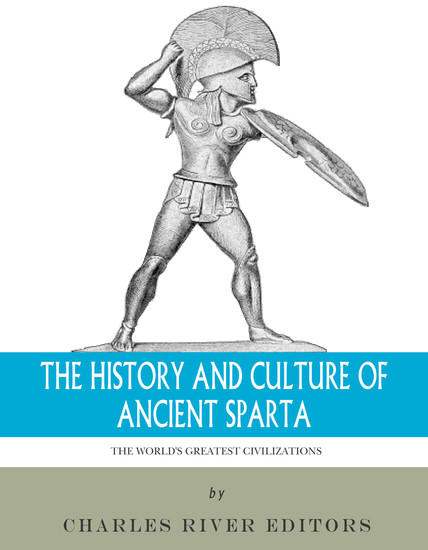
The History and Culture of Ancient Sparta - cover

The History and Culture of Ancient Sparta

Editors Charles River

Editorial: Charles River Editors

  • 0
  • 0
  • 0

Sinopsis

“The walls of Sparta were its young men, and its borders the points of their spears.” – attributed to King Agesilaos
 
There have been no shortage of great warrior societies in history, including the Romans, Mongols, Macedonians, and Vikings, the list goes on. Yet one humble city in particular, nestled in a valley near the Eurotas river in the Greek region of the Peloponnese and once ridiculed as little more than a cluster of villages inhabited by uncouth shepherds, produced the most famous warrior elite the world has ever known.
 
The most unique city-state in Ancient Greece was Sparta, which continues to fascinate contemporaneous society.  It is not entirely clear why Sparta placed such a great emphasis on having a militaristic society, but the result was that military fitness was a preoccupation from birth.  If a Spartan baby did not appear physically fit at birth, it was left to die.  Spartan children underwent military training around the age of 7 years old, and every male had to join the army around the age of 18. 
 
The Spartans, whose carefully constructed approach to warfare and – there is no other word for it – Spartan way of life, earned the grudging admiration of all of Greece and succeeded in establishing themselves in the years following the reforms of the semi-legendary ruler Lycurgus as the greatest military force in all of Hellas. Athens might have the mightiest fleet and the greatest cadre of philosophers and dramatists, Thessaly might have had the most vaunted cavalry, and the great city-states of Argos, Thebes and Corinth all had their own claims to fame, but on the battlefield the Spartan phalanx stood without peer. So feared were they in Greece that their very appearance on the battlefield could cause entire enemy armies to flee in terror, and in one of history’s most famous battles, 300 Spartan warriors headed a combined Greek force which held off the hundreds of thousands of Persian warriors of Xerxes’s invading army for three days at Thermopylae, inflicting an estimated 20,000 casualties upon them before dying to the last man rather than retreating.
 
Sparta will forever be known for its military prowess, but they had lives off the battlefield as well, and their way of life was also unique. For example, Spartan females were formally educated, which was a rarity among the city-states, and the Spartan way of life was entirely dependent on a class of indentured servants known as the helots. Yet the Laws of Lycurgus, which ordered all Spartans to disregard art (with the exception of song, which the Spartans prized, and some forms of music and poetry), to distrust philosophy, and to abhor excess in all things, were designed to create the perfect warrior society, and they did. As a result, the Spartans became notorious for “Laconic phrases”
 
The World’s Greatest Civilizations: The History and Culture of Ancient Sparta comprehensively covers the history and culture of the famous Greek city-state, looking at their religious, political, and military past, and examining all their accomplishments. Along with historic artwork depicting important people, places, and events, The History and Culture of Ancient Sparta will bring readers up to speed on Ancient Sparta today.    
Disponible desde: 20/06/2025.
Longitud de impresión: 36 páginas.
Otros libros que te pueden interesar

  • Queen Victoria's Jubilee - cover

    Queen Victoria's Jubilee

    Mark Twain

    • 0
    • 0
    • 0
    While in London in 1897, Mark Twain was commissioned by William Randolph Hearst to report for the San Francisco Examiner on the sixtieth anniversary of Queen Victoria's ascension to the throne.Evoking historical detail reminiscent of passages in The Prince and the Pauper and Personal Recollections of Joan of Arc, Twain compares the jubilee to his own original and imaginative account of the 1415 celebration following the English victory at Agincourt, and he also reflects on the rapid changes in the British Empire during the Victorian age.
    Ver libro
  • Stonewall Jackson’s Most Famous Battles: The History of the Confederate General’s Legendary Victories - cover

    Stonewall Jackson’s Most Famous...

    Editors Charles River

    • 0
    • 0
    • 0
    Confederate general Thomas Jonathan Jackson had been a virtual unknown upon his arrival at the front line of First Bull Run, but by the spring of 1862, thanks to his actions at that battle, “Stonewall” was already becoming known across the battlefields. Ultimately, it would be the Valley Campaign of 1862 that made him a legend.  
    	In the early months of 1862, Jackson was given command of an army numbering about 17,000 in the Shenandoah Valley. His task was daunting. The loss at Bull Run prompted a changing of the guard, with George B. McClellan, the “Young Napoleon”, put in charge of reorganizing and leading the Army of the Potomac. That spring, the Army of the Potomac conducted an ambitious amphibious invasion of Virginia’s Peninsula, circumventing the Confederate defenses to the north of Richmond by attacking Richmond from the southeast. 	General Johnston’s outnumbered army headed toward Richmond to confront McClellan, but the Union still had three armies totaling another 50,000 around the Shenandoah Valley, which represented a threat to Richmond from the north. It was these armies that Jackson would be tasked with stopping.  
    	Jackson would go on to lead his undermanned army through what military strategists and historians consider the most incredible campaign of the Civil War. From late March to early June, Jackson kept all three Union armies bottled up and separated from each other in the Shenandoah Valley by marching up and down the Valley about 650 miles in 50 days, earning his army the nickname “foot cavalry.”  
    Although Jackson is revered today as an almost ideal commander, a lot of his subordinates bristled under his leadership, believing not only that he asked too much but that he was too strict. 
    Ver libro
  • BDSM for Beginners - Introduction to the BDSM Scene and the Submissive and Dominant Role - cover

    BDSM for Beginners -...

    More Sex Fun Book Club, Melissa...

    • 0
    • 0
    • 0
    Pain and pleasure. Punishment and reward. Is that what BDSM is all about?  
    It's a big misconception that BDSM is all about punishing the sub.  
    BDSM is a safe sexual roleplaying game between you and your partner. Adding just a small dose of BDSM lets you explore your kinky side in new ways.  
    In this book, you will learn how to live out your sexual desires, explore your sexual fantasies, and experiment with pain and pleasure. This book gives you a basic understanding of everything about BDSM, including: The history of KinkBenefits of BDSMThe Basics of BDSM (subs and doms)Tools and toysPleasure spotsAnd much more  
    Ready to learn more about BDSM and start your training?
    Ver libro
  • Trends and Debates in American Education - A Hispanic Perspective - cover

    Trends and Debates in American...

    Otto Federico von Feigenblatt

    • 0
    • 0
    • 0
    The volume covers a range of topics related to American education from a Hispanic point of view. Legislative intervention in the teaching of social studies in Florida, critical race theory in education, strengths and weaknesses of the decentralized American education system, and the higher education of Hispanics in the United States, are some of the topics explored. The volume concludes with a critical interpretation of the shortage of teachers in the State of Florida at a time of great socioeconomic and political polarization in the United States of America, as a representative case of the central debates in education of the second decade of the twenty-first century.
    Ver libro
  • Teaching English - cover

    Teaching English

    Michael Meyer, Laurenz Volkmann,...

    • 0
    • 0
    • 0
    This lively audiobook in a pleasant female voice with a charming British accent appeals to students who like to complement their reading of the book with listening –  or simply missed the lecture. Watching the PowerPoint presentations online while listening facilitates multimodal learning. This audiobook also serves a lecture-oriented flipped classroom and complements other introductions to teaching English as a foreign language because the 12 lectures offer an accessible and up-to-date introduction. Definitions and practical examples guide the understanding and reflection of basic and advanced concepts of foreign language learning.This introduction responds to new developments in language education: (1) Recent policies from the Kultusministerkonferenz and updates of the Common European Framework of Reference for Languages with its Companion Volume (2020) pay more attention to language awareness, mediation, and media literacy. (2) New empirical research explores the aims, methods, and impact of professional teacher education, Task-Based Language Teaching, and Content-and-Language-Integrated Learning. (3) The dramatic need for online teaching has met with refined concepts of multimodal media competence and cutting-edge tools for the digital classroom. The audiobook is also available as aprinted book and ebook, PowerPoint presentations are provided online. Thus multimodal teaching and learning is facilitated.
    Ver libro
  • Mutapa Empire - The Strategic Control of Trade Routes - cover

    Mutapa Empire - The Strategic...

    Rolf Hedger

    • 0
    • 0
    • 0
    The Mutapa Empire, also known as the Kingdom of Mutapa, emerged in the 15th century as a powerful Shona state in southern Africa. Its origins are deeply rooted in the earlier civilizations of the region, particularly the Kingdom of Great Zimbabwe, from which it inherited its political structures, trade networks, and cultural traditions. As Great Zimbabwe began to decline due to overpopulation, resource depletion, and internal conflicts, new centers of power arose, with Mutapa becoming the most dominant. 
    According to oral tradition, the empire was founded by a prince named Nyatsimba Mutota, who left Great Zimbabwe in search of new resources, particularly salt. His journey led him northward, where he conquered smaller communities and established a new political center. Mutota’s leadership allowed him to unite different groups under his rule, forming the early foundations of the Mutapa Empire. His successors, particularly his son Matope, expanded the empire further, consolidating power over a vast territory that included present-day Zimbabwe, Mozambique, and parts of Zambia and South Africa. 
    The name “Mutapa” itself carries significant meaning, often interpreted as “conqueror” or “master pillager,” reflecting the empire’s expansionist nature. The title “Mwene Mutapa” was given to its rulers, signifying supreme authority over both the people and the land. Under this leadership, the empire became highly centralized, with the Mwene Mutapa holding absolute power while relying on regional chiefs to manage local governance. This political structure allowed for effective control over its vast territories and trade networks.
    Ver libro