¡Acompáñanos a viajar por el mundo de los libros!
Añadir este libro a la estantería
Grey
Escribe un nuevo comentario Default profile 50px
Grey
Suscríbete para leer el libro completo o lee las primeras páginas gratis.
All characters reduced
The Greatest Civil War Battles - The Second Battle of Bull Run (Second Manassas) - cover

The Greatest Civil War Battles - The Second Battle of Bull Run (Second Manassas)

Editors Charles River

Editorial: Charles River Editors

  • 0
  • 0
  • 0

Sinopsis

“A splendid army almost demoralized, millions of public property given up or destroyed, thousands of lives of our best men sacrificed for no purpose. I dare not trust myself to speak of this commander as I feel and believe. Suffice to say...that more insolence, superciliousness, ignorance, and pretentiousness were never combined in one man.” – Union II Corps Commander Alpheus Williams
 
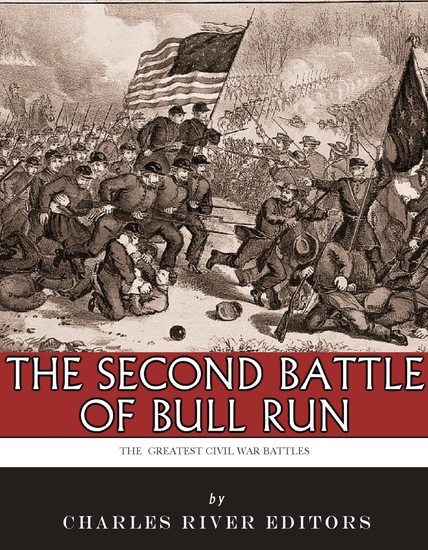
The Second Battle of Bull Run (August 28-30, 1862) was one of the most decisive battles fought during the Civil War, and it was also one of the most unlikely. Less than three months before the battle, Joseph E. Johnston’s Army of Northern Virginia had been pushed back nearly all the way to Richmond by George B. McClellan’s Army of the Potomac, so close that Union soldiers could see the church steeples of the Confederate capital. And yet, at the end of Second Manassas, Robert E. Lee’s Army of Northern Virginia found itself in the field unopposed about 20 miles away from the Union capital of Washington D.C. How could such a remarkable reversal of fortunes take place so quickly?
 
After Lee succeeded the wounded Johnston, he pushed McClellan’s Army of the Potomac away from Richmond and back up the Peninsula in late June, only to then swing his army north to face a second Union army, John Pope’s Army of Virginia. Needing to strike out before the Army of the Potomac successfully sailed back to Washington and linked up with Pope’s army, Lee daringly split his army to threaten Pope’s supply lines, forcing Pope to fall back to Manassas to protect his flank and maintain his lines of communication. At the same time, it left half of Lee’s army (under Stonewall Jackson) potentially exposed against the larger Union army until the other wing (under James Longstreet) linked back up. Thus, in late August 1862, the Army of Northern Virginia and the Army of Virginia found themselves fighting over nearly the exact same land the South and North fought over in the First Battle of Bull Run 13 months earlier.
 
When Pope’s army fell back to Manassas to confront Jackson, his wing of Lee’s army dug in along a railroad trench and took a defensive stance. The battle began with the Union army throwing itself at Jackson the first two days. But the concentration on Stonewall’s men opened up the Union army’s left flank for Longstreet’s wing, which marched 30 miles in 24 hours to reach the battlefield by the late afternoon of August 29. Lee used Longstreet’s wing on August 30 to deliver a devastating flank attack before enough reinforcements from the retreating Army of the Potomac reached the field, sweeping Pope’s Army from Manassas and forcing the Union soldiers into yet another disorderly retreat from Manassas to Washington D.C., a scene eerily reminiscent of the First Battle of Bull Run.
 
The Greatest Civil War Battles: The Second Battle of Bull Run comprehensively covers the campaign and the events that led up to the battle, the fighting itself, and the aftermath of the battle. Accounts of the battle by important participants are also included, along with maps of the battle and pictures of important people, places, and events. You will learn about the Second Battle of Bull Run like you never have before, in no time at all.
Disponible desde: 02/05/2025.
Longitud de impresión: 51 páginas.

Otros libros que te pueden interesar

  • Ugly - Giving Us Back our Beauty Standards - cover

    Ugly - Giving Us Back our Beauty...

    Anita Bhagwandas

    • 0
    • 0
    • 0
    We've all had those moments. The ones where you look in the mirror and nothing feels ok. For Anita Bhagwandas, this started when she was a child and it created an enduring internal torment about her looks. 


    We're all told that this is just part of growing up, but it stays with us, evolving as we age. The internet tells us we should love ourselves, whilst bombarding us with images of airbrushed perfection, upholding centuries-old beauty standards which we can't always see. Our beauty rituals are so often based around things we think we need to fix, grow, and develop—sometimes tipping into dangerous obsession. 


    So, what seismic shift does it take to break free from this mentality? In Ugly, Anita uncovers where these beauty standards started, unpicks why they've been perpetuated, and unmasks the structures that continue to support them. From the ever-growing cosmetic surgery industry, to the hidden pitfalls of "pretty privilege," it is time to finally break free from those limiting beauty standards, because feeling ugly should have nothing to do with how we look, and everything to do with who wants us to feel lacking.
    Ver libro
  • All at Sea - A Memoir - cover

    All at Sea - A Memoir

    Alan Loynd

    • 0
    • 0
    • 0
    All at Sea describes the career of a ship captain and salvage master from the time when he joined his first vessel to his present status as a marine consultant in Hong Kong. He writes of the remarkable changes he has seen and experienced in a career which has spanned more than half a century. By turns amusing and thought-provoking, this is an enjoyable tale of a most interesting life. 
    "[Alan] has done readers a service by putting on record so many of his experiences in such a charming & accessible manner. ... those who are interested in recent maritime practice should ... find within its pages much to intrigue & delight them. / Alan Loynd joined the Swire Group in 1976, and worked for businesses within it for most of thirty years.... it is both an honour and a pleasure to commend this volume to almost any curious & enthusiastic reader.”—Barnaby Swire. Chairman, the Swire Group 
    "A well thought through, beautifully written account of an interesting life.... I honestly could not put this down! Alan writes exceptionally well, with a delightful turn of phrase and a nice dry wit. His shrewd and sympathetic insights into the people of southern China are a particular pleasure. You pick up this book expecting a seafarer’s memoir - Devon schoolboy to CEO - and you get a handbook to modern Hong Kong, a bonus sketch of the Queen and Prince Philip visiting the tiny and remote island nation of Tuvalu, and an insight into modern salvage techniques.... Highly recommended."—Andrew Craig-Bennett, Amazon UK, 29 July 2021. 
    "A riveting read.... This is a quite exceptional account of a life at sea, covering a vast range of roles and adventures. It is beautifully written, and Alan Loynd’s (very) dry sense of humour shines through it all. I am a compulsive reader of mariners’ memoirs, and this is one of the very best." 
    —Killick, Amazon UK, 7 July 2021.
    Ver libro
  • The Fall of Berlin - The Final Showdown Between Nazi Germany and the Red Army - cover

    The Fall of Berlin - The Final...

    Sage Winters

    • 0
    • 0
    • 0
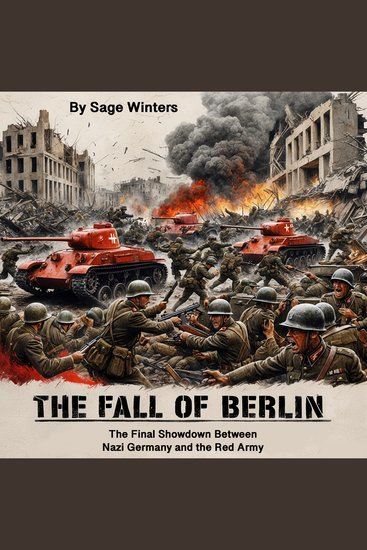
    In the final years of World War II, the fate of Nazi Germany seemed sealed. By early 1945, the once-feared Reich was in rapid decline. The German military was stretched thin, fighting on multiple fronts, and its once-unstoppable war machine had been crippled by continuous defeats. The Allies from the west and the Soviets from the east were closing in, their forces overwhelming the remnants of the German military. 
      
    In the East, the Red Army’s relentless advance had already pushed the Germans back hundreds of miles from the Soviet Union’s borders. The success of the Soviet offensives, especially following the victory at Stalingrad, left the Nazis reeling. Soviet General Zhukov’s forces had already crossed the Vistula River in Poland and were now bearing down on the Oder River, just a stone’s throw from Berlin. The Red Army’s advance was swift, and Hitler, from his bunker beneath the Reich Chancellery in Berlin, could no longer deny the grim reality that the capital was in imminent danger. 
      
    Despite this, Adolf Hitler refused to surrender or even entertain the thought of defeat. His obsession with holding Berlin—his “fortress”—was absolute. As Soviet forces neared the capital, he remained convinced that a miracle might still turn the tide. To his inner circle, this delusion became apparent. His judgment was clouded, and the once-great military genius was now a desperate and isolated dictator. He ordered that Berlin be fortified, even though it was clear that the city’s defenses were insufficient against the overwhelming Soviet force.
    Ver libro
  • Lead You - Notes to Young Africans on Creating a More Representative Continent - cover

    Lead You - Notes to Young...

    Ufuoma Otu

    • 0
    • 0
    • 0
    Despite several decades of so-called independence from colonial rule, representative government has largely remained elusive in many African countries, compromised by systemic corruption and political tyranny. 
    Widespread apathy from years of living under harsh realities has led to younger Africans speaking out against deplorable leadership and governance that ignore their basic needs and actively rob them of a brighter future. 
    Indeed, the future ought to be brighter for a continent that consistently ranks as having the youngest demographic in the world. Want to be a part of the new dawn in any way? If yes, this audiobook is for you! 
    Ver libro
  • Web of Lies - The Lure and Danger of Conspiracy Theories - cover

    Web of Lies - The Lure and...

    Aoife Gallagher

    • 0
    • 0
    • 0
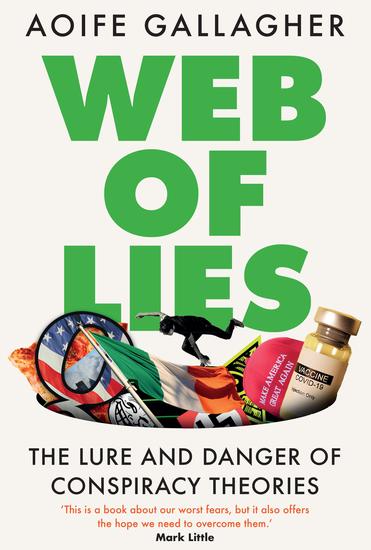
    There are many ways to fall down the rabbit-hole – and it may be far easier than you realise.
    Research analyst Aoife Gallagher has spent years investigating the darkest corners of the internet, but what happens when the online world spills into real life? Web of Lies is a fascinating deep dive into the rising threat of conspiratorial thought in Ireland and internationally, and explores how the internet is being used to spread disinformation – polarising society and radicalising people into extremism in the process.
    With balance and fairness, Gallagher connects the worldʼs oldest hatreds to current online cultures, showing how conspiratorial thinking can proliferate during times of crisis and how to recognise its most harmful impacts. Web of Lies is an urgent, provocative but ultimately hopeful call to protect ourselves and our loved ones, before itʼs too late . . . …
    'Ever wondered how good people get trapped in their worst nightmares? Web of Lies is an unforgettable journey through the upside-down world of conspiratorial thinking. Aoife Gallagher has written the definitive account of how global lies have changed Irish lives, in a book full of personal empathy, unrivalled expertise and captivating storytelling. It shines a light on the real-world harm of our darkest online fantasies and it shows how each of us can fight back.' Mark Little
    'At a time of fractious discord in discourse, Gallagher provides a vital context to and education in the strange and alarming world of conspiracy theories. Anyone interested in truth and facts should read this book.' Una Mullally
    'Aoife Gallagher can plumb the depths of the internet and come up to the surface to explain what she's found with levity, empathy and humour. Wise without lecturing; sharp but always maintaining compassion for those caught up in misinformation. A fantastic global overview of trends while having one eye on how these things have come to Ireland.' Brianna Parkins
    Ver libro
  • The Cannons Roar - Fort Sumter and the Start of the Civil War—An Oral History - cover

    The Cannons Roar - Fort Sumter...

    Bruce Chadwick

    • 0
    • 0
    • 0
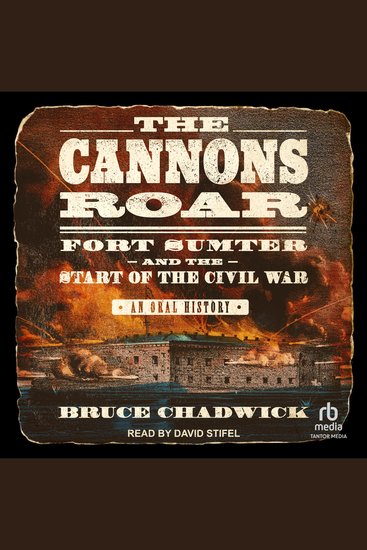
    On April 12, 1861, Confederate troops began firing on Fort Sumter, beginning the bloodiest conflict in American history. Since that time numerous historians have described the attack in many well-regarded books, yet the event still remains overlooked at times in the minds of the public. 


    The Cannons Roar seeks to remedy that. Rather than providing a third-person, after-the-fact description, acclaimed author Bruce Chadwick will tell the story of the attack from the people who were in the thick of it. The Cannons Roar will not only provide portraits of the major players, it will give voice to dozens of regular people from across the country and socioeconomic spectrum. 


    Using letters, newspaper articles, diaries, journals, and other written sources, Chadwick describes in vivid detail the events preceding the attack, the attack itself, and its aftermath. Collectively, listeners will obtain a fuller understanding of the politics and thinking of political and military leaders that influenced their decisions or lack thereof. 


    Combining traditional history with the in-the-moment ethos of an oral history, The Cannons Roar brings this historic moment in American history to new and vivid life.
    Ver libro