Junte-se a nós em uma viagem ao mundo dos livros!
Adicionar este livro à prateleira
Grey
Deixe um novo comentário Default profile 50px
Grey
Assine para ler o livro completo ou leia as primeiras páginas de graça!
All characters reduced
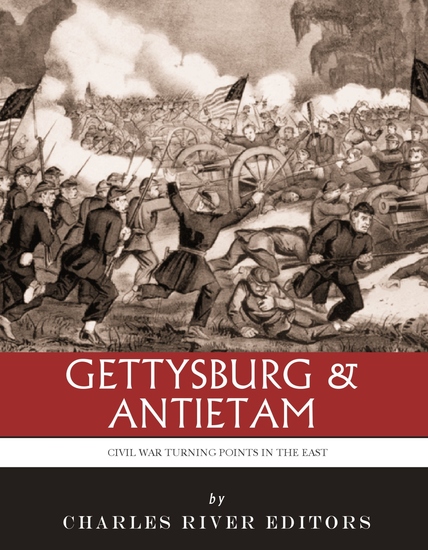
The Civil War Turning Points in the East - The Battle of Antietam and the Battle of Gettysburg - cover
LER

The Civil War Turning Points in the East - The Battle of Antietam and the Battle of Gettysburg

Editors Charles River

Editora: Charles River Editors

  • 0
  • 0
  • 0

Sinopse

The bloodiest day in American history took place on the 75th anniversary of the signing of the Constitution. On September 17, 1862, Robert E. Lee’s Confederate Army of Northern Virginia fought George McClellan’s Union Army of the Potomac outside Sharpsburg along Antietam Creek. That day, nearly 25,000 would become casualties, and Lee’s army would barely survive fighting the much bigger Northern army. Although the battle was tactically a draw, it resulted in forcing Lee’s army out of Maryland and back into Virginia, making it a strategic victory for the North and an opportune time for President Abraham Lincoln to issue the Emancipation Proclamation, freeing all slaves in the rebellious states.
 
For those reasons, Antietam is remembered as one of the major turning points of the Civil War, but it is often overlooked that the bloody battle only represented the climactic culmination of a 3 week campaign that saw George McClellan cautiously pull a fragmented Union army together and begin tracking Lee’s army into Maryland. Sizing up McClellan, Lee had split his army up during its invasion, including sending Stonewall Jackson’s men to Harpers Ferry, but the whole course of the campaign and possibly the war changed when the Union Army somehow found a copy of Lee’s marching orders, telling them where the Confederate army would be and when. To Lee’s surprise, McClellan’s army began advancing far more rapidly, including attacking them at South Mountain before cornering them along Antietam Creek outside of Sharpsburg.
 
Without question, the most famous battle of the American Civil War took place outside of the small town of Gettysburg, Pennsylvania, which happened to be a transportation hub, serving as the center of a wheel with several roads leading out to other Pennsylvanian towns. From July 1-3, Robert E. Lee’s Confederate Army of Northern Virginia tried everything in its power to decisively defeat George Meade’s Union Army of the Potomac, unleashing ferocious assaults that inflicted nearly 50,000 casualties in all.
 
Day 1 of the battle would have been one of the 25 biggest battles of the Civil War itself, and it ended with a tactical Confederate victory. But over the next two days, Lee would try and fail to dislodge the Union army with attacks on both of its flanks during the second day and Pickett’s Charge on the third and final day. Meade’s stout defense held, barely, repulsing each attempted assault, handing the Union a desperately needed victory that ended up being one of the Civil War’s turning points.
 
After the South had lost the war, the importance of Gettysburg as one of the “high tide” marks of the Confederacy became apparent to everyone, making the battle all the more important in the years after it had been fought. While former Confederate generals cast about for scapegoats, with various officers pointing fingers at Robert E. Lee, James Longstreet, and James Stuart, historians and avid Civil War fans became obsessed with studying and analyzing all the command decisions and army movements during the entire campaign. Despite the saturation of coverage, Americans refuse to grow tired of visiting the battlefield and reliving the biggest battle fought in North America.
 
The Civil War Turning Points in the East comprehensively covers the entire Pennsylvania campaign, analyzes the decisions made by the battles' most important leaders, and explains the aftermath of the Union victory and the legacies that were made and tarnished by the battles. Along with bibliographies, maps of the battles, and pictures of important people and places, you will learn about the battles like you never have before.
Disponível desde: 02/05/2025.
Comprimento de impressão: 132 páginas.

Outros livros que poderiam interessá-lo

  • Catholic Church’s Most Influential Religious Military Orders The: The Controversial and Mysterious History of the Knights Templar the Teutonic Knights and the Order of the Holy Sepulchre - cover

    Catholic Church’s Most...

    Editors Charles River

    • 0
    • 0
    • 0
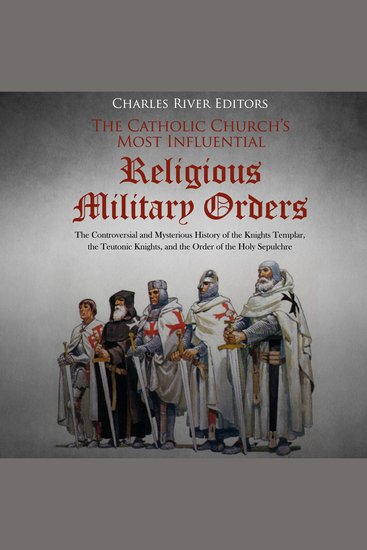
    For centuries, Christians and Muslims were embroiled in one of the most infamous territorial disputes of all time, viciously and relentlessly battling one another for the Holy Land. In the heart of Jerusalem sat one of the shining jewels of the Christian faith, the Church of the Holy Sepulchre. Legend has it that this was where their Savior had been buried before his fabled resurrection. What was more, it was said to house the very cross Jesus Christ had died upon. It was for precisely these reasons that fearless pilgrims, near and far, risked their lives and made the treacherous trek to Jerusalem.  
    	The Order of the Temple of Solomon, also known as the Templars or the Knights Templar, is one of the best-known and least-understood groups in history. They appear prominently in everything from novels (The Da Vinci Code) to films (as the Knights of the Cruciform Sword in Indiana Jones and the Last Crusade) to videogames (Assassin's Creed). In these stories, they are a sinister cult that manipulated historical events since the Middle Ages, via intimidation and assassination. They are usually connected to the Freemasons and, sometimes, to other historical cults like the Hindu Thuggees. 
    	The knights of the Teutonic Order have since been compared to the surreal creature that appeared to the biblical Ezekiel, one that bore 2 faces – one of a man's, and one of a lion's. The human side of the creature is said to symbolize the order's charity, whereas the lion was a metaphor for its valor and gallant spirit, which they relied on to vanquish the heathens of the world. 	Like other secretive groups, the mystery surrounding these military orders helped their legacies endure. While some conspiracy theorists attempt to tie the groups to other alleged secret societies like the Illuminati, other groups have tried to assert connections with them to bolster their own credentials.
    Ver livro
  • Reflections on Happiness - cover

    Reflections on Happiness

    Emilie du Châtelet

    • 0
    • 0
    • 0
    Reflections on Happiness by Gabrielle Émilie Le Tonnelier de Breteuil, Marquise du Châtelet, is a philosophical essay exploring the nature of happiness and its relationship to human life. Written in the 18th century, the work reflects the marquise's deep engagement with the intellectual currents of her time, particularly the Enlightenment. In this piece, she examines the concept of happiness, questioning what it truly means to live a fulfilled and meaningful life. 
    Du Châtelet argues that happiness is not simply a passive state of contentment but is closely linked to the pursuit of reason, virtue, and intellectual growth. She critiques the idea that material wealth or external circumstances alone can bring lasting happiness, suggesting instead that a person’s inner life—shaped by rational thought, self-control, and personal development—plays a crucial role in achieving fulfillment. Moreover, she posits that happiness is a complex and individual experience, shaped by both reason and emotions, and that it is more sustainable when it is aligned with one’s own nature and values. 
    Throughout the work, du Châtelet blends insights from philosophy, science, and personal reflection, offering a nuanced understanding of happiness as both a goal and a process. The essay reflects her belief in the power of human agency and the importance of intellectual and emotional balance in the pursuit of a meaningful life.
    Ver livro
  • Knowledge and Learning are Two Different Things - Eight Public Meetings with Young People Claremont Colleges USA 1968 - cover

    Knowledge and Learning are Two...

    Jiddu Krishnamurti

    • 0
    • 0
    • 0
    A radical transformation in the psyche itself," 8 November 1968. Duration: 80 minutes.To communicate we must know that the word is not the thing and also be in that state of mind whose quality is attention, care. That can take place only if we are serious.We are the world, and the world is us. To bring about a radical transformation, which is so essential in society, there must be radical transformation in ourselves.Analysis of violence does not end violence, nor is violence ended by thinking of nonviolence.There is no teacher outside, no saviour, no master; you yourself have to change, and therefore you have to learn to observe, to know yourself.Knowledge and learning are two different things.What is this silence you talk about? The silence that I am experiencing comes and goes."Thought is the cause of fear," 10 November 1968. Duration: 76 minutes.Though we have plenty of energy, apparently we lack the drive, enthusiasm, vitality to bring about a change in ourselves.As long as there is fear, there must be violence, aggression, anger, hatred. Thought is the source of fear.Is it possible to live everyday life without thought interfering?
    Ver livro
  • Population: 485 - cover

    Population: 485

    Anônimo

    • 0
    • 0
    • 0
    Mike Perry’s extraordinary and thoughtful account of meeting the people of his small hometown by joining the fire and rescue team was a breakout hit that “swells with unadorned heroism” (USA Today) 
    Welcome to New Auburn, Wisconsin (population: 485) where the local vigilante is a farmer’s wife armed with a pistol and a Bible, the most senior member of the volunteer fire department is a cross-eyed butcher with one kidney and two ex-wives (both of whom work at the only gas station in town), and the back roads are haunted by the ghosts of children and farmers. Michael Perry loves this place. He grew up here, and now-after a decade away-he has returned. 
    Unable to polka or repair his own pickup, his farm-boy hands gone soft after years of writing, Mike figures the best way to regain his credibility is to join the volunteer fire department. Against a backdrop of fires and tangled wrecks, bar fights and smelt feeds, he tells a frequently comic tale leavened with moments of heartbreaking delicacy and searing tragedy.  
    Tracing his calls on a map in the little firehouse, he sees “a dense, benevolent web, spun one frantic zigzag at a time” from which the story of a tiny town emerges.
    Ver livro
  • Built For Stealth - Key Principles for Building a Great Life - cover

    Built For Stealth - Key...

    Scott Allan

    • 0
    • 0
    • 0
    In Built for Stealth, Scott Allan provides battle-tested action plans that generate tangible results through taking consistent massive action. Built for Stealth is a compilation of the best frameworks created to help epic performers—just like you—push past difficult boundaries and break self-imposed limitations. 
    In this training, you learn to create opportunity instead of waiting for it to happen. You build the path that you want to take instead of treading on the path already taken. You learn from failure instead of avoiding hard things. You get to decide who you want to be, instead of someone else deciding who you should be. 
    In Built for Stealth, you will discover:6 proven steps to break your bad habits7 battle-tested methods for retraining your brainThe 11 definitive traits implemented by world-class epic performers5 simple steps to leverage fear and become an unstoppable badassThe 7-step framework for creating continuous change7 ways to master repetitive failure and build resilience 
    Optimize your life, develop into the person you are meant to be, and pivot towards mastery. Now you have the best tools and tactics to stop holding yourself back and do whatever it takes to reach your dreams and achieve your goals.
    Ver livro
  • The Coming Insurrection - cover

    The Coming Insurrection

    The Invisible Committee

    • 0
    • 0
    • 0
    "The Coming Insurrection" is a provocative manifesto penned by the enigmatic collective known as The Invisible Committee, which surfaced in France in 2007. This radical leftist treatise diagnoses contemporary society as deeply afflicted by the malaises of capitalism, alienation, and pervasive surveillance, arguing that the fabric of modern life is leading inexorably towards societal collapse. Through a compelling blend of critical theory and urgent polemic, the manifesto calls for a comprehensive insurrection against the existing order. It champions the formation of autonomous communes, the subversion of state mechanisms, and the rejection of traditional political and social structures as pathways to liberation. The text, notorious for its incendiary tone and its advocacy for direct action, has ignited significant debate, admiration, and criticism, marking it as a seminal work in radical political thought.
    Ver livro