¡Acompáñanos a viajar por el mundo de los libros!
Añadir este libro a la estantería
Grey
Escribe un nuevo comentario Default profile 50px
Grey
Suscríbete para leer el libro completo o lee las primeras páginas gratis.
All characters reduced
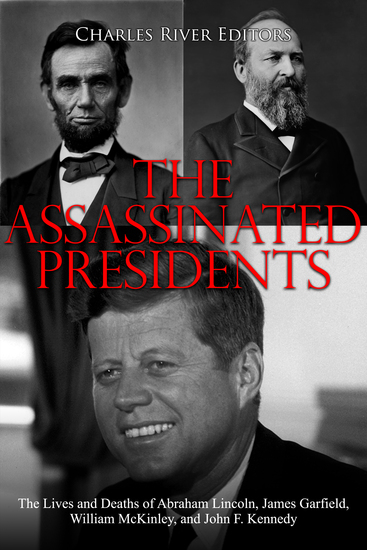
The Assassinated Presidents - The Lives and Deaths of Abraham Lincoln James Garfield William McKinley and John F Kennedy - cover

The Assassinated Presidents - The Lives and Deaths of Abraham Lincoln James Garfield William McKinley and John F Kennedy

Editors Charles River

Editorial: Charles River Editors

  • 0
  • 0
  • 0

Sinopsis

Until April 14, 1865, John Wilkes Booth was one of the most famous actors of his time, and President Abraham Lincoln had even watched him perform. But his most significant performance at a theater did not take place on the stage. That night, Booth became one of history’s most infamous assassins when he assassinated President Lincoln at Ford's Theatre in Washington, D.C. 
 
After the shooting, during which it is believed he broke his leg, Booth fled south on horseback, with authorities hot on his tail. 12 days later, while he was at a farm in rural northern Virginia, Booth was tracked down and shot by Boston Corbett, a Union soldier who acted against orders. Eight others were tried for their alleged involvement in the plot and convicted, and four were hanged shortly thereafter as a result of some of the nation’s most famous trials.
 
In 1880, Garfield ran as a Republican for president, and one of his supporters was a man named Charles Guiteau, who wrote and circulated a speech called “Garfield vs. Hancock” that aimed to rally support for the Republican candidate. Though few knew it, Guiteau’s family had already deemed him insane and attempted to keep him committed in an asylum, only to have him manage an escape from confinement. 
 
Despite lobbying around Republican headquarters in New York City and even approaching Cabinet members, no post was forthcoming for the troubled man. Eventually, in May 1881, Secretary of State James Blaine told him to never show up again. Enraged by the perceived slight, Guiteau bought a revolver and plotted to kill the president. He got his chance on July 2, 1881 at a railroad station, shooting Garfield in the back twice and bragging to the authorities, "I am a Stalwart of the Stalwarts...Arthur is president now!"
 
President James Garfield had been assassinated just 20 years earlier, but McKinley didn’t worry about presidential security or his own safety, and that was the case in Buffalo. McKinley’s insistence on greeting the public and shaking hands allowed Czolgosz to walk up to him on September 6, 1901 at a public reception in the Temple of Music on the expo grounds and shoot him point blank, with one bullet grazing the president and another lodging in his abdomen. In the aftermath of the shooting, as Czolgosz was beaten and seized by the crowd, he uttered, "I done my duty." For his part, McKinley said, “He didn't know, poor fellow, what he was doing. He couldn't have known."
 
Despite being president, McKinley’s medical services were shoddy, and given the still primitive medical standards of the early 20th century, gunshots to the abdomen often brought death. One of the best known aspects of the assassination is that Thomas Edison’s x-ray machine was on hand and may have been used to try to locate the bullet that doctors couldn’t find, but for reasons that remain unknown, the x-ray machine was not used.
 
In many ways, John Fitzgerald Kennedy and his young family were the perfect embodiment of the ‘60s. The decade began with a sense of idealism, personified by the attractive Kennedy, his beautiful and fashionable wife Jackie, and his young children. Months into his presidency, Kennedy exhorted the country to reach for the stars, calling upon the nation to send a man to the Moon and back by the end of the decade. In 1961, Kennedy made it seem like anything was possible, and Americans were eager to believe him. The Kennedy years were fondly and famously labeled “Camelot,” by Jackie herself, suggesting an almost mythical quality about the young President and his family.
 
As it turned out, the ‘60s closely reflected the glossy, idealistic portrayal of John F. Kennedy, as well as the uglier truths. The country would achieve Kennedy’s goal of a manned moon mission, and the landmark Civil Rights Act of 1964 finally guaranteed minorities their civil rights and restored equality, ensuring that the country “would live out the true meaning of its creed.” 
Disponible desde: 01/05/2025.
Longitud de impresión: 299 páginas.

Otros libros que te pueden interesar

  • Sound N’ Fury - Rock N’ Roll Stories - cover

    Sound N’ Fury - Rock N’ Roll...

    Alan Niven

    • 0
    • 1
    • 0
    Most rock ’n’ roll books are a bore. They all have the same narrative arc and are aimed at the dwindling following that now follows an artist that has long passed their AARP date. 
    		 
    Sound N’ Fury does not have a story arc. It is a collection of anecdotes, like a record comprised of various tracks — each one has its point and purpose. Alan Niven, who guided Guns N’ Roses from the gutter of Los Angeles to Wembley Stadium, shares stories from his remarkable life as a manager with an immediacy delivered by an extraordinary recall of dialogue. Readers will encounter not just Guns N’ Roses (who have sold almost 10 million tickets to their shows) but The Rolling Stones, Aerosmith, Clarence Clemons, Whitesnake, Elton John, and others who came from humble origins and experienced fame known only to few. Small-town minds collided with worldwide adulation, expectations, and demands. The results are amusing, affirming, and, predictably, disastrous. Keep in mind that rock ’n’ roll is God’s occupation for the unemployable.
    		 
    Written with a crisp and fluid style, the magnificence and idiocy of the music world will dance off the pages and engross even those who are not rock fans.
    Ver libro
  • The Boy Who Survived Auschwitz - cover

    The Boy Who Survived Auschwitz

    Adriana Lerman

    • 1
    • 1
    • 0
    Levi Lerman was a cheerful and lively boy from the town of Ostrowiec. He was only fourteen years old when his life took an unimaginable turn with the outbreak of World War II in 1939, when the Nazi forces invaded Poland and occupied his hometown.
    Over a painful six-year period, Levi endured a harsh life in the Ostrowiec ghetto, suffered devastating losses, performed exhausting forced labor, and survived countless transfers to concentration camps, including the extermination camp of Auschwitz-Birkenau.
    In the middle of this torment, a single light guided him through the darkness: his unbreakable determination to live and to protect his father—a strength that helped him survive against all odds.
    Ver libro
  • Twelve Years a Slave - cover

    Twelve Years a Slave

    Solomon Northup

    • 0
    • 1
    • 0
    "They can take your freedom, but they cannot take your identity."
    
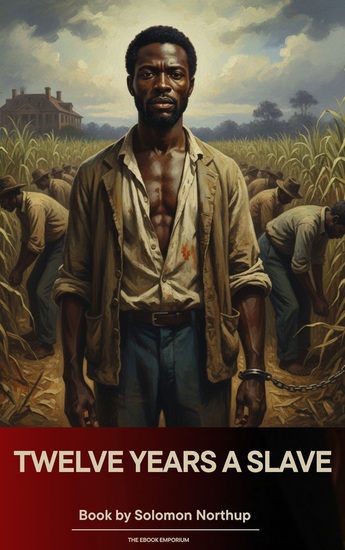
    In 1841, Solomon Northup was a professional violinist and family man living in Saratoga Springs, New York. After being lured to Washington D.C. with the promise of work, he was drugged, shackled, and stripped of his name. For the next twelve years, he was passed from master to master in the bayous of Louisiana, enduring the sadistic cruelty of men like Edwin Epps while witnessing the quiet heroism of his fellow enslaved people. Twelve Years a Slave is a visceral, unflinching look at the "peculiar institution" through the eyes of a man who knew both the dignity of liberty and the agony of the lash. It remains a foundational text of American history and a testament to the endurance of the human spirit.
    
    The Mechanics of Oppression: Northup provides a meticulous, almost journalistic description of the economics and daily operations of the slave trade. He details the cultivation of cotton and sugar, the social hierarchies of the plantation, and the psychological warfare used to keep human beings in subjection.
    
    A Quest for Justice: The narrative is propelled by Northup's secret attempts to communicate with his family in the North. His eventual rescue is a heart-stopping moment of tension and triumph, highlighting the legal and social complexities of a divided nation where a man's status as "property" or "person" could depend entirely on the color of his skin and the geography of his location.
    
    Why It Is a Vital Classic: While many narratives were edited to suit political agendas, Northup's account is praised for its stark realism and descriptive power. It provides names, dates, and locations that were later verified by historians, making it one of the most credible and devastating indictments of slavery ever written.
    
    Bear witness to the truth. Purchase "Twelve Years a Slave" today.
    Ver libro