¡Acompáñanos a viajar por el mundo de los libros!
Añadir este libro a la estantería
Grey
Escribe un nuevo comentario Default profile 50px
Grey
Suscríbete para leer el libro completo o lee las primeras páginas gratis.
All characters reduced
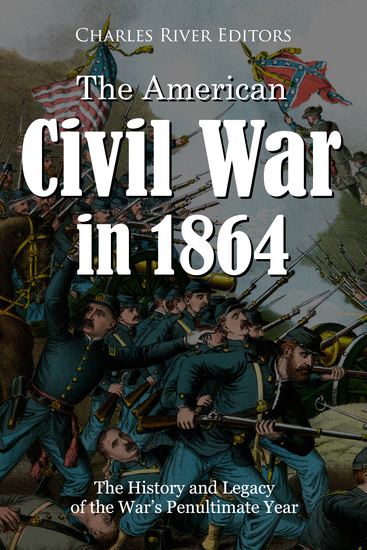
The American Civil War in 1864 - The History and Legacy of the War’s Penultimate Year - cover

The American Civil War in 1864 - The History and Legacy of the War’s Penultimate Year

Editors Charles River

Editorial: Charles River Editors

  • 0
  • 0
  • 0

Sinopsis

With Robert E. Lee’s Army of Northern Virginia continuing to frustrate the Union Army of the Potomac’s attempts to take Richmond in 1862 and 1863, President Lincoln shook things up by turning command of all the armies of the United States to Ulysses S. Grant in March 1864. , Lee had won stunning victories at battles like Chancellorsville and Second Bull Run by going on the offensive and taking the strategic initiative, but Grant and Lincoln had no intention of letting him do so anymore. Attaching himself to the Army of the Potomac, Grant ordered Army of the Potomac commander George Meade, "Lee's army is your objective point. Wherever Lee goes, there you will go also."
 
From May 5-7, the two most famous generals of the Civil War squared off for the first time. The 100,000 strong Army of the Potomac was double the size of Lee’s hardened but battered Army of Northern Virginia. It was a similar position to the one George McClellan had in 1862 and Joe Hooker had in 1863, and Grant’s first attack, at the Battle of the Wilderness, followed a similar pattern. Nevertheless, Lee proved more than capable on the defensive.
 
The Battle of the Wilderness was fought so close to where the Battle of Chancellorsville took place a year earlier that soldiers encountered skeletons that had been buried in shallow graves in 1863. Moreover, the  woods were so thick that neither side could actually see who they were shooting at, and whole brigades at times got lost in the forest. Both armies sustained heavy casualties while Grant kept attempting to move the fighting to a setting more to his advantage, but the heavy forest made coordinated movements almost impossible.
 
On May 5 and May 6, both armies attempted desperate attacks and counterattacks to strike a knockout blow, but they were ultimately unable to dislodge each other. Given the terrain and the nature of the fighting, it was one of the most horrendous battles of the war, with some wounded men literally burning to death in fires ignited by the battle that sparked the nearby underbrush and spread rapidly. The defending Confederates technically won a tactical victory by holding their ground, but they did so at a staggering cost, inflicting 17,000 casualties on the Army of the Potomac and suffering 11,000 of their own.
 
On May 7, Grant disengaged his army from the battle. His objective had been frustrated by Lee’s skillful defense, the same position as Hooker at Chancellorsville, McClellan on the Virginian Peninsula, and Burnside after Fredericksburg. His men got the familiar dreadful feeling that they would retreat back toward Washington, as they had too many times before. This time, however, Grant made the fateful decision to keep moving south, inspiring his men by telling them that he was prepared to “fight it out on this line if it takes all Summer.” The Battle of the Wilderness would only be the beginning of the Overland Campaign, not the end of it.
 
Despite the fierce fighting, Grant continued to push his battered but resilient army south, hoping to beat Lee’s army to the crossroads at Spotsylvania Court House, but Lee’s army beat Grant’s to Spotsylvania and began digging in, setting the scene for on and off fighting from May 8-21 that ultimately inflicted more casualties than the Battle of the Wilderness. In fact, with over 32,000 casualties among the two sides, it was the deadliest battle of the Overland Campaign.
 
Although the Battle of Spotsylvania technically lasted nearly 2 weeks, it is best remembered for the fighting that took place on May 12 at a salient in the Confederate line manned by Richard S. Ewell’s corps. Known as the Mule Shoe, a Union assault on the salient produced 24 hours of the most savage fighting conducted during the war, forever christening that point in the line as the Bloody Angle. 
Disponible desde: 01/05/2025.
Longitud de impresión: 279 páginas.
Otros libros que te pueden interesar

  • The Princess of Babylon - cover

    The Princess of Babylon

    Voltaire

    • 0
    • 0
    • 0
    Voltaire's 'The Princess of Babylon' is an enchanting tale of love, intrigue, and diplomacy set in a fantastical Orient. Princess Formosante's quest for true love intertwines with political machinations, highlighting Voltaire's wit and satire. The narrative weaves romance and philosophical reflection, offering a timeless exploration of power, virtue, and the human heart, encapsulated in a captivating fairy-tale setting. Read in English, unabridged.
    Ver libro
  • Settling the Boom - The Sites and Subjects of Bakken Oil - cover

    Settling the Boom - The Sites...

    Mary E. Thomas, Bruce Braun

    • 0
    • 0
    • 0
    Examines how settler colonial and sexist infrastructures and narratives order a resource boom 


    Over the past decade, new oil plays have unsettled U.S. energy landscapes and imaginaries. Settling the Boom studies how the disruptive forces of an oil boom in the northern Great Plains are contained through the extension of settler temporalities, reassertions of heteropatriarchy, and the tethering of life to the volatility of oil and its cruel optimisms. 


    This collection reveals the results of sustained research in Williston, North Dakota, the epicenter of the "Bakken Boom." While the boom brought a rapid influx of capital and workers, the book questions simple timelines of before and after. Instead, Settling the Boom demonstrates how the unsettling forces of an oil play resolve through normative narratives and material and affective infrastructures that support settler colonialism's violent extension and its gendered orders of time and space. Considering a wide range of evidence, from urban and regional policy, interviews with city officials, media, photography, and film, these essays analyze the ongoing material, aesthetic, and narrative ways of life and land in the Bakken.
    Ver libro
  • The Fourth Coming - How God Mathematics Can Put the World to Rights - cover

    The Fourth Coming - How God...

    Francis Keith Robins

    • 0
    • 0
    • 0
    In a time of dire need, as climate change, conflict, and economic upheaval imperil our existence and our mental well-being deteriorates from not utilising our minds as God intended, Francis Keith Robins introduces a groundbreaking approach to saving humanity – reshaping our thought processes through mathematics.
     
    In his book, The Fourth Coming, Robins provides a detailed, step-by-step guide to unlocking our inherent mathematical potential. His vision is to create a society that is inclusive, equal, and peaceful – one that aligns with God’s desire for us. He advocates for a paradigm shift where shared mathematical models and systematic thinking supplant the ineffective classes of governments and institutions currently jeopardizing our planet. This revolutionary approach aims to alter the trajectory of human history in a manner that aligns with divine intentions. 
     
    Robins’ theories, described as a work of mathematical brilliance, offer a refreshingly simple yet profound solution to consciousness – which, as noted by ‘New Scientist’, remains one of the most elusive and significant mysteries in science and philosophy. Furthermore, he concludes that the introduction of religion by God was a response to 
    humanity’s failure to use their brains as He intended.
    Ver libro
  • Greek and Roman Epics - Stories of Gods Heroes and the Afterlife (3 in 1) - cover

    Greek and Roman Epics - Stories...

    Odessa Nightshade

    • 0
    • 0
    • 0
    Step into the timeless worlds of ancient Greece and Rome, where gods rule the heavens, heroes chase destiny, and the underworld reveals the secrets of life and death. This 3-in-1 collection explores the most iconic myths and epics that have shaped Western civilization. 
    Begin with The Aeneid, Virgil’s legendary tale of Aeneas and the founding of Rome—filled with battles, divine intervention, and the struggle to fulfill fate. Then, uncover the power and presence of The Goddesses of Olympus, from wise Athena to vengeful Hera, each influencing both gods and mortals. Finally, journey through The Mythical Underworld, a shadowy realm ruled by Hades and Persephone, where souls are judged and heroes face their deepest trials. 
    Rich in drama, beauty, and insight, these stories offer a thrilling look at humanity’s oldest questions—about love, war, destiny, and what lies beyond.
    Ver libro
  • A Rare Recording of Richard Wurmbrand - cover

    A Rare Recording of Richard...

    Richard Wurmbrand

    • 0
    • 0
    • 0
    Richard Wurmbrand, born on March 24, 1909, was a Romanian Christian minister of Jewish descent. He was a youth during a time of anti-Semitic activity in Romania, but it was later, after becoming a believer in Jesus Christ as Messiah, and daring to publicly say that Communism and Christianity were not compatible, that he experienced imprisonment and torture for his beliefs. After serving five years of a second prison sentence, he was ransomed for $10,000. After spending time in Norway and England, he and his wife Sabina, who had also been imprisoned, emigrated to America and dedicated the rest of their lives to publicizing and helping Christians who are persecuted for their beliefs. He wrote more than eighteen books, translated into more than 60 languages, the most widely known being "Tortured for Christ." He founded the international organization, Voice Of The Martyrs, which aids Christians around the world who are persecuted for their faith. Wurmbrand died on February 17, 2001. Recording obtained and published by Rick Sheridan.
    Ver libro
  • How to Fall in Love - cover

    How to Fall in Love

    Olivia Werner

    • 0
    • 0
    • 0
    [How to Fall in Love] invites readers into an intimate exploration of modern connection, weaving together raw emotional insight with razor-sharp social observation. With unflinching honesty and lyrical precision, this groundbreaking guide dismantles our cultural myths about romance while illuminating the subtle complexities of opening one's heart in a digital age. Through masterfully crafted chapters that read like intimate conversations, readers discover how the architecture of love is built not through grand gestures, but in the delicate moments of vulnerability, the quiet courage of remaining open despite past wounds, and the revolutionary act of choosing connection in a world designed for disconnection. This isn't just another dating manual – it's a profound meditation on how we love now, examining the intricate dance between solitude and intimacy, between protecting ourselves and daring to be seen.
    Ver libro